For the theologian Diana L. Hayes, the question “Who am I?” is a central question for people of faith:
Who am I? I am a child of God, whether black, brown, yellow, red, or white, because race does not exist in God. Nor do other divisions exist in God, not those of Muslim, Jew, Christian, Hindu, or other, because God is God for all of humanity, however God is named…. We are all created in God’s own image and likeness, a creation that God declared to be good without caveats. Why am I here on this earth at this time and place? To help bring about God’s kin-dom by recognizing and, more importantly, by affirming my co-createdness with all of humanity and thus the presence of God in all with whom I come into contact. I am called, as all are called, to contribute to the rebuilding of … a community in which all are welcome.
Hayes reflects on what we can learn about love from those who have not experienced belovedness in our families, cultures, and churches:
Those who are the least among us already know the answer to this most critical spiritual question for our time: “Who do you, God, say that I, humanity, am?” This is not because their lives are so simple and childlike … but because they, like Job, have been tested and survived. Their everyday lives are such a constant struggle simply to survive … that they are drawn ever closer to God, who is the answer to all of our longings….
Is it not time for us to learn from the example of those who have suffered the most and yet have a rich, nurturing life of the spirit that enables them to persevere in their daily struggle?….
We are all our brothers’ and sisters’ keeper. God has placed upon all of us the responsibility of following in God’s own footsteps, of loving all people as God loves us, of seeking their greater good rather than our own individual success. We can only do this by letting go of the “isms” that continue to plague humanity—negativisms based on race, ethnicity, gender, class, sexual orientation, and religious creed. We must begin to remove the blinders we have placed on ourselves that restrict our vision, blinding us to the light of God shining through the face of all God’s people. We must come together as one, seeking to build a community of the faithful that rejects a narrow, dualistic perception of life.
“Who do you, God, say that we are?” We are your children, lost and wandering in a confusing and confused world, but never abandoned, never forsaken, never alone. We are your chosen ones, given knowledge of life and death, and the ability through your grace to use that knowledge to choose life in all of its diversity and to transform this world into your reign. This is our challenge for the coming century and perhaps for the new millennium. May we continue to be blessed with the wisdom and love of God in order to reclaim our full life in the Spirit and be transformed.
Reference:
Diana L. Hayes, No Crystal Stair: Womanist Spirituality (Orbis Books, 2016), 77, 78–79.
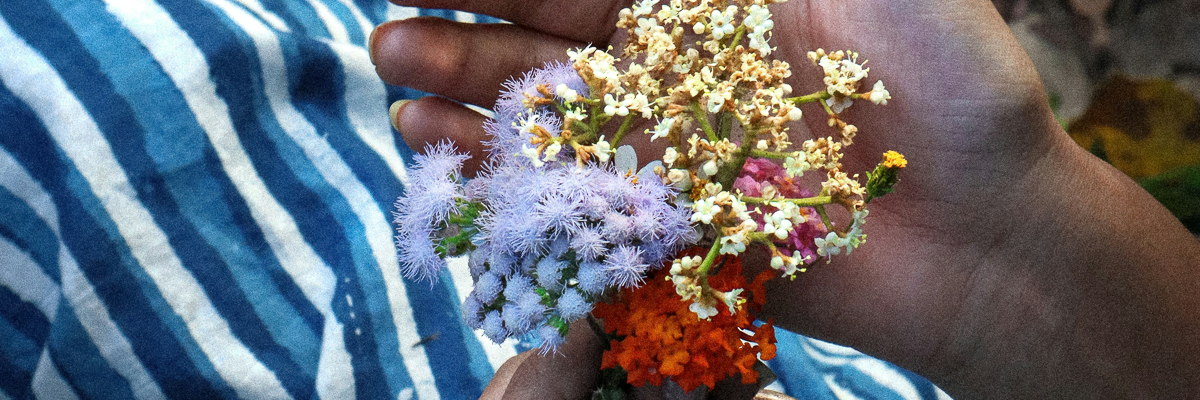
Image credit and inspiration: Credits: Tony Sebastian, untitled (detail), 2019, photo, India, Unsplash. Click here to enlarge image. Like a bouquet of many different kinds of flowers, we are all gently held as beautifully chosen and beloved.


Story from Our Community:
I have always felt that being an introvert was a character flaw and tried without much success to be more gregarious. Through these meditations and Father Richard’s teachings, I have come to accept this as a blessing and realize that I am not alone. I am cradled in the Trinity’s all-encompassing embrace.
—Veronica S.

