This week’s meditations focus on the shadow self, a recurring theme in Father Richard Rohr’s work.
The shadow self is an essential concept in my work, which always needs initial clarification and definition. My understanding of the shadow comes primarily from Swiss psychotherapist Carl Gustav Jung (1875–1961).
Let’s begin with the personal shadow. During the first half of our lives (and for many, into the chronological second half of life), we are building up our persona, our separate or false self. To put it very simply, as children we learn which behaviors cause approval and disapproval from our families, teachers, and friends. If we want to have some sort of control over our lives and create pleasant outcomes, we tend to develop those things which are acceptable and repress those things which are not. Those things we repress or deny about ourselves become our shadow. The qualities we “place” in our shadow aren’t necessarily bad; they’re simply the ones that are not rewarded by our family system or culture. [1]
Persona (the self we present to the world) and shadow are correlative terms. Our shadow is what we refuse to recognize about ourselves and what we do not want others to perceive. The more we have cultivated and protected a chosen persona, the more shadow work we will need to do. Therefore, we need to be especially careful of clinging to any idealized role or self-image, like that of minister, parent, doctor, nice person, professor, moral believer, or president of this or that. These are huge personas to live up to, and they trap many people in lifelong delusion that the role is who they are and all they are allowed to be. The more we are attached to our protected self-image, the more shadow self we will likely have. In my experience, this is especially dangerous for a “spiritual leader” or “professional religious person” because it involves such an ego-inflating self-image. Whenever ministers, or any true believers, are too anti anything, we can be pretty sure there’s some shadow material lurking somewhere nearby. Zealotry often reveals one’s overly repressed shadow.
Our self-image is not substantial or lasting; it’s simply created out of our own mind, desire, and choice—and everybody else’s preferences for us! It’s not objective at all but entirely subjective (which does not mean that it doesn’t have real influence). The movement to second-half-of-life wisdom has much to do with necessary shadow work and the emergence of healthy self-critical thinking. These alone allow us to see beyond our own shadow and disguise and to find who we are, “hidden with Christ in God,” as Paul puts it (Colossians 3:3). The Zen masters call it “the face we had before we were born.” This self cannot die, lives forever and is our true self. Religion is always in some way about discovering our true self (or soul), which is also to discover God, who is our deepest truth. [2]
References:
[1] Adapted from Richard Rohr, “Unveiling the Shadow,” Daily Meditations, June 13, 2021.
[2] Adapted from Richard Rohr, Falling Upward: A Spirituality for the Two Halves of Life, rev. ed. (Jossey-Bass, 2024), 81–83.
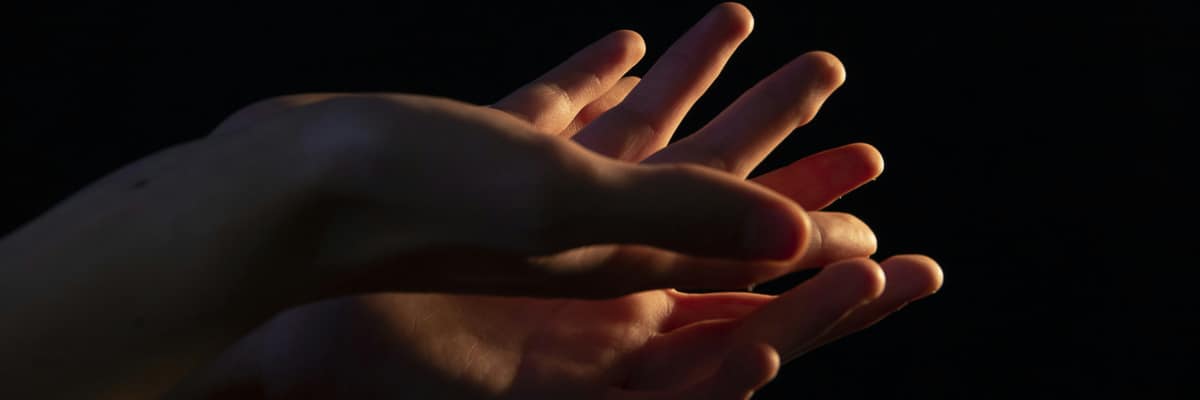
Image credit and inspiration: Flavie Martin, untitled (detail), 2022, photo, Unsplash. Click here to enlarge image. With cautious breath and glimmers of light, we step into the shadow—drawn by the gifts it holds—seeking the clarity and courage to name what hides.


Story from Our Community:
Aloha CAC! I’ve come to see that the integration of our shadow selves gives us the awareness of who we are not, so that we can become who we have come here to be. When we know our shadow, we are free to do all that is ours to do in the world.
—Leavitt T.