Fourth Sunday of Advent
In the beginning was the Word, and the Word was with God, and the Word was God…. All things came to be through him, and without him nothing came to be.
—John 1:1, 3
Drawing on the wisdom of Franciscan theology, Father Richard Rohr writes that the Incarnation begins first with the birth of the cosmos, long before the birth of Jesus:
What was God up to in those first moments of creation? Was God totally invisible before the universe began? Is there even such a thing as “before”? Why did God create at all? What was God’s purpose in creating? Is the universe itself eternal, or is the universe a creation in time as we know it—like Jesus himself?
Let’s admit that we will probably never know the “how” or even the “when” of creation. But the question that religion tries to answer is mostly the “why.” Is there any evidence for why God created the heavens and the earth? What was God up to? Was there any divine intention or goal, or do we even need a creator “God” to explain the universe?
Most of the perennial wisdom traditions have offered explanations, and they usually go something like this: Everything that exists in material form is the offspring of some Primal Source, which originally existed only as Spirit. This Infinite Primal Source somehow poured itself into finite, visible forms, creating everything from rocks to water, plants, organisms, animals, and humans. This self-disclosure of whomever we call God into physical creation was the first Incarnation (the general term for any enfleshment of spirit), long before the personal, second Incarnation that Christians believe happened with Jesus.
When Christians hear the word “incarnation,” most of us think about the birth of Jesus, who personally demonstrated God’s radical unity with humanity. But I want to suggest that the first Incarnation was the moment described in Genesis 1, when God joined in unity with the physical universe and became the light inside of everything. This, I believe, is why light is the subject of the first day of creation.
The Incarnation, then, is not only “God becoming Jesus.” It is a much broader event, which is why John first describes God’s presence in the general word “flesh” (John 1:14). John is speaking of the ubiquitous Christ we continue to encounter in other human beings, a mountain, a blade of grass, or a starling.
“Christ” is a word for the Primordial Template (Logos or Word) through whom “all things came into being, and not one thing had its being except through him” (John 1:3). Seeing in this way has reframed, reenergized, and broadened my own religious belief, and I believe it could be Christianity’s unique contribution among the world religions.
Reference:
Adapted from Richard Rohr, The Universal Christ: How a Forgotten Reality Can Change Everything We See, Hope For, and Believe (Convergent Books, 2021), 12–13.
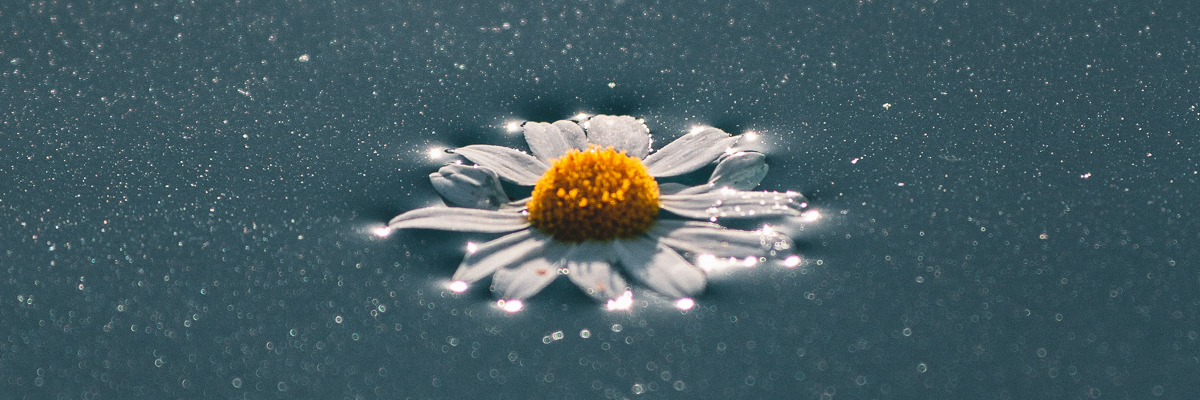
Image credit and inspiration: Maciej Wodzyński, untitled (detail), 2020, photo, Unsplash. Click here to enlarge image. Both the summer daisy and the winter freeze exist as exhalations of God, each a shining expression of the divine unfolding—from the cosmos to the incarnation of Jesus.


Story from Our Community:
Christ abides in us. Everything that is is sustained in the creative, eternal, loving power of Christ. This is true of all people, all matter, all emptiness, and darkness too. God actively pours it all forth, and experiences creation as us, in us, and through us. I think God enjoys the experience of knowing as us as much as we enjoy the experience of God knowing as us. That’s why these moments are so full of joy.
—Heather C.

