Father Richard Rohr identifies how the story of Adam and Eve in Genesis 3 is a metaphor for the loss of innocence that we all experience:
The Bible presents us with stories in “little theater” to prepare us for the Big Theater, teaching us, in effect, that whatever is happening in the Bible is not just there, it’s everywhere; it’s not just this person, it’s every person. For too long, it has been common for Christians to read the Bible complacently, often observing, “That was the problem with Jewish religion back then.” Thus, we cleverly avoid acknowledging that the exact same problem applies today, in our own lives and communities. If the text is truly inspired, it reveals the patterns that are always true—even and most especially here and now, in me and you, not just back there in them.
When we read Genesis 3 and look at “the Fall” itself, the Fall is not simply something that happened to Adam and Eve in one historical moment. It’s something that happens in all moments and all lives. It must happen and will happen to all of us. In fact, as the English mystic Julian of Norwich said, “First the fall, and then the recovery from the fall, and both are the mercy of God.” [1] It’s in falling down that we learn almost everything that matters spiritually.
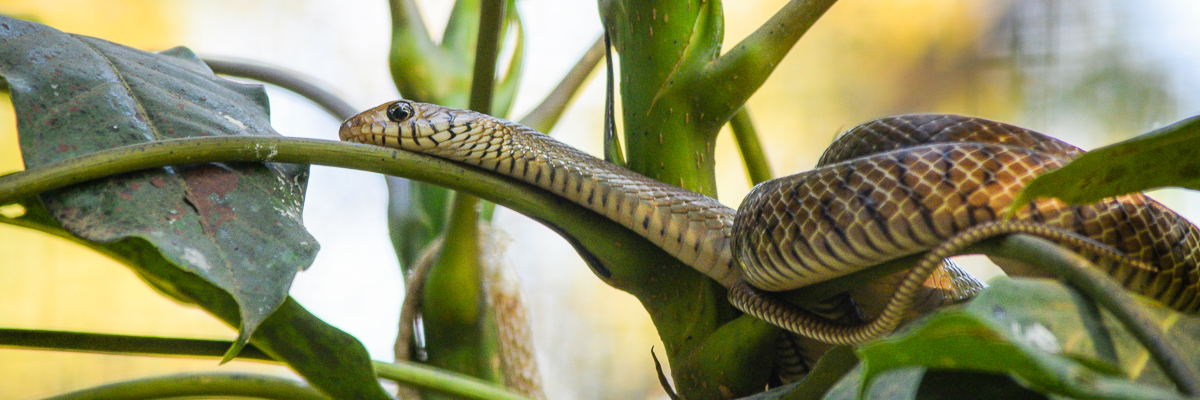
In Genesis, the Evil One, imaged as a snake, makes Eve suspicious. That starts the disconnection, an unraveling between Eve, Adam, and God. Suspicion does that in all relationships. Someone tells us one critical thing about another person, and that gets our minds going, fitting all sorts of pieces into a nicely constructed pattern. Suspicion almost always finds evidence for what it suspects. It inevitably moves toward states of resentment and an inability to trust outside myself. That’s the psychology of what’s happening in this simple story line.
The text states, “the eyes of both of them were opened” (3:7). What they were opened to was a split universe. Teachers of prayer call it the “subject-object split.” This happens whenever we stand over and against things, apart and analytical, and can no longer know things by affinity, likeness, or natural connection. Instead, we merely know them as objects out there, subject to our suspicion and doubt.
This move of “leaving the garden” begins in all human beings somewhere around seven years of age. Before that time, like Adam and Eve in the garden, we exist in unitive consciousness. It’s where we all begin, when “the father and I are one” (John 10:30), or my mother and I are one—as many of us enjoy in the first years of life.
Eventually the split happens. It has to happen. We will eat of the tree of the knowledge of good and evil and suffer the “wound of knowledge.” We will get suspicious of ourselves and of everything else. We will doubt. That’s called the state of alienation, and many live their whole lives there.
References:
[1] Julian of Norwich, Revelations of Divine Love, 61, ed. Grace Warrack (Methuen & Company, 1901), 153; Richard’s paraphrase.
Adapted from Richard Rohr, Things Hidden: Scripture as Spirituality, rev. ed. (Franciscan Media, 2022), 38–40.
Image credit and inspiration: Abishek Rana, untitled (detail), 2020, photo, Unsplash. Click here to enlarge image. A serpent in a garden invites us to pause. We are reminded that maturing means discerning between venom and challenge. Can we step from innocence into experience—while being held in intimate relationship with God?


Story from Our Community:
Loving all of creation as Christ taught us could return us to Eden, to heaven on earth. I imagine the possibilities: no war, no hatred, no discrimination or bigotry. Everyone working for the good of others to erase famine, ease suffering, and create a society where everyone is given the opportunity to be the best version of themselves. If we love as Christ loves, no one would be excluded.
—Reino P.

