The Spirit’s Silent Witness
We Conspire is a series from the Center for Action and Contemplation featuring wisdom and stories from the growing Christian contemplative movement. Sign up for the monthly email series and receive a free invitation to practice each month.
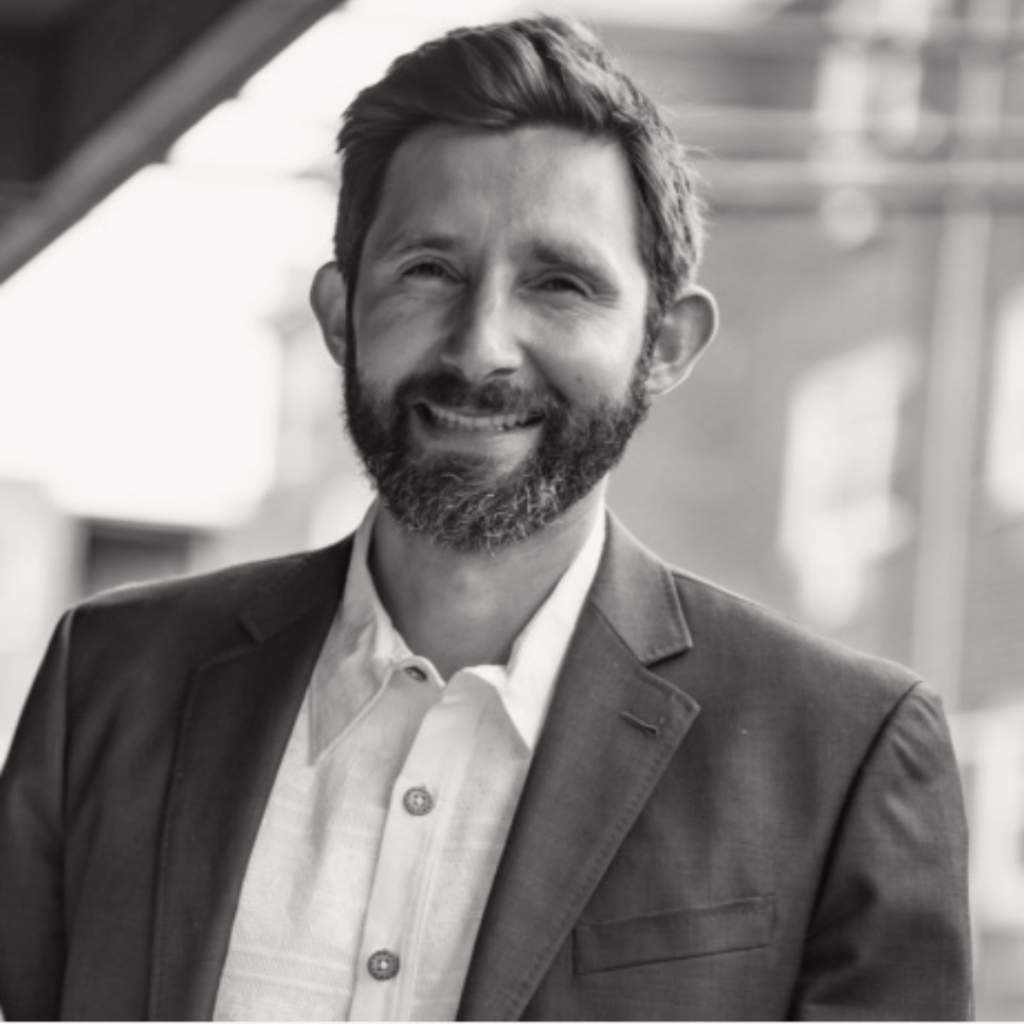
Michael Okińczyc-Cruz of the Coalition for Spiritual and Public Leadership (CSPL) helped organize a public Mass outside a Chicago Immigration and Customs Enforcement (ICE) detention center, protesting the denial of human and religious rights. In the face of provocation, the crowd responded with silence and lament, revealing the power of nonviolent resistance.
Two thousand people gathered for a public Mass on All Saints Day, 2025, outside the Broadview ICE Facility on the west side of Chicago.
Though less popular in America, public Masses have been forms of nonviolent protest in Latin America as well as Poland during the anti-communist Solidarity Movement in the 1980s. The people gathering outside Broadview that day, organized by the Coalition for Spiritual and Public Leadership (CSPL), were protesting profound human rights violations as hundreds of people were detained and crammed into the small Broadview facility with no beds and little food. Protesters were also demonstrating against the violation of people’s religious rights, as priests and Catholic sisters were banned from the facility and therefore unable to offer liturgy, communion, or spiritual support to detainees. The public Mass on November 1 was CSPL’s second attempt to negotiate an agreement for its pastoral delegation to enter the facility and offer spiritual care and communion to detainees.

Rather than the response being one of shaming, cursing, or yelling, [the collective silence had] much deeper impact and really allowed the cruelty that was on full display to sink in.
—Michael Okińczyc-Cruz
During the public Mass, CSPL co-founder and Executive Director Michael Okińczyc-Cruz recalls how ICE and border patrol agents intentionally drove vans through the street Mass, forcing people to move out of the way and waving tauntingly at peaceful protesters. ICE also dispatched two large charter buses filled with detainees during the Mass, transporting — and perhaps deporting — them right before the protesters’ eyes.
“It was a tinderbox environment,” Okińczyc-Cruz recalls. “They were trying to provoke an aggressive response.”
When protesters learned during the Mass that social workers and religious leaders were once again denied entrance into the facility, Sister JoAnn Persch, RSM, whom Okińczyc-Cruz calls a “Chicago legend” and who would pass away two weeks later at the age of 91, was tasked with delivering the news to the 2,000-person crowd. She stepped up to the podium and shared that they had once again been denied access.
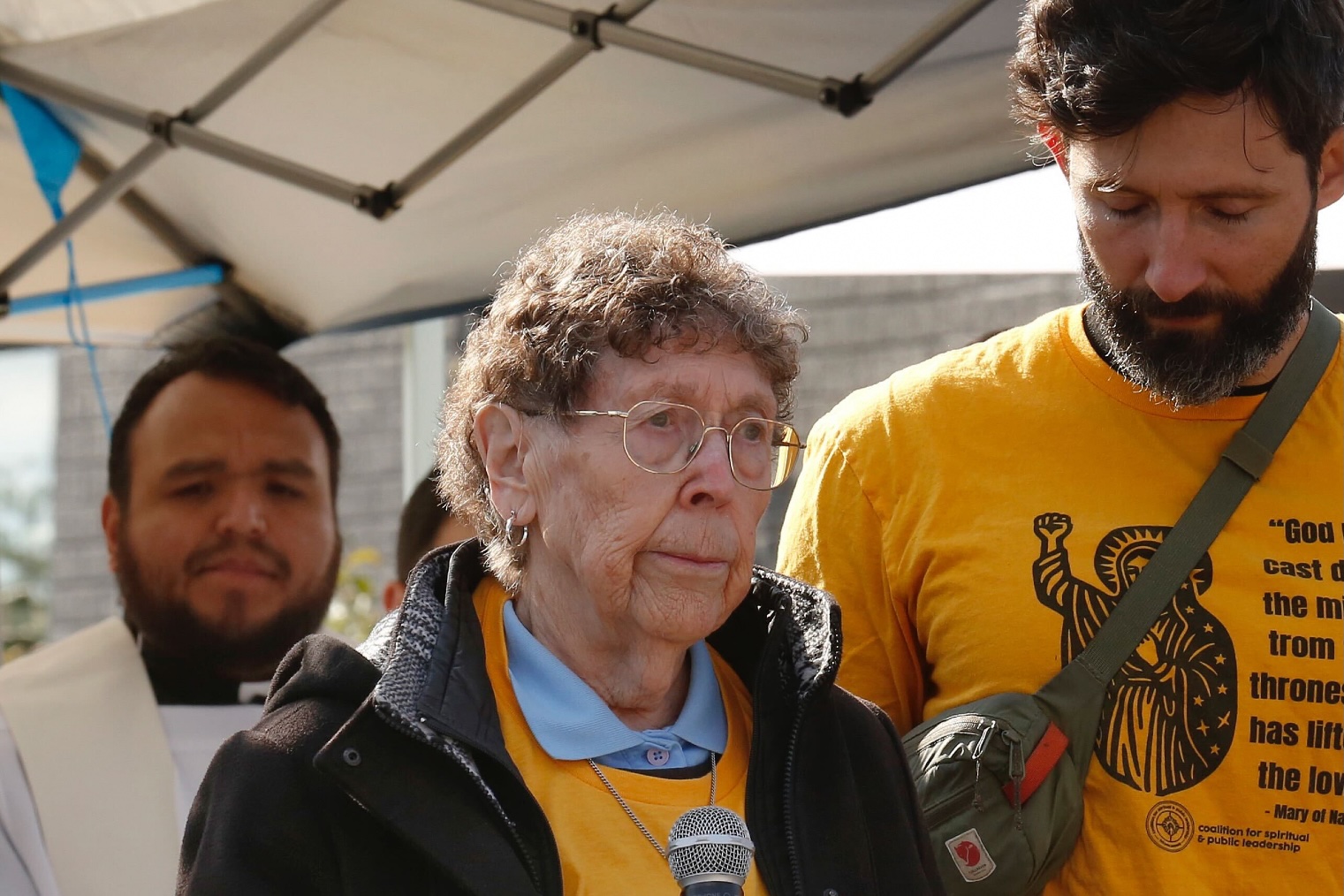
The Mass became silent. “It was a profound moment of tension,” Okińczyc-Cruz recalls.
But instead of striking a match, the silence held the pain and tension. “The silence spanned about two or three minutes, which felt like an eternity,” Okińczyc-Cruz recalls. “It was a moment of prophetic lamentation. Rather than the response being one of shaming, cursing, or yelling, this had a much deeper impact and really allowed the cruelty that was on full display to sink in.”
Days later, Pope Leo XIV himself, a Chicago native, called for “deep reflection” over the treatment of migrants at Broadview.
“After that, we decided, through a process of discernment with our members, board, and staff, to file a lawsuit against the Department of Homeland Security and ICE,” Okińczyc-Cruz shares. “Our lawsuit was based on the grounds that the religious rights of our ministers were being denied. In the months since November, when we filed that lawsuit, a judge has ruled now three times in our case and has granted preliminary injunctions that allow our ministers access to Broadview.”
It takes a real commitment to nonviolence, but I think that’s a sign of the Holy Spirit at work.
—Michael Okińczyc-Cruz

On Ash Wednesday 2026, ministers entered Broadview to offer ashes, communion, and pastoral care. During Holy Week, delegations provided communion and pastoral presence on Holy Thursday, Good Friday, Holy Saturday, and Easter Sunday. On Holy Thursday, one priest washed the feet of fourteen detainees in handcuffs and shackles — echoing Jesus’s act the night before his arrest. Tears flowed from detainees, ministers, and even a security staff member. “It was a very humanizing experience,” Okińczyc-Cruz noted. In a narrative that paints detainees as threats, such encounters reveal parents, grandparents, and community members bearing the image of God.
These actions demand more than courage; they require organizing and spiritual practice. CSPL invests heavily in relationships, listening campaigns, and training that blend organizing skills with contemplative practices. In a diverse, multiracial, multigenerational coalition — from teens to elders like a near-centenarian named Ms. Gladys — organic leaders from local communities model nonviolent discipline. When provocation came, the group held a line of powerful solidarity and lament rather than retaliation. “It takes a real commitment to nonviolence,” Okińczyc-Cruz emphasized, “but I think that’s a sign of the Holy Spirit at work.”
CSPL’s work continues through lead-pipe replacement in low-income areas, economic justice campaigns, and ongoing pastoral-care efforts. Videos and timelines on their site document the journey from procession to injunction to foot-washing. CSPL demonstrates that spiritual formation and public action are not opposites but partners.
Okińczyc-Cruz concludes: “The methodology of faith-based organizing really emphasizes subsidiarity, meaning the people who are most affected by injustice have a distinctive and important role to play. Everybody has the capacity to be a protagonist: an agent of God’s reign.”
Reflect with Us
Michael Okińczyc-Cruz’s story shows how contemplation can shape action — even in moments of tension and injustice. In choosing silence, lament, and nonviolence, a community made space to witness suffering without adding to it. Where might you be invited to respond differently in the face of conflict or provocation? What could it look like to practice presence, restraint, or compassion in a moment that asks for reaction? Share your reflection with us.
We Conspire is a series from the Center for Action and Contemplation featuring wisdom and stories from the growing Christian contemplative movement. Sign up for the monthly email series and receive a free invitation to practice each month.