Hospitality Across Borders
We Conspire is a series from the Center for Action and Contemplation featuring wisdom and stories from the growing Christian contemplative movement. Sign up for the monthly email series and receive a free invitation to practice each month.
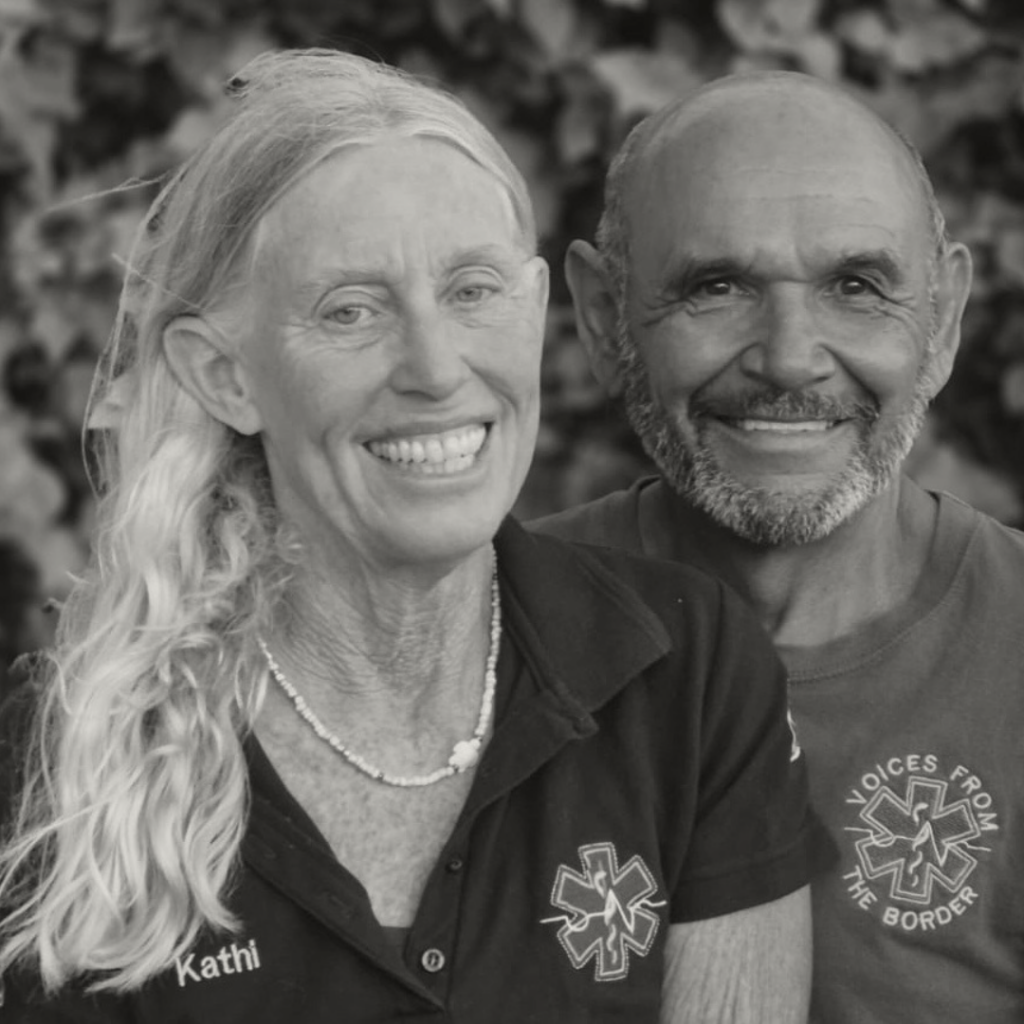
In June 2018, Kathi Noaker and her friend India Aubry crossed the border into Nogales, Sonora, México, with little more than open hearts, basic supplies, and a simple directive: Find a nurse named Pancho. Eventually, their journey became the organization Voices from the Border.
“Find a nurse named Pancho, and he’ll translate for you,” they were told.
It was June 1, 2018. Kathi Noaker and her friend India Aubry were with a group of women who felt called to “do something” for the hundreds of migrants and refugees camped out at the nearby Nogales, Sonora, port of entry in México. They had no idea how to help or what to do but crossed the border equipped with supplies.
“How do we welcome the stranger? I don’t know. Open hearts and minds,” Kathi says matter-of-factly. “It’s pretty simple: We’re humans who care about other humans.”
It didn’t take long for the group to notice a man who was helping people — everyone, it seemed. That had to be Pancho.
They told him about their mutual friend. “We’re here to help,” they shared, and he showed them his “humble ambulance,” a van carrying medical supplies with “Panchito y su Cristina” painted on the side, named after his adult daughter in the United States.

People don’t stop getting hurt or needing medical care just because they are migrating. We want to be a safety net for those people. —Kathi Noaker
There was much in that moment that Kathi couldn’t have fathomed:
That they would return every day for the next several weeks to do whatever Pancho suggested. That this was the beginning of what would become their nonprofit organization, Voices from the Border. Pancho would play an integral role in teaching them how to best serve migrants — a “steep learning curve,” Kathi says, for a group of white American women. That Pancho had defied the odds in the second half of his life.
Francisco Olachea “Pancho” Martin was deported at age 50 after spending 32 years — his entire adult life — in the United States. Growing bitter after having his life uprooted would have been understandable. Instead, he set his eyes on becoming a nurse like his mother, which required him to first earn his high school diploma in México. He paid no mind to the ageism he faced, returning to school in his fifties. He became a nurse to help those on the border who in some way faced the same pain and uprootedness he had endured.
Another thing Kathi couldn’t have fathomed: That this man guiding them around the port of entry, giving them a tour of his ambulance, would eventually become her husband. That they would wed on June 1, 2021, three years from the day they met, and begin a life together in México. That they, together, would spend each day serving those on the border. “It’s a love story in the middle of everything else,” she beams.
The couple just celebrated their five-year wedding anniversary. Both are 67 years old. Retirement is the last thing on their minds.
“The older we get, the more we really just focus on each day because there’s no guarantee for tomorrow,” Kathi says. “Why wouldn’t you do what we do? There’s no magic answer to this. We’re just humans, and we care about other people.”
Since those early days, Voices from the Border has evolved to provide two primary services to migrants south of the U.S.-Mexico border: free rent in one of their four apartments in Nogales, Sonora, which can house up to 28 people and families; and free medical care. “People don’t stop getting hurt or needing medical care just because they are migrating,” Kathi notes. “We want to be a safety net for those people.” In addition to these services, Voices helps meet migrants’ needs ranging from food and rent assistance, small business support, or purchasing school supplies — any way they can help people living their day-to-day lives.
We help people in their moment and hope that moment lasts a lifetime.
—Kathi Noaker, quoting Pancho

This is how it works: India Aubry and her team in Arizona share stories and needs from the border to raise funds and awareness. The Migrant Services Team south of the border, led by México natives Pancho and Norma, decides how to best allocate those funds for migrants in need of housing, medical care, or other services that could propel them forward in life. Kathi carefully tracks the constant flow of dollars converted to pesos for migrants in desperate need — giving the nonprofit a clear, ongoing awareness of exactly what they can and cannot do. The more they help, the more stories there are, which continues to raise awareness for the plights of those on the border — a never-ending cycle of people helping people.
Kathi’s stories are endless. The residents currently living in Voices’ apartments as of June 2026 include: a young man who had migrated with his mom from southern México and was mugged on the way to school one morning, shot, and is now a quadriplegic; a man for whom they helped find a surgeon to remove his gallbladder; a young go-getter for whom Voices purchased a grill with deep fryers so she could start her own business; a woman who was fired from a grocery store because of her disability; and many more stories detailed in their newsletter. Kathi says that they mostly find themselves sitting with families in their grief.
“Migrants are always separated from those they love,” Kathi writes in a recent newsletter. “They leave behind mothers and fathers too elderly to make the difficult journey; sisters, brothers, and sometimes children and grandchildren for whom the journey is too dangerous. They do this all with the hope of reestablishing themselves safely, finding employment, and sending money back home, or saving enough to bring their families to them. These are the guests in our apartments. They have heartache for their homes, their communities, and their country’s once-peaceful past.”

No action of kindness is less than any other action of kindness. Small acts of kindness all add up.
—Kathi Noaker
Kathi’s life looks nothing like it did a decade ago. Pancho’s journey could fill a book. But their life now is simple. They live together with five dogs in an 800-square-foot house in San Carlos, México, which they built during the pandemic. Pancho commutes to Nogales once a month to provide medical care and other services to residents. He talks to residents and the Migrant Services Team for several hours each day to best identify needs and allocate funds. Together, Kathi and Pancho visit two nearby houses each day where dozens of stray dogs and cats congregate. They pet them. They feed them. “No action of kindness is less than any other action of kindness,” she reflects. “Small acts of kindness all add up.”
One of the most difficult aspects of border work is the profound lack of control: people they had helped years earlier now being deported from the United States; the constant stream of stories filled with unfathomable pain; and the overwhelming sense that no matter how much they do, the needs never end. But Pancho has a saying they return to often: “We help people in their moment and hope that moment lasts a lifetime.”
Reflect with Us
Kathi and Pancho’s story reminds us that hospitality often begins with a simple willingness to show up. We may not be able to solve every problem, but we can accompany someone in their moment with presence, compassion, and care. Who in your life or community might need accompaniment right now? What small act of kindness or hospitality could you offer this week, trusting that even the smallest gestures can become part of a much larger story? Share your reflection with us.
We Conspire is a series from the Center for Action and Contemplation featuring wisdom and stories from the growing Christian contemplative movement. Sign up for the monthly email series and receive a free invitation to practice each month.