The Radical Simplicity of Love
We Conspire is a series from the Center for Action and Contemplation featuring wisdom and stories from the growing Christian contemplative movement. Sign up for the monthly email series and receive a free invitation to practice each month.
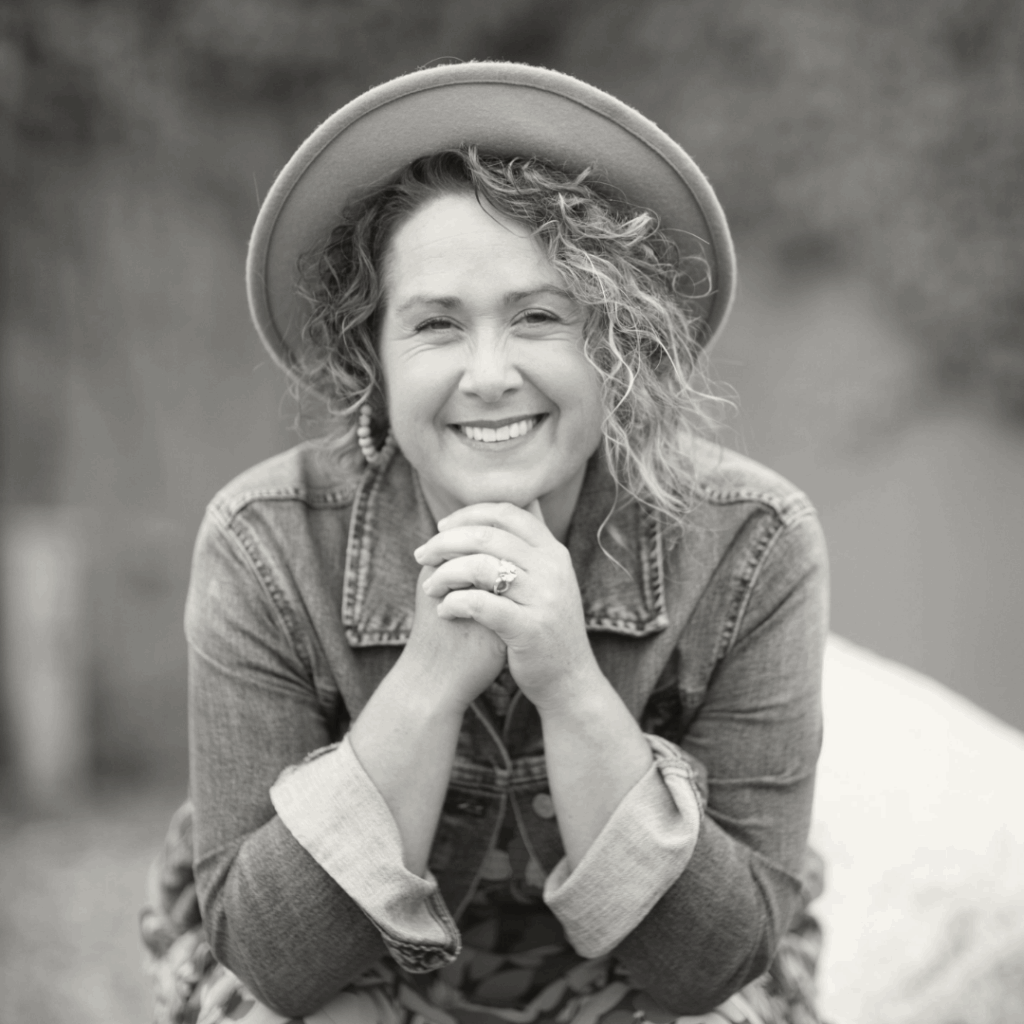
What if simplicity meant putting love first, even in the face of violence? In September’s “We Conspire” series, discover how former soldier Diana Oestreich embraced a radical path of peace through what she calls a “desert baptism” — a moment that revealed the sacredness of individual life and reshaped her faith, her service, and her understanding of what truly matters.
The night before their convoy mission, Diana Oestreich’s sergeant delivered some chilling orders: soldiers were to keep the convoy moving at all costs, even when Iraqi children were pushed in front of American tanks as an ambush tactic.
Oestreich, a medic, had joined the National Guard at age 17 to fund her college education at the University of Minnesota-Duluth. A third-generation enlistee, joining had been more practical than anything. But in 2002, just weeks before completing her six-year commitment, the events of 9/11 upended her plans as she was deployed to the preemptive invasion of Iraq. Now she was being ordered to run over innocent children. What had her life become?
Oestreich lay wide awake in her tent that evening wrestling with her sergeant’s command. This was her crossroads, her dark night, leading to what she would call her “desert baptism.”

The seemingly simple notion that every life was sacred would become the anchor of her faith.
Her Christian beliefs rose to the surface of her mind, but in a much different way from her small-town, Baptist upbringing, or her emotive experience in evangelicalism during high school and college. Her faith was now doing far more than the version of fundamentalism that led her to want to “save unbelievers”; it was animating how she might respond to what was literally a life-or-death situation. Her soul screamed. Her conviction was palpable. If Christianity was anything, wasn’t it loving enemies? Wasn’t it standing up for the “least of these”?
“It felt like lightning crashed in,” she recounts. “I heard this voice say, ‘I love those children, Diana. I love them too.’ All the pressure left. I knew God was love, and I couldn’t ever take a life.”
No lives were lost in the mission, but her desert baptism led to a new outlook on life, as well as her military service. This seemingly simple notion — that every life was sacred — would become the anchor of her faith.
In the village of Al-Awja, Oestreich encountered a frail newborn named Mohammed, fighting for his life with each breath. The baby’s grandmother, Olm Hassan, pleaded for help. Oestreich’s superiors did not want to get involved, but Oestreich invoked the Geneva Convention’s mandate that requires a medic to take action when any life, limb or eyesight is in danger. She stood her ground, insisting the baby be treated. She could almost hear that divine voice again: I love this child, Diana.
Everything going on today is an opportunity for people to transform their theology from a small tribal God to a living God. Can’t we all agree that a loving God would not say that your child doesn’t deserve to live? —Diana Oestrich

With Olm Hassan by her side, she navigated checkpoints and bureaucratic pushback to get Mohammed to a hospital. “I was praying, ‘Keep breathing, keep breathing,’” she recalls. “If I brought a dead baby back to that village, it would’ve broken their hearts.”
Mohammed received the medical treatment he needed, and the village erupted in celebration when Oestreich and Olm returned with a healthy child. Women adorned Oestreich with perfume and jewelry. “That grandmother showed me what waging peace looks like,” she says. “She was the only person I saw being Jesus on that battlefield. A brown Muslim woman showed me what love on the cross looks like.”
Oestreich’s worldview was forever reshaped. Oestreich had learned in Iraq that to wage peace on this earth was to care for every human life — to elevate the voices of the forgotten.
“I’m part of the 8 billion now,” she says, referring to the global human family. “Nobody’s disposable anymore. I don’t have to demonize anyone to prove my loyalty.”

The biggest, most sacred, holiest thing we can ever do is be with people. —Diana Oestrich
During the pandemic she published her first book Waging Peace: One Soldier’s Story of Putting Love First. She became involved with Red Letter Christians (RLC), a non-denominational movement founded by Tony Campolo and Shane Claiborne that seeks to combine Jesus and justice and “de-funk” American Christianity. At RLC gatherings and events, Oestreich could provide unique insights on the militarism ingrained in American culture and how Christians could become “conscientious objectors” in a system that could sometimes turn violent in its focus on profit and demonization of the other. At one RLC gathering, they melted guns into garden tools, a powerful metaphor demonstrating how nonviolence can cultivate new growth and connection to creation.
For Oestreich, it all goes back to her desert baptism and the transformative power of one life: one innocent child being spared in a mission; one infant that is always worth saving, even if that means putting rank and reputation on the line. “It’s not idealistic,” she says; “It’s just the gospel.”
“This all leads us to ask the question: Are we really okay with even one child being killed in Gaza? One child being starved to death?” Oestreich says. “God cares about the sparrows and the hairs on our heads. Everything going on today is an opportunity for people to transform their theology from a small tribal God to a living God. Can’t we all agree that a loving God would not say that your child doesn’t deserve to live?”
Oestreich turns around. It’s one of her sons, her middle one, adopted from Ethiopia, knocking on her office door. She lets him in and introduces him. “His middle name is Emmanuel,” she beams, “which means God with us. The biggest, most sacred, holiest thing we can ever do is be with people. But it requires us to leave our houses and maybe leave all of our disagreements at the door and just be with others. That’s the path to transformation.”
Reflect with Us
What does it mean to choose simplicity when the world demands complexity — can you name one belief, habit, or fear you might release to make space for love? Share your reflection with us.
“We Conspire” is a series from the Center for Action and Contemplation featuring wisdom and stories from the growing Christian contemplative movement. Sign up for the free monthly email series and receive your invitation to practice each month.