The Castle Within
We Conspire is a series from the Center for Action and Contemplation featuring wisdom and stories from the growing Christian contemplative movement. Sign up for the monthly email series and receive a free invitation to practice each month.
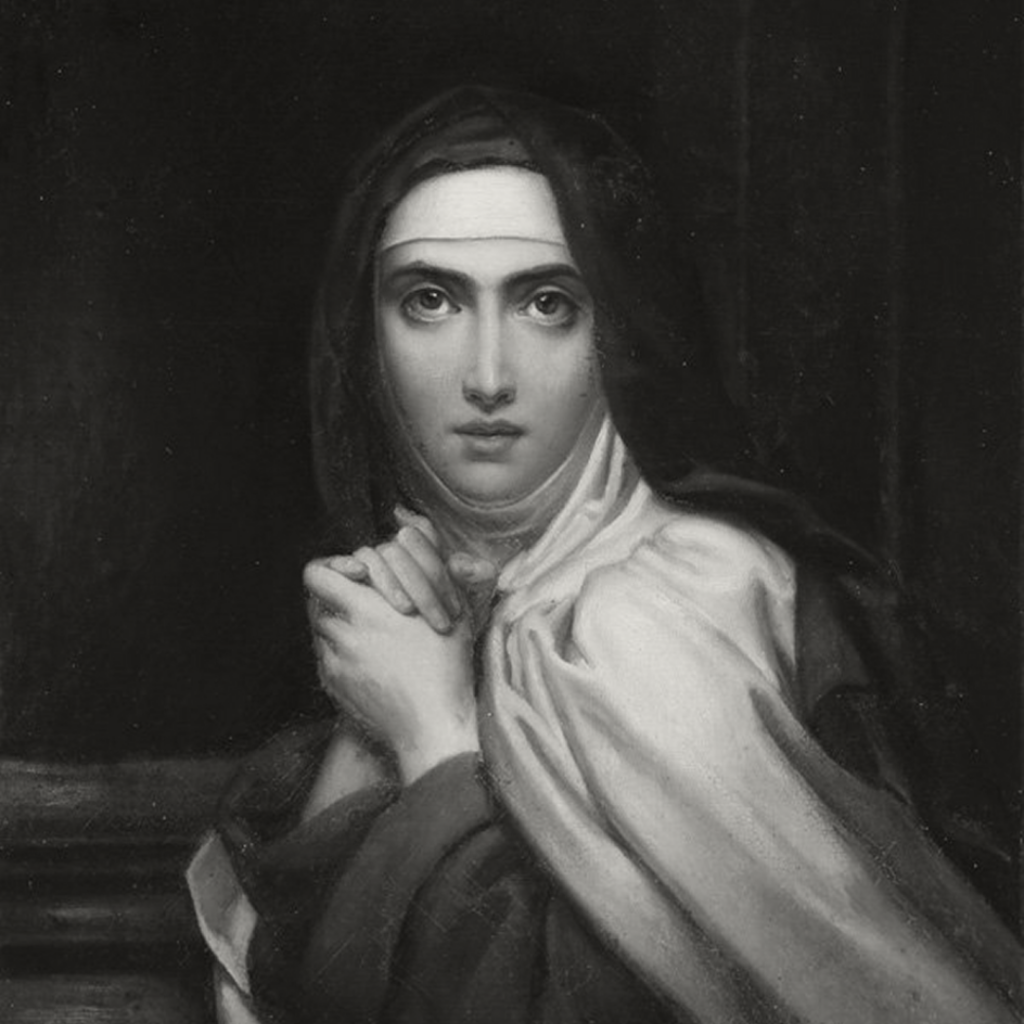
Sixteenth-century Spanish mystic St. Teresa of Ávila (1515–1582) models in her life and writing that tears and struggle can be our guide into a deeper awareness of divine union. Divine love can continue to flow through us, regardless of our circumstances.
St. Teresa of Avila’s Interior Castle is one of the classics in Christian mystical literature, detailing one’s interior journey into union with God. She wrote this transformative and timeless text during one of the most perilous periods of her life. How do one’s tears lead us into greater solidarity with the world’s suffering? It is almost as if Teresa is saying to her readers, “Journey into the soul.”
Teresa of Avila faced immense scrutiny during the era shaped by the Spanish Inquisition, which enforced Catholic orthodoxy and prosecuted those guilty of heresy. Decrees by the Spanish monarchs led to forced conversions and expulsions of Jews and Muslims. Teresa’s Jewish family had experienced this trauma firsthand, as her grandfather was “accused of secretly practicing his ancestral Jewish traditions, which resulted in his family being publicly shamed.” [1] She had also been sent to a convent at age sixteen because of an unknown scandal. We don’t know the circumstances, except that she was initially a bit of a troublemaker. She shocked her family by deciding she wanted to join the convent and profess her vows as a nun. [2]

Teresa’s vision of the soul is of “a castle made exclusively of diamond … [that contains] a multitude of dwellings, just as in heaven there are many mansions.”
In her late forties, decades into religious life, she initiated a reform movement for her community known as the Carmelites. She sought to return the religious order to its roots of prayer and voluntary poverty. Needless to say, her work—which she undertook with her friend Juan de Yepes Alvarez, St. John of the Cross—ruffled feathers. She wrote her autobiography in her early fifties, which came under formal investigation of the Inquisition [3]; she also experienced coinciding spells of visions and raptures, which heightened Inquisition suspicion and triggered deeper investigation. Her reform efforts were opposed and she was forced into involuntary retirement for a time.
Imagine her anguish: Her reform project was under fire. Her writing was being examined. Her very faith that had transformed her and the vocation that had formed her were attacked. But it was also during this intense and trying period that she penned Interior Castle.
Teresa’s vision of the soul is of “a castle made exclusively of diamond … [that contains] a multitude of dwellings, just as in heaven there are many mansions.” [4] The interior castle contains infinite depth and is endlessly exploratory, and Teresa wrote about our inner heavenly mansions during a time when her life seemed to be caving in. She remained hopeful while facing scrutiny. It is no wonder her spiritual brother was close friend and fellow Carmelite reformer St. John of the Cross, author of the poem and book Dark Night of the Soul. Was she in her own dark night? Most likely, yet still she dared follow the faintest of lights through her interior castle halls and rooms into awareness of divine union.
James Finley puts Teresa’s positive vision of the soul this way: “She uses this metaphor of a castle that our soul … being such as it is created by God … has a quality that it’s elegant, it’s vast, it’s mysterious, it’s graced, it’s luminous, it’s inherently holy. This is the mystery of your soul… that God lives inside of you in the innermost hidden center of yourself. Therefore, if we think of heaven as where God lives, and if God lives in you, then you’re God’s heaven. That is, you’re the one in whom God takes his delight. You’re the one in whom God delights, the beloved of God, God’s heaven.” [5]
You’re the one in whom God delights, the beloved of God, God’s heaven. —James Finley

As we journey inward into the early rooms of the “interior castle,” Teresa writes that we confront reptiles there, blocking the way. James Finley describes these as “habits of the mind and heart that compromise union that we’re looking for.” [6] One reptile we confront is the limitations we place on ourselves, the tendency to define ourselves by our circumstances rather than by how God is loving us. Finley continues, “We tend not to see the God-given godly nature of ourselves subsisting in God, sustained in God … it’s not that we’re imagining our challenges, our problems, our crises, and our struggles… It isn’t that these aren’t real. They are real… It’s just that we go around imagining that these conditions we’re in have the final say in who we are.” [7]
Teresa dared to write these words for others, to articulate this liberating journey into divine union, even while other words she had written were being investigated. She did not allow her tumultuous circumstances to dictate who she knew herself to be in Christ. Her soul was God’s heaven. “What a marvelous thing,” Teresa wrote in another work, “that He who would fill a thousand worlds and many more with His grandeur would enclose himself in something so small.” [8]
Teresa models in her life and writings that despite turbulent personal circumstances, struggle can become a pathway to intimacy with God. The inevitable suffering of life finds us all, and embarking on a contemplative journey requires facing our own struggles of heart and mind. When we dare to move like Teresa into deeper awareness of our own union with God, we venture deeper into the inner castle. We discover God has chosen to dwell, by some mystery, in this inner heaven.
References:
[1] Mirabai Starr, Wild Mercy: Living the Fierce and Tender Wisdom of the Women Mystics (Sounds True, 2019), 17.
[2] Starr, Wild Mercy, 19.
[3] Carlos Eire, The Life of Saint Teresa of Avila (Princeton University Press, 2019), 41.
[4] Teresa of Ávila, Interior Castle, trans. Mirabai Starr (Riverhead Books, 2003), 35.
[5] James Finley, “Teresa of Avila: Session 1,” Turning to the Mystics (podcast), Center for Action and Contemplation, June 22, 2020, audio, 32:00, https://cac.org/podcasts/teresa-of-avila-session-1/.
[6] Ibid.
[7] Ibid.
[8] Teresa of Ávila, The Collected Works of St. Teresa of Ávila, vol. 2, trans. Kieran Kavanaugh and Otilio Rodriguez (Institute of Carmelite Studies Publications, 1980), 144.
Reflect with Us
St. Teresa of Ávila reminds us that struggle, confusion, and even tears can become part of the journey inward. When we move honestly through our challenges rather than around them, we may discover a deeper awareness of God’s presence within us. Where might your own struggles be inviting you deeper into your “interior castle”? What would it look like to trust that God’s love remains present even in seasons of uncertainty or difficulty? Share your reflection with us.
We Conspire is a series from the Center for Action and Contemplation featuring wisdom and stories from the growing Christian contemplative movement. Sign up for the monthly email series and receive a free invitation to practice each month.