The Bible as Good News for a Fractured World
Our world is deeply fractured. We see the symptoms all around us. We see it in politics. We see it in social media. We see it in our families and denominations. Those fractures couldn’t come at a worse time. We need to come together as never before to address our environmental and climate crises, to resist authoritarian movements that have the power of billionaires, the power of social media and AI, at their disposal to divide us further and further. We need to come together to explore better ways of living with ourselves, with one another, and with this sacred, beautiful earth.
One of the weapons we see people use in our hostilities and fragmentation is the Bible. Many of us have been wounded by the Bible wielded as a weapon. Many of us have wielded the Bible as a weapon ourselves and wounded others. Many of us have just stayed away from the Bible entirely because it feels like something dangerous—a sharpened sword, a loaded gun, a ticking time bomb, a toxic recipe…. But if we learn to read the Bible in conversation with our honest experience and in light of our living traditions, we can learn and model a better way.
Throughout the 2026 Daily Meditations, we are looking at the Bible in new and fresh ways—as good news for a fractured world. Let me mention three of those new and fresh ways.
First, we are not reading the Bible as if it were a divinely dictated book that descended out of heaven on a parachute. Instead, we are reading the Bible as a set of precious literary artifacts that have emerged in the unfolding story of humanity. We are taking seriously the historical, social, ecological, economic, and political contexts of the Bible, and we are digging deep for needed ancient wisdom to help us today.
Second, we aren’t reading the Bible as if it were a manual to help people dominate and exploit the earth and other people. It certainly has been and is being used in that way, but we are instead exploring the Bible for inspiration—for creative and nonviolent resistance to that kind of domination and exploitation.
And third, we aren’t reading the Bible as if it were an evacuation plan, preparing us to give up on the earth and be beamed up to heaven. Instead, we are exploring the Bible as a prompt for both deep contemplation and for deep, loving action.
We are seeking to approach the Bible contemplatively, quieting our kneejerk reactions, exposing our deep-seated biases, challenging our untested assumptions, and leading us to see the divine in creation, in our own hearts, and in one another. And, especially in the life and teaching of Jesus, we see a call to a special kind of action in the world—nonviolent action, creative action, Christlike action where leadership looks like service and where the power of love outlasts and overcomes the love of power.
Reference:
Adapted from Brian D. McLaren, 2026 Daily Meditations Theme: Good News for a Fractured World, Center for Action and Contemplation, video.
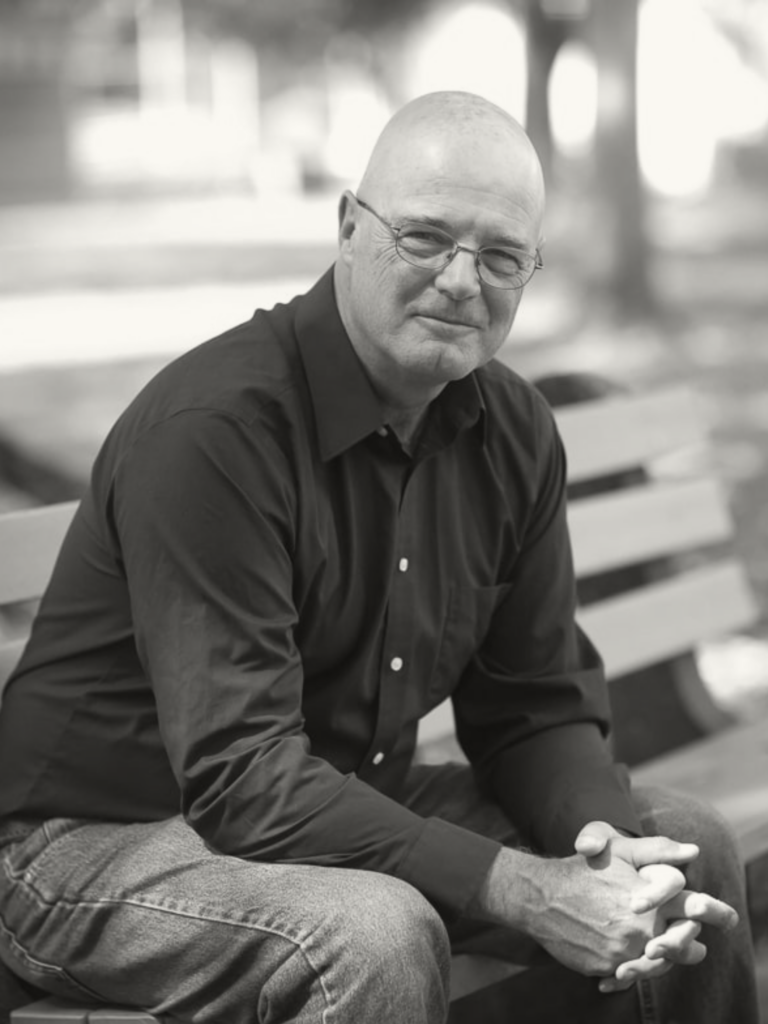
Dr. Brian McLaren is a core faculty member at the CAC. He is an author, speaker, activist, and public theologian. A former college English teacher and pastor, he is a passionate advocate for “a new kind of Christianity” that is just, generous, and working with people of all faiths for the common good.
The Center for Action and Contemplation’s mission is to introduce Christian contemplative wisdom and practices that support transformation and inspire loving action. In this issue of the Mendicant, we are honored to share with you articles from five members of CAC’s community about what loving action looks like in their lives.