Seeds of Climate Justice Rising
We Conspire is a series from the Center for Action and Contemplation featuring wisdom and stories from the growing Christian contemplative movement. Sign up for the monthly email series and receive a free invitation to practice each month.
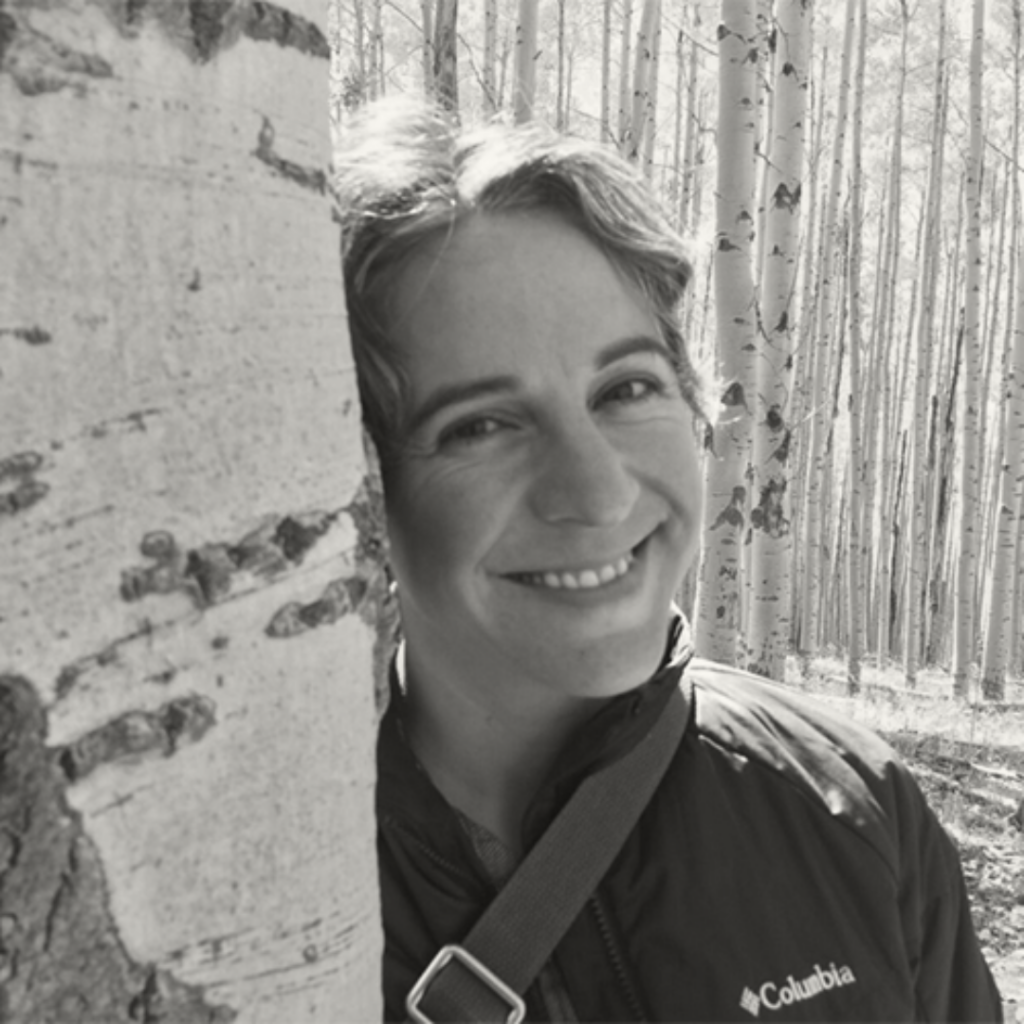
Amid rising climate instability and political setbacks, Desirée Bernard of New Mexico Interfaith Power and Light roots her action for climate justice in her faith. Her work demonstrates the urgency of ecological justice and the enduring hope that small acts of hope can grow into transformative change.
There’s a line from the Greek poet Dinos Christianopoulos that Desirée Bernard has often returned to: “What didn’t you do to bury me / but you forgot that I was a seed.”
“I actually feel emotional when I say that quote,” says Bernard, the executive director of New Mexico Interfaith Power and Light, which mobilized people to reduce the causes and consequences of global climate change. “We are living in profoundly challenging times for anybody who cares about responding to the climate crisis and healing our planet. In the United States, it really feels like being in the belly of the beast. Our nation’s global influence is making things worse instead of better in a time when people and ecosystems all over the world are already suffering from the ravages of a destabilized climate, and the call to change is clear.”
In January 2025, the United States reversed its climate policy by withdrawing from the decade-old Paris Agreement, expanding fossil fuel production and infrastructure, and pulling back from clean-energy investments. One year later, the U.S. federal government repealed the scientific and legal foundation for greenhouse gas regulation under the Clean Air Act and rolled back emission limits and clean energy mandates — a combined action that Environmental Protection Agency administrator Lee Zeldin called the “single largest act of deregulation in the history of the United States.” The regression has negatively impacted various aspects of local climate efforts, forcing chapters of Interfaith Power and Light (IPL) around the country to work harder amid reduced federal support and policy headwinds. Bernard and her team in New Mexico face unique challenges, the state ranking second in the U.S. in oil production and in the top five for natural gas, while also ranking in the top three for poverty. These conditions make for difficult, top-heavy political dynamics, with oil and gas exerting an oversized influence in decision-making.

They tried to bury us; they didn’t know we were seeds.
—Dinos Christianopoulos
“Unfortunately, the oil and gas industry’s influence on our legislative body against forward-thinking solution is very intense in our state,” Bernard shares. Landmark climate change legislation has failed for two years in a row in the state’s senate. Bernard says the oil and gas industry’s grip on New Mexico politicians sometimes echoes an unhealthy patronizing dynamic. Even environmentally conscious politicians point toward the revenues from the oil and gas industry — framing them, for example as providing for early childhood education — as a necessary tradeoff for the state’s bottom line. They treat the issue as if it were a zero-sum scenario instead of a deep call to creative engagement and dynamic, innovative leadership.
“Recently an attendee at one of our events took the mic to ask a question and stated how important it is not to bite the hand that feeds you,” says Bernard. “But we need to be able to speak honestly about what needs to be done; to tell the truth about the destruction that is clearly resulting from our ongoing dependence on burning oil and gas. And we need to be laser-focused on transitioning away from fossil energy as quickly as possible. It sometimes feels like we, as a public, fail to hold these industries accountable for anything. That dynamic will break, though, because it’s dysfunctional.”
Most people really just want to move forward good things that take care of people, land, and water — those elements that we know are fundamental to wellbeing.
—Desirée Bernard, New Mexico Interfaith Power and Light

Daunting as the environmental challenges are — deepening daily with the explosive growth of energy-hungry AI data centers — Bernard remains hopeful. She holds close to her heart the legacy of her grandmother, who epitomized the opening quotation. After surviving with other Londoners in the Underground (subway) during Adolf Hitler’s Blitz in the Second World War, Bernard’s grandmother, Jessie, escaped to the United States in the 1940s. She became one of the most stable forces in Bernard’s upbringing.
“Despite having an intense lived experience of authoritarianism and violence, she metabolized that into a worldview that was grounded, coherent, and healthy,” Bernard reflects. “She had a good appreciation for what human beings need, what the right role of government is, and how important it is to participate in democracy and build healthier communities through participation. She was grounded in both the ethics of community and democracy. She helped plant the seeds of a positive worldview that shaped my understanding of how to engage in the world in a healthy way.”
Bernard continues: “There’s something that gets passed from generation to generation through our ancestors, and we too are becoming ancestors. What we plant now will nurture a good that can be relied on in the future. That brings us full circle, back to being seeds. We’re just regular people, right? Most of us are not billionaires calling the shots. Despite the manufactured polarization that we see today, most people really just want to move forward good things that take care of people, land, and water — those elements that we know are fundamental to wellbeing.”
At the beginning of this year, Bernard and other staff of New Mexico IPL undertook a 25-day walking pilgrimage from Carlsbad to Santa Fe, arriving at the State Capital on Climate Solutions Day to advocate for courageous and moral action from leaders. In their walking and in their prayers, they sowed many seeds that they hope will help grow the collective movement toward climate justice and ways of living that honor the earth as sacred and irreplaceable.
“There is this idea of emergence — that each one of us finds a way to speak the truth we know and to join together with others working in synergistic ways. And until some of this fever breaks,” Bernard concludes, “we’re sowing seeds that will someday provide shade for future generations.”
Reflect with Us
Desirée Bernard’s story reminds us that even in times of uncertainty and setback, small acts of faithfulness can become seeds of hope, rooted in contemplation. Where might you be invited to act with care and courage, even if the impact feels small? What seeds of hope are you inspired to plant as love for the future?
Share your reflection with us.