Listening for the Sound of the Genuine
We Conspire is a series from the Center for Action and Contemplation featuring wisdom and stories from the growing Christian contemplative movement. Sign up for the monthly email series and receive a free invitation to practice each month.
How do we discern what is ours to do? This reflection on Howard Thurman’s 1980 “The Sound of the Genuine” speech invites us to deep listening to ourselves and each other. When we attend to the music within, we discover vocation as a harmony in which divine love, identity, and communion with others takes shape.
At the end of his life St. Francis of Assisi said, “I have done what is mine [to do]; may Christ teach you what is yours!” [1] This call stirs questions: How do we discern what is ours to do? How do we know it is real and true? Thomas Merton names the complex landscape of discernment at the start of his famous prayer in Thoughts in Solitude: “The fact that I think I am following your will does not mean that I am actually doing so.” [2] Discernment can feel disorienting and dizzying. It requires a mystic’s guidance to move beyond our lust for answers and linear progress toward the inner self where we are formed by Love in contemplation.
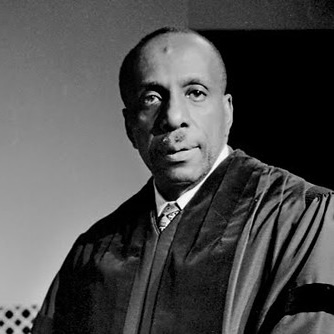
There may be no better commentary on the profound movement of discernment than Christian mystic Howard Thurman’s 1980 baccalaureate speech at Spelman College, “The Sound of the Genuine.” Given one year before he passed away, Thurman’s 45-year-old speech, worth listening to in full, continues to invite those seeking what is theirs to do into spiritual depth and a discovery of discernment that is connected to the core of who they are.
Thurman (1899-1981) learned about the genuine from his grandmother, whose spirituality was anchored in human dignity despite being enslaved on a plantation in Madison County, Florida. He was one of the most important and under-appreciated theologians of the Civil Rights movement era, and it is said that Martin Luther King Jr. carried with him on his travels a Bible, the U.S. Constitution, and Thurman’s 1949 book Jesus and the Disinherited. [3] Thurman’s 1980 speech brings together some of life’s most fundamental spiritual questions around identity, vocation, and how to listen for and receive the sound of the genuine in our lives.

“There is in every person, something that waits and listens for the sound of the genuine.”
—Howard Thurman
Christian mystics through the centuries have been trying to find language for the intersection of divine union and identity, essential components of spiritual discernment. Thurman’s recurring call in his speech arises out of an inner posture that leads to continual movement and growth throughout a person’s life. Thurman echoes throughout his speech: “There is in every person, something that waits and listens for the sound of the genuine.” [4]
For Thurman this waiting and listening for the sound of the genuine, or, the “song of the river,” is as essential as the air we breathe. After sharing a parable that concludes with the story of a pewter maker who once knew the “song of the river” — where “every piece of pewter he fashioned was an expression of an inner dream he had about the creative possibilities of a pewter” — but became muted over time amid marriage, parenting, and market demand for more pewter, Thurman cautions: “If you cannot hear it, you will never find whatever it is for which you’re searching. And if you hear it, and then do not follow it, it were better that you had never been born.” [5]
This severe warning is cushioned by the reality that the sound of the genuine is always there, accessible to the spiritual seeker who waits and listens. Contemplation makes way for listening and receiving a sound that has never ceased. “You may be famous,” Thurman continues. “You may be whatever the other ideas are that are part of this generation. But you know that you don’t have the foggiest notion who you are, where you’re going, what you want… Cultivate the discipline of listening to the sound of the genuine in yourself.” [6]
“I must wait and listen for the sound of the genuine in you. I must wait.” —Howard Thurman

This tension and difficulty to hear is simply part of what it means to be human in a complex, noisy world. In 1935, Thurman wrote of “the dilemma of genuineness as the underprivileged man faces it” and the difficulty of truly being oneself “in a world-society built on subterfuge and deceit.” [7] In other words, in the context of his 1980 speech, sometimes we, like the pewter, mute the song of the river. Other times the cruelty of the world mutes the song. Yet it rises nonetheless to be received by those willing to pierce through the noise via waiting and listening.
But the contemplative movement that Thurman shares with Spelman graduates does not stop with the individual. Listening to the sound of the genuine is relational. “There’s something in everybody that waits and listens for the sound of the genuine in other people,” [8] Thurman builds in his speech. It’s easy, he cautions, to write someone off, to conclude the sound of the genuine cannot possibly rise up in a particular person believed to be “other.” Thurman encourages: “I must wait and listen for the sound of the genuine in you. I must wait. For if I cannot hear it, then in my scheme of things, you are not even present.” [9]
This practice of deep listening, for Thurman, opens us up to receiving the sound of the genuine even in people and places we may least expect. As we learn to “incline the ear of the heart,” as Pope Francis encouraged, [10] the song of the river, once subtle as a whisper, may begin to sound more like a choir of waterfalls. Our own presence and commitment to listening for the sound of the genuine becomes its own affirmation to the presence of others — that we see them, hear them, and dare to know and understand them. Thurman concludes his speech with a beautiful, mystical depiction of harmony: “Now if I hear the sound of the genuine in me, and you hear the sound of the genuine in you, it is possible then for me to go down in me, and come up in you. So that when I look at myself through your eyes, having made that pilgrimage, I see in me what you see in me. And the wall that separates and divides will disappear. And we will become one, because the sound of the genuine makes the same music… There is that in every person that waits, waits, and listens for the sound of the genuine in other people. And when these two sounds come together, this is the music God heard when he said, ‘Let us make man in our image.’” [11]
How do we discern what is ours to do? Thurman’s speech invites an interior journey, animated by listening, that gives birth to a genuine song. We will know it when we hear it. We will sing it when we know it. And we will hear it being sung in places where we could not hear it before.
Reflect with Us
Howard Thurman reminds us that discernment begins not with certainty, but with listening. Beneath the noise of expectation, urgency, and fear, there is something within each of us that waits for the sound of the genuine — a truth about who we are and how we are called to live in relationship with others. Where in your life might you be invited to pause and listen more deeply? What part of you is waiting to be heard? Share your reflection with us. Share your reflection with us.
We Conspire is a series from the Center for Action and Contemplation featuring wisdom and stories from the growing Christian contemplative movement. Sign up for the monthly email series and receive a free invitation to practice each month.
References:
[1] Francis of Assisi, quoted by Thomas of Celano, “The Remembrance of the Desire of a Soul,” chapter 162. See Francis of Assisi: Early Documents, vol. 2 (New City Press: 2000), 386.
[2] Thomas Merton, Thoughts in Solitude (Farrar, Straus and Giroux, 2011), 79.
[3] Rev. Otis Moss III, interview by Krista Tippett, “The Sound of the Genuine: Traversing 2020 with ‘the Mystic of the Movement’ Howard Thurman,” On Being, October 15, 2020, podcast audio, https://onbeing.org/programs/rev-otis-moss-iii-the-sound-of-the-genuine-traversing-2020-with-the-mystic-of-the-movement-howard-thurman/.
[4] Howard Thurman, “The Sound of the Genuine” (Baccalaureate ceremony, Spelman College, May 4, 1980), The Howard Thurman Digital Archive, https://thurman.pitts.emory.edu/items/show/838.
[5] Ibid.
[6] Ibid.
[7] Howard Thurman, “Good News for the Underprivileged,” Religion and Life 4 (Summer 1935): 403–9, Papers of Howard Thurman Project, https://www.thurmanpapersproject.org/documents/472.
[8] Thurman, “The Sound of the Genuine.”
[9] Ibid.
[10] Pope Francis, “Message of His Holiness Pope Francis for the 56th World Day of Social Communications: ‘Listening with the Ear of the Heart,’” Vatican.va, January 24, 2022, https://www.vatican.va/content/francesco/en/messages/communications/documents/20220124-messaggio-comunicazioni-sociali.html.
[11] Thurman, “The Sound of the Genuine.”