Let Your Heartbreak Be Your Guide
We Conspire is a series from the Center for Action and Contemplation featuring wisdom and stories from the growing Christian contemplative movement. Sign up for the monthly email series and receive a free invitation to practice each month.
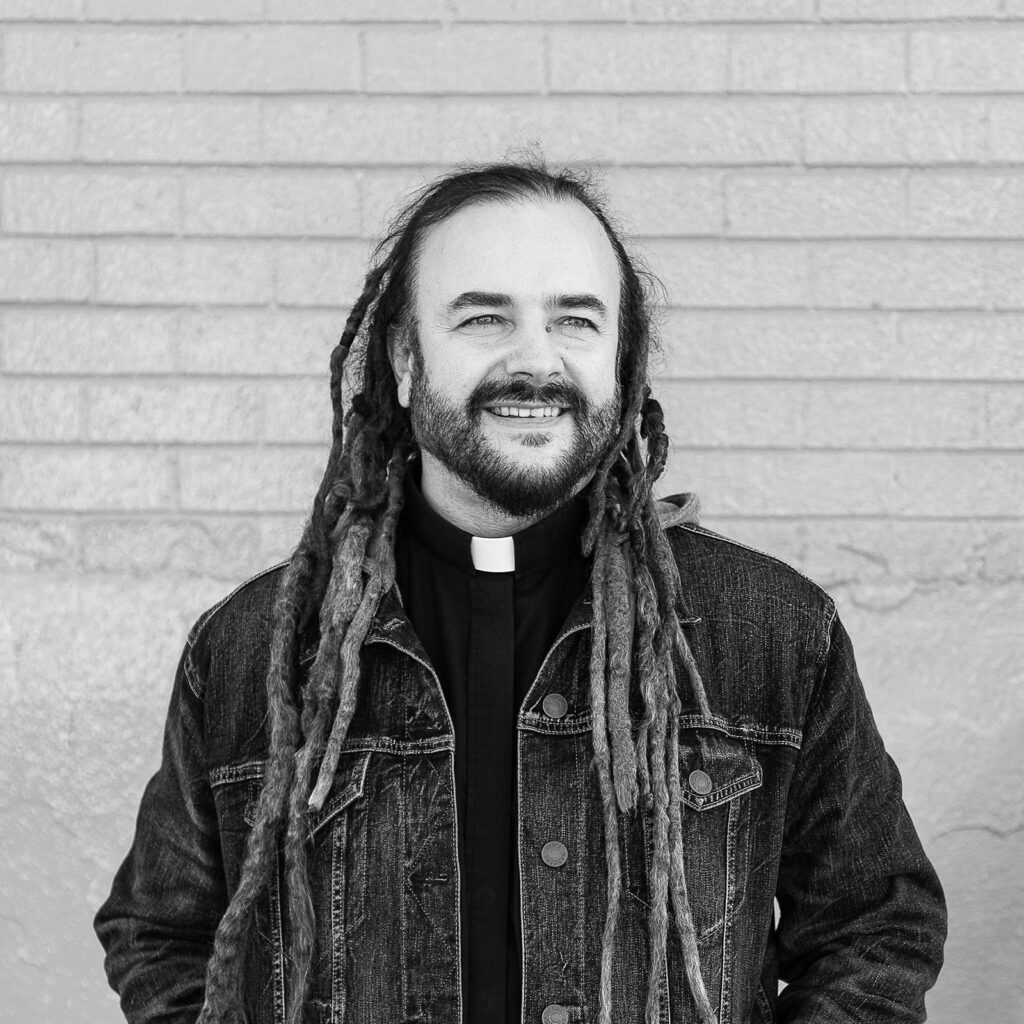
For Father Adam Bucko, Episcopal priest and Director of the Center for Spiritual Imagination, tears soften us into deeper solidarity with the world when we bring them to God in prayer. When we dare to name what lies beneath our tears and rest in God’s presence in powerlessness and trust, something shifts. Our heartbreaks become gifts, and through them we begin to discern our unique offering to a wounded world.
While co-facilitating a retreat in upstate New York for unhoused youth, Adam was approached by a young woman named Ebony who sought spiritual guidance. “Painful things from her past were beginning to come up for her during the retreat,” Adam writes in his 2022 book Let Your Heartbreak Be Your Guide, “and she had difficulties expressing them. Seeing her pain and how difficult it was for her to give words to her years of private suffering, I encouraged her to go for a walk around the chapel and try to find three objects in nature that represented some of what she was feeling.” One of the items Ebony returned with was a flower yet to bloom. [1]
“I am like this flower,” she shared with him. “From the outside no one knows that this flower has the potential to be beautiful, to offer fragrance, and to bloom, unless they look inside. One day I know I will bloom, but I don’t seem to be able to get there.” [2]

Every time I allowed myself to feel at a loss in the face of the pain I witnessed, every time I touched my own irrelevance, there was this energy of God that would begin to emerge in our midst. All I had to do was say yes to it. —Adam Bucko
After listening to Ebony, feeling the weight of the pain she carried, and also feeling a sense of his own helplessness, Adam invited her to take the three objects into the chapel and spend time in silent prayer. Later, she came running toward him, visibly changed. Holding up the same flower she had shown him earlier, she said that as she prayed with her eyes closed, the struggles she had been unable to name seemed to dissolve into relief and peace. When she opened her eyes, she saw that the flower in her hands had opened and bloomed, mirroring the image she had used to describe her own longing.
If Ebony’s story is a map, it is not only for her. It is also for Adam.
Over the years, he accompanied young people on the streets, sitting with their pain and trying to respond in ways that were both compassionate and effective. He saw some return to the streets, others become lost there, and some killed in cycles of violence he could not stop. He watched the social sector struggle to respond, at times creating programs that unintentionally bypassed the very wounds they were meant to address. Again and again, he found himself confronting the limits of what he could fix or prevent. At times, it felt like hitting a wall. There were many tears in the process. He later reflected on this turning point in a chapter of his book titled, “Claiming Our Irrelevance So God Can Be Relevant.”
“Deep down, I really believed that I was there among the homeless fixing their lives,” admits Adam. “Until one day I realized that what I was doing was not really working. Kids were going through our programs and still ending up on the street. Kids were going through our programs, and they were still just one step from being hurt or even killed by a drug dealer or pimp. That is when I was forced to change. I started feeling helpless, and my confidence was shattered.” [3]
When we dare to name what lies beneath our tears and rest in God’s presence in powerlessness and trust, something shifts.

The tears did not pull him away from the work. They brought him closer to what the real work was. In allowing himself to feel helpless, he found himself standing in deeper solidarity with those he served. The illusion that he could fix everything began to fall away. “As a result of the crisis I underwent, my work evolved from a highly praised, solution-oriented, and evidence-based practice into something much more intuitive. It really moved into prayer,” he writes. Helplessness did not go away, but he stopped trying to push it aside. As he learned to stand there without answers, the need to control began to soften, and he became more attentive to what God might be doing between him and those he served.
“And what I began discovering is that every time I allowed myself to feel at a loss in the face of the pain I witnessed, every time I touched my own irrelevance, there was this energy of God that would begin to emerge in our midst. All I had to do was say yes to it. The presence of God was there, always ready to pick up the broken pieces from the floor and re-assemble them into something good, into something wholesome. And when that happened, it was often not clear who was helping whom. Because in each of those sacred moments I received just as much as I was giving, if not more.”
In those sacred moments, he describes that something fundamental had shifted. What remained was not a need to prove effectiveness or secure visible outcomes, but a deeper attentiveness to Presence.
“All of this has to start with each of us,” Adam concludes in the final pages of his book. “It has to start with my commitment to a practice of prayer. All of this has to start with my adopting a way of life that can help me grow and nourish my spiritual life, including being in a community of accountability and mutual support, so that I may become God’s hands and feet and microphone for healing and justice.” [4]
Reference:
[1] Adam Bucko, Let Your Heartbreak Be Your Guide: Lessons in Engaged Contemplation (Orbis Books, 2022), 10.
[2] Bucko, Let Your Heartbreak, 10.
[3] Bucko, Let Your Heartbreak, 115–116.
[4] Bucko, Let Your Heartbreak, 128.
Reflect with Us
Fr. Adam Bucko’s story reminds us that heartbreak does not have to push us away from the world. When we bring our grief, helplessness, and tears into prayer, they can soften us into deeper compassion and solidarity with others. What hurt in your life might be asking for your attention right now? What might happen if you brought that place of tenderness honestly into prayer and allowed it to guide you toward love? Share your reflection with us.
We Conspire is a series from the Center for Action and Contemplation featuring wisdom and stories from the growing Christian contemplative movement. Sign up for the monthly email series and receive a free invitation to practice each month.