Honra y Dignidad
When I first heard of Don Félix, it wasn’t through a neighbor or a church. It was on the evening news. They called him “el perro del junker”—the dog of the junkyard—because that’s where he lived, in a small Puerto Rican apartment beside a car lot, watching over it so nothing would get stolen. The story ran for a night, stirred pity for a moment, and then disappeared. Months later, nothing had changed. He was still abandoned, still alone, still stigmatized.
That’s when we stepped in.
At our nonprofit, we feed more than 300 elderly people every week. But food is only the beginning. We hold their hands in the hospital, we pray with them as they fade, we bury them when no one else will. Our calling is not simply to meet needs but to restore honra y dignidad.
For Don Félix, this meant something as basic—and as holy—as fixing his toilet. His bathroom had a hole in the floor where waste dropped into the crawlspace below, filling his home with flies. With a team of volunteers, we crawled under his apartment, through human excrement, to connect the pipe to the city sewage. It was undignified work, yet it restored dignity.
Félix is brutally honest about his past. He was an alcoholic, an abusive husband, an absent father. “I proved I should be alone,” he told us, “and yet here you are, dealing with my shit.” His words are both confession and revelation, because in him, I don’t see an addict or abuser. I see a man who still laughs, who still hopes, who is slowly rebuilding relationships. Just this week, one of his sons came back into his life. Felix Jr. is trying, just like his dad.
This is what “a more just and connected world” looks like—not erasing the past but refusing to let the past define someone’s worth. Not romanticizing suffering but confronting it with stubborn love.
Gustavo Gutiérrez, father of liberation theology, once said: “To know God is to do justice.” [1] Justice in Félix’s case looks like driving him to therapy, sharing meals in his cluttered home, insisting he is not a throwaway human being.
And as the Apostle Paul reminds us: “If one member suffers, all suffer together with it; if one member is honored, all rejoice together with it” (1 Corinthians 12:26).
Across Puerto Rico, countless elders share his story. Loneliness, poverty, and preventable illness haunt their final years. Suicide rates rise, families vanish. But with the support of our community, another way is possible. We are learning that justice is rarely clean. It smells like sewage, it asks for courage, it requires us to wade into the mess. But when we do, we discover that dignity is contagious—it doesn’t just restore one life, it restores us all.
This is how a more just and connected world is built: one repaired toilet, one reconciled family, one stubborn act of love at a time.
Reference:
[1] Gustavo Gutiérrez, A Theology of Liberation (Orbis, 1973), 118.
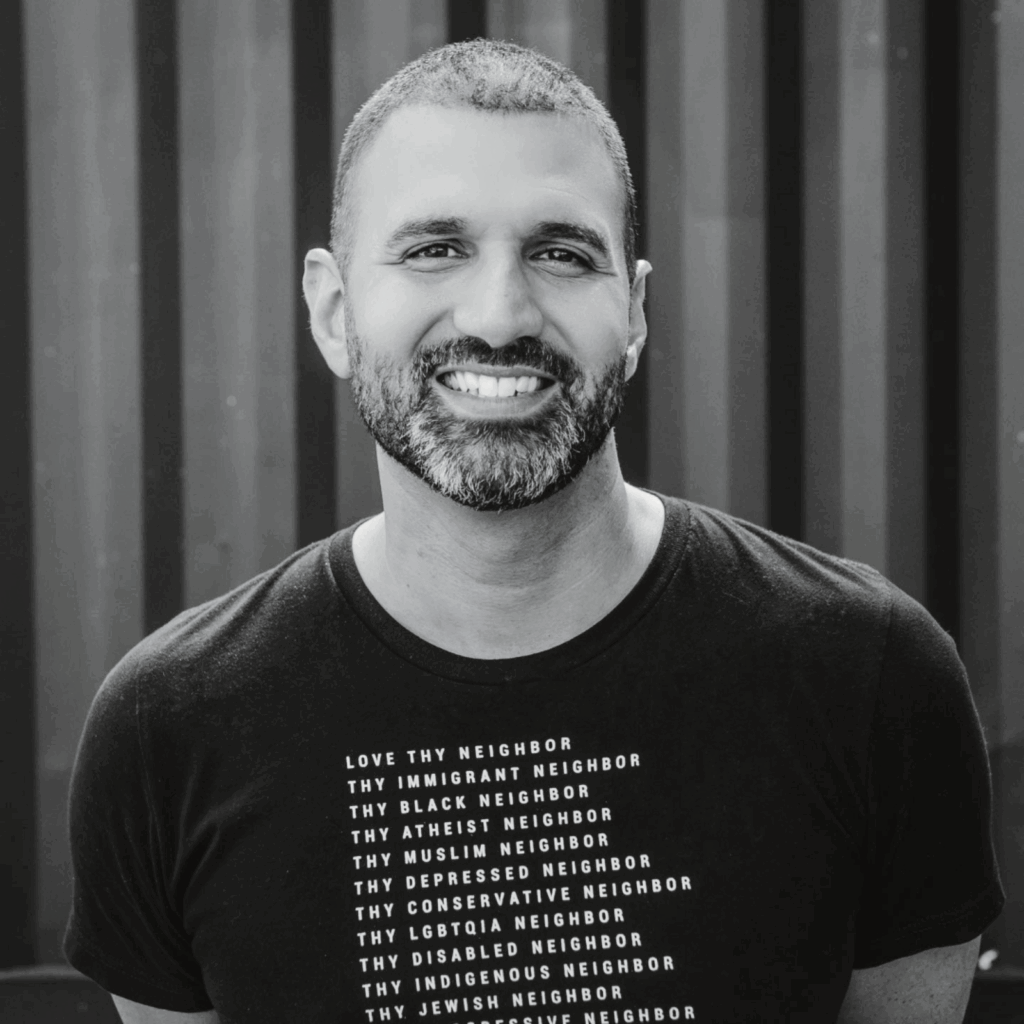
Carlos A. Rodríguez is the founder and director of The Happy Givers, a Puerto Rico–based non-profit feeding elders, rebuilding homes, and cultivating community farms with honra y dignidad. Join him in Puerto Rico at TheHappyGivers.com.
The Center for Action and Contemplation’s mission is to introduce Christian contemplative wisdom and practices that support transformation and inspire loving action. In this issue of the Mendicant, we are honored to share with you articles from five members of CAC’s community about what loving action looks like in their lives. Download a PDF of this issue.