A Heart Converted by the Poor
We Conspire is a series from the Center for Action and Contemplation featuring wisdom and stories from the growing Christian contemplative movement. Sign up for the monthly email series and receive a free invitation to practice each month.
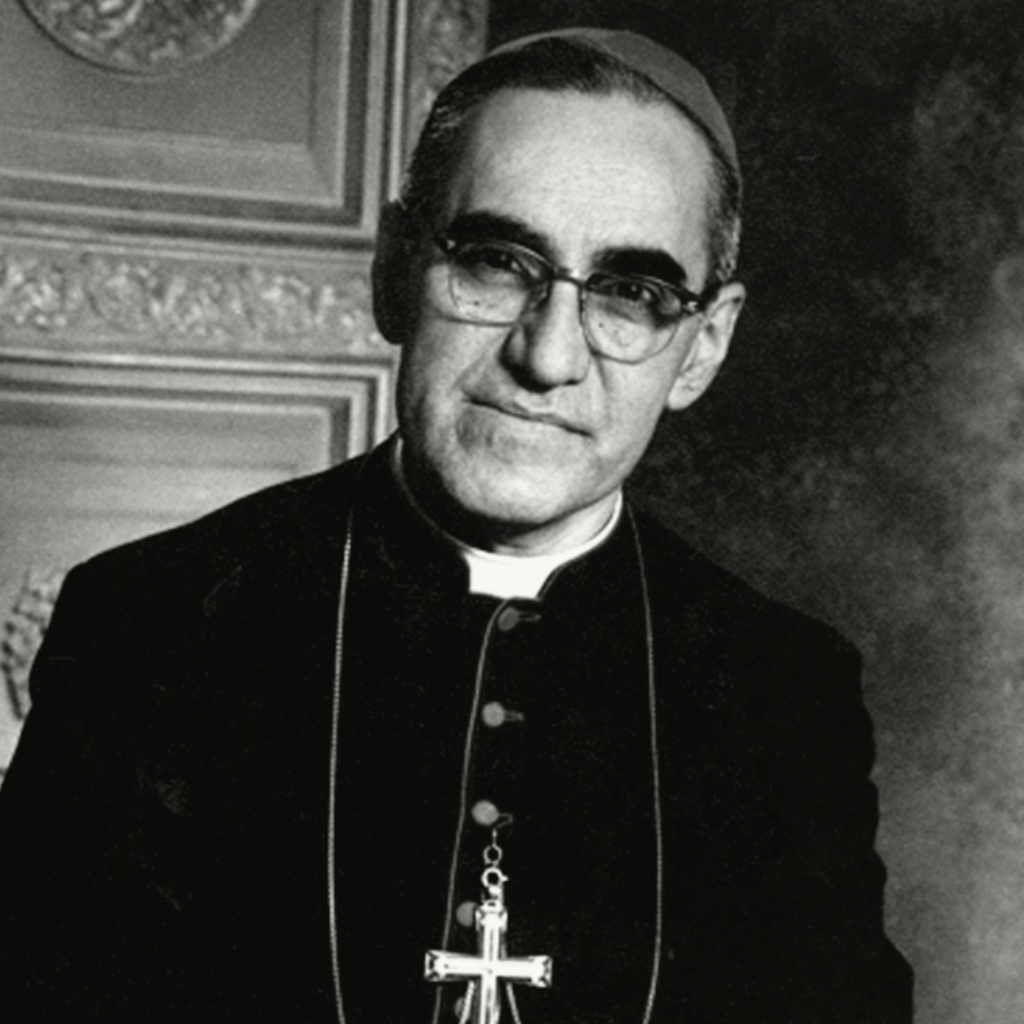
For decades, Salvadoran priest Óscar Romero stood firmly on the sidelines — an orthodox figure wary of social activism and suspicious of Marxist influences in the Roman Catholic Church. Then, in a few short years, he became one of the most powerful voices for the poor in Latin America, paying for it with his life.
Priest Óscar Arnulfo Romero y Galdámez was completing his doctorate in Rome when his bishop summoned him home to El Salvador amid the intensifying hardships of World War II. Romero’s country also faced social and political unrest as military-backed parties manipulated politics and key institutions. A tiny percentage of the population controlled most wealth and land. The country was hurtling toward chaos and eventual civil war.
But for decades, Romero remained on the sidelines of social activism.
Throughout the 1940s and 1950s, Romero served as a parish priest in the diocese of San Miguel. He was known for his orthodoxy and piety. In the 1960s and 1970s, he rose in leadership within the Salvadoran Catholic hierarchy and served as editor of the archdiocesan newspaper, where he held an editorial line against social reform. With the rise of communism, Romero expressed concerns about the infiltration of Marxist ideas into Church teaching. He criticized social-focused reforms at a Jesuit high school in San Salvador as “demagoguery and Marxism.” [1] But around 1974, when he was named bishop of the rural diocese of Santiago de María, things began to change.
As bishop, concerned that many of the poor slept outside in the cold, he opened an old school for them to sleep in. Romero would visit them, learn, and receive their stories. As Fordham University professor Michael Lee says of Romero’s time at Santiago de María, “One begins to see an opening, a widening, of Oscar Romero’s vision as to what the circumstances in his country were.” [2] In 1977, as polarization and violence continued to heighten, and as more Salvadoran priests were committing themselves to social change, the Church hierarchy named Romero archbishop of the capital city of San Salvador. Church leadership believed he would remain silent and refrain from criticizing the government.
El Salvador was reaching its tipping point — and even though he did not know it, so was Romero.
One month after Romero was named archbishop, his friend — a Jesuit priest named Rutilio Grande García — was assassinated for courageously taking a stand against the land-hoarding practices of elite landowners. In response, a new Romero stepped into the limelight.

One begins to experience faith and conversion when one has the heart of the poor, when one knows that financial capital, political influence, and power are worthless, and that without God we are nothing.
—Óscar Romero
Romero began to ask some hard questions about the Church’s role in the world. He wondered what his role should be as governmental atrocities continued. He began to question his previous apolitical leanings.
Early in his time as archbishop, he boycotted the inauguration of President General Carlos Humberto Romero Mena because of widespread electoral fraud and the 1977 Plaza Libertad Massacre, where security forces killed dozens to hundreds of peaceful political demonstrators. Romero’s boycott was an unprecedented act that would set the tone for his tenure as archbishop. He also formed an archdiocesan office staffed with lawyers and researchers who were tasked with investigating human rights abuses in El Salvador.
Romero’s perspective on the Church’s role evolved significantly throughout the 1970s. Whereas Romero was previously wary of liberation theology, in his pastoral letters he began openly aligning the Church with the poor. Romero once told farmers attending Mass, “You are the image of the divine victim, ‘pierced for our offenses.’” [3] Sin became not only personal, but structural: anything that did not advance God’s reign on earth.
Romero’s Sunday homilies (often lasting an hour or more) were broadcast live on the Archdiocesan radio station and became the most popular radio program in the country. It was also a trusted source of news, as Romero would report on abuses that the state-run media censored. More priests and leaders took up the mantle, which led the government to print flyers plastered with this propaganda: “Be a patriot! Kill a priest!” [4]
Romero was politically assassinated while celebrating Mass on March 24, 1980, at the Chapel of the Hospital de la Divina Providencia in San Salvador. His courageous journey and witness invite prayerful wrestling with God, an open-mindedness toward the Spirit’s guidance, and a pursuit of justice that centers the poor and marginalized. In the words of Romero: “That is when one begins to experience faith and conversion: when one has the heart of the poor, when one knows that financial capital, political influence, and power are worthless, and that without God we are nothing.” [5]
Reflect with Us
Óscar Romero spent years on the sidelines of social change before something shifted. As he listened more closely to the lives and suffering of the poor, what once felt distant became impossible to ignore. Where might you find yourself staying on the sidelines of something that matters? What might be inviting you to move closer — not with certainty, but with openness and a willingness to be changed? Share your reflection with us.
We Conspire is a series from the Center for Action and Contemplation featuring wisdom and stories from the growing Christian contemplative movement. Sign up for the monthly email series and receive a free invitation to practice each month.
References:
[1] Kathleen Manning, “ Óscar Romero’s Saintly Struggle for Justice,” National Catholic Reporter, October 1, 2018. Accessed May 8, 2026.
[2] Michael Lee, Óscar Romero: Saint of Liberation, narrated by Michael Lee (Learn25, 2017), Audible audio ed.
[3] Jon Sobrino, Witnesses to the Kingdom: The Martyrs of El Salvador and the Crucified Peoples (Orbis, 2003), 28–31.
[4] Kevin Clarke, Oscar Romero: Love Must Win Out, People of God (Liturgical Press, 2014), 79.
[5] Oscar Romero, The Violence of Love: The Pastoral Wisdom of Archbishop Oscar Romero, compiled and translated by James R. Brockman, S.J. (Fount, 1989), 147.