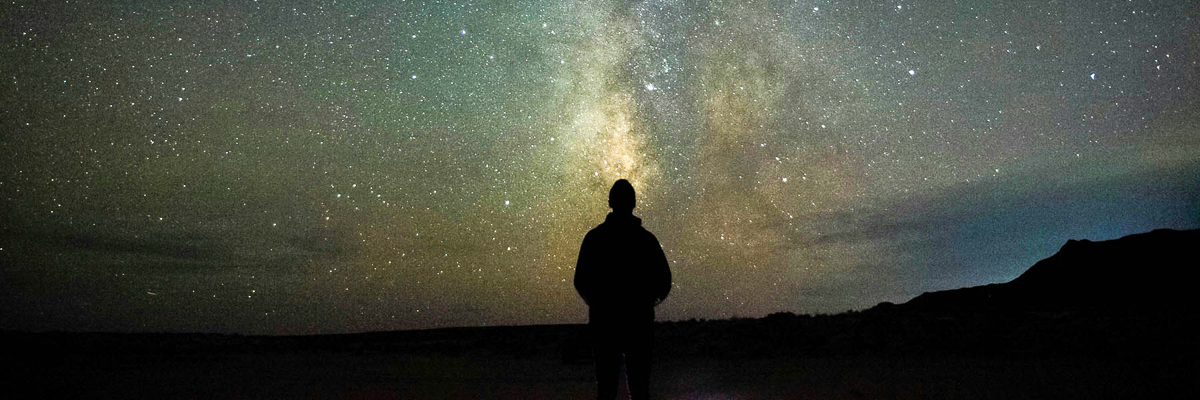
CAC Dean of Faculty Carmen Acevedo Butcher translated The Cloud of Unknowing, the foundational text for Centering Prayer. Contemplative practice creates space for us to be with God, after which we return to our daily lives and commitments. The anonymous author of The Cloud encourages beginners to enter contemplation with these simple instructions:
Lift up your heart to God with a gentle stirring of love. Focus on him alone. Want him, and not anything he’s made. Think on nothing but him. Don’t let anything else run through your mind and will. Here’s how. Forget what you know. Forget everything God made and everybody who exists and everything that’s going on in the world, until your thoughts and emotions aren’t focused on reaching toward anything…. Let them be. For a moment don’t care about anything….
Everyone on earth has been helped by contemplation in wonderful ways. You can’t know how much…. So stop hesitating. Do this work until you feel the delight of it. [1]
The author urges beginner contemplatives to welcome the temporary experience of “unknowing” that takes place in this type of prayer:
The first time you practice contemplation, you’ll only experience a darkness, like a cloud of unknowing. You won’t know what this is. You’ll only know that in your will you feel a simple reaching out to God. You must also know that this darkness and this cloud will always be between you and your God, whatever you do. They will always keep you from seeing him clearly by the light of understanding in your intellect and will block you from feeling him in the sweetness of love in your emotions. So be sure you make your home in this darkness. Stay there as long as you can…. It’s the closest you can get to God here on earth, by waiting in this darkness and in this cloud. [2]
For Acevedo Butcher, contemplation is an essential practice of our time, enabling us to meet the challenging conditions of our lives with greater wisdom and compassion:
We need contemplation because, as our globe gets more crowded by the hour, more and more we act like elbow-to-elbow passengers in cheap coach seats on a commuter flight…. Who doesn’t rush through the day? Who never feels the pressure to produce? How often are you in cyberspace? Our new frantic pace is like poison to our holding hands with those we love. That is where contemplation comes in. It reconnects us to ourselves, to God, and to others. It helps us learn to forgive and heal our souls….
For the first sixteen centuries of the Christian church, contemplative prayer was the goal of Christian spirituality, and now in our own time of transition and upheaval, … we are returning to our roots. Contemplative prayer is more relevant than ever before. More and more of us are practicing this ancient form of prayer and finding peace in a world of war, extreme political divide, epidemics, terrorism, technology, overcrowding, noise, inequality, and a Church in need of humility. [3]
References:
[1] The Cloud of Unknowing, trans. Carmen Acevedo Butcher (Shambala, 2018), 12–13.
[2] The Cloud, 13.
[3] Carmen Acevedo Butcher, introduction to The Cloud of Unknowing, trans. Carmen Acevedo Butcher (Shambala, 2018), xxix, xxx.
Image Credit and inspiration: Patrick Hendry, untitled (detail), 2015, photo, Unsplash. Click here to enlarge image. A person stands in a contemplative “just this” moment with the night sky.


Story from Our Community:
Every morning I enjoy quiet time, reading and just “being.” Yesterday, I noticed cobwebs on the window that looks out at nature: my deck, plants, birds, and trees. My initial reaction was to get a broom and wipe them away. Then I noticed baby spiders, a mama nearby, and the beautiful intricacy of the web. It was a “just this” moment. I am grateful that I am beginning to wake up, really see, and feel the joy.
—Joan V.

