With Scripture, we’ve … been invited to a centuries-long conversation with God and God’s people that has been unfolding since creation, one story at a time.
—Rachel Held Evans, Inspired
Public theologian Rachel Held Evans (1981–2019) recounts the historical circumstances that led to the creation of the Old Testament:
Our Bible was forged from a crisis of faith. Though many of its stories, proverbs, and poems were undoubtedly passed down through oral tradition, scholars believe the writing and compilation of most of Hebrew Scripture, also known as the Old Testament, began during the reign of King David and gained momentum during the Babylonian invasion of Judah and in the wake of the Babylonian exile, when Israel was occupied by that mighty pagan empire….
While the circumstances of the exiled Israelites may seem far removed from us today, the questions raised by that national crisis of faith remain as pressing as ever: Why do bad things happen to good people? Will evil and death continue to prevail? What does it mean to be chosen by God? Is God faithful? Is God present? Is God good?
Rather than answering these questions in propositions, the Spirit spoke the language of stories, quickening the memories of prophets and the pens of scribes to call a lost and searching people to gather together and remember.
The Bible can be understood as a call to remember our shared humanity:
This collective remembering produced the Bible as we know it and explains why it looks the way it does—foreign yet familiar, sacred yet indelibly smudged with human fingerprints. The Bible’s original readers may not share our culture, but they share our humanity, and the God they worshipped invited them to bring that humanity to their theology, prayers, songs, and stories.
And so we have on our hands a Bible that includes psalms of praise, but also psalms of complaint and anger, a Bible that poses big questions about the nature of evil and the cause of suffering without always answering them. We have a Bible that says in one place that “with much wisdom comes much sorrow” (Ecclesiastes 1:18) and in another “wisdom is supreme—so get wisdom” (Proverbs 4:7 HCSB). We have a Bible concerned with what to do when your neighbor’s donkey falls into a pit…. We have a Bible that depicts God as aloof and in control in one moment, and vulnerable and humanlike in the next, a Bible that has frustrated even the best systematic theologians for centuries because it’s a Bible that so rarely behaves.
In short, we have on our hands a Bible as complicated and dynamic as our relationship with God, one that reads less like divine monologue and more like an intimate conversation. Our most sacred stories emerged from a rift in relationship, an intense crisis of faith. Those of us who spend as much time doubting as we do believing can take enormous comfort in that. The Bible is for us too.
Reference:
Rachel Held Evans, Inspired: Slaying Giants, Walking on Water, and Loving the Bible Again (Nelson Books, 2018), 7, 12, 13–14.
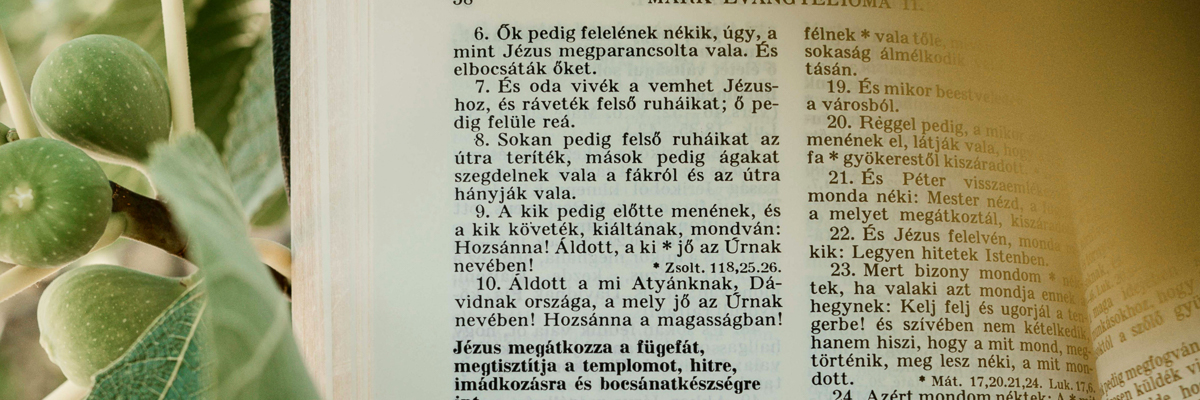
Image credit and inspiration: Image credit and inspiration: Paréj Richárd, untitled (detail), 2021, photo, Unsplash. Click here to enlarge image. Our relationship with the Bible may shift—sometimes clear, sometimes mysterious—yet still holding the promise of a greening, growing thing.


Story from Our Community:
Through my contact with the Daily Meditations as well as books by Richard Rohr, Mirabai Starr, and Thomas Merton, I have come to a “both/and” approach to reality. It also seems to be in sync with scripture. It has brought me a sense of peace, seeing multiple perspectives as a gift rather than a conflict needing a resolution. It has also made me realize that if forgiveness is real, so too are those people and things that have been forgiven. As Fr. Richard might say, “Everything Belongs.”
—F.L.

