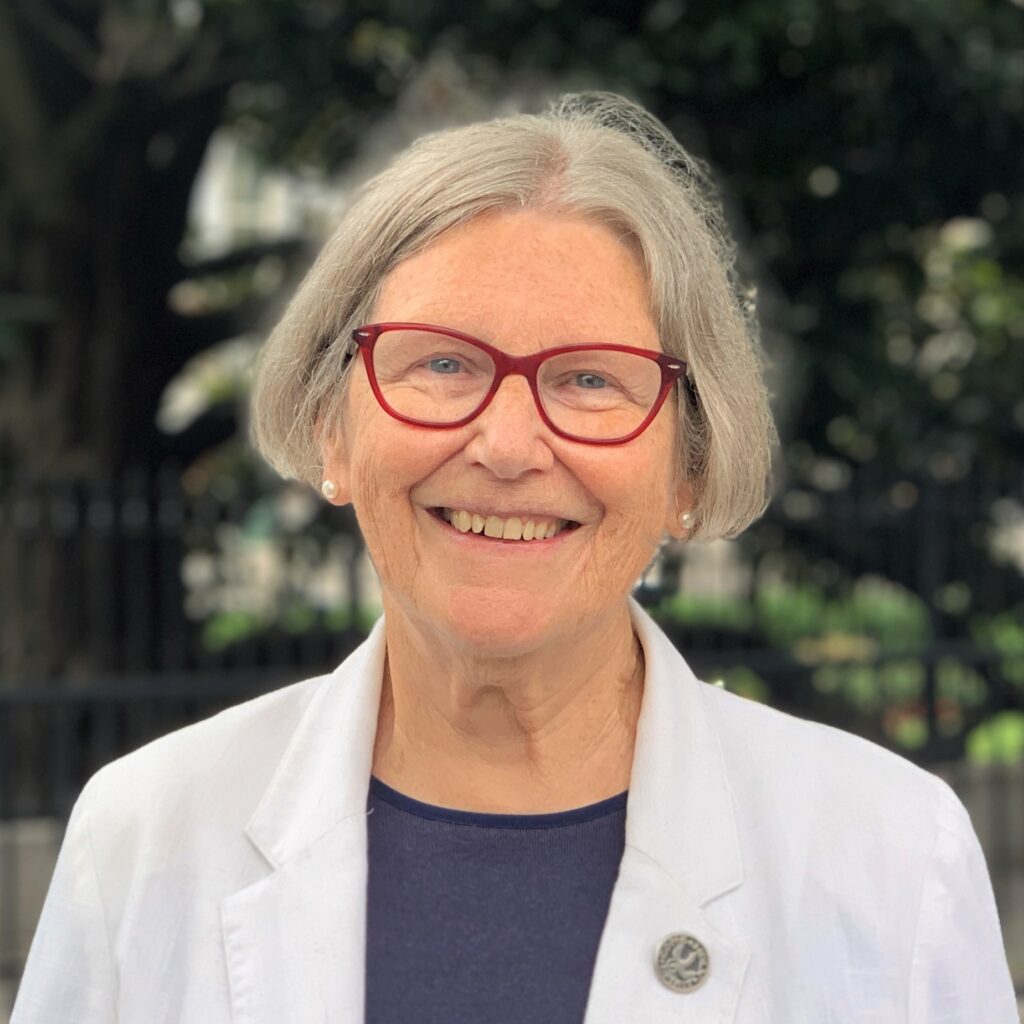
Brian McLaren:
Welcome everyone to this episode of Learning How to See. I’m Brian McLaren. In a previous episode, Father Rafael Garcia used the image of an optometrist. Any of us who wear glasses or have had a vision test, know the experience of being in the optometrist’s office sitting behind this machine where the optometrist gradually adjusts a series of lenses to help you get the right prescription to correct faulty vision. There’s a click and the doctor says, “Is that clearer now? Click again. Is that clearer or less clear? Click again. How about now? This or this? This one or this one.” Some lenses help us see more clearly, others less clearly. Let me mention three lenses that make our seeing worse. One is the lens of authoritarianism. Through the lens of authoritarianism, we look at every person and judge them based on whether they share our allegiance against that common enemy and allegiance to a dictator or a strongman. Authoritarianism always reduces our sight.
Another lens is the lens of scapegoating, where we feel better about ourselves by uniting ourselves and projecting our aggression and shame on some other group of people, making them into an enemy. Authoritarianism reduces the clarity of our vision. Scapegoating reduces the clarity of our vision, so does supremacy, whether it’s based on race, religion, party, ideology, nation. People spend billions of dollars to change the way we see each other through advertising, politics, through propaganda, through the algorithms on social media. And so we all face the constant struggle of having our vision reduced by authoritarianism, scapegoating, supremacy, and no doubt, other bad lenses as well. Our guest today is someone who helps us see more clearly. You might call Sister Simone Campbell, an optometrist of the soul. She’ll help you see more clearly today through eyes of love. I’m so glad you’ve joined us for this episode of Learning How to See.
Welcome everyone. We’re so glad you’re with us for another episode of Learning How to See, and we have my dear friend and someone I’ve learned so much from, Sister Simone Campbell, with us today. I’m so glad also to have my co-host, Carmen Acevedo Butcher. We are going to talk about learning how to see through eyes of love. Simone, before we get started, I wonder if you could just introduce yourself. I wanted to ask you something I’ve never known. How did you become a sister? How’d you become a nun? Maybe tell us a little bit about yourself.
Sr. Simone Campbell:
Oh my gosh, that goes back to the dark ages, Brian, don’t know about that far. In the beginning was the word. No, no. Okay. I grew up in Southern California. I’m a child of the ’60s. My sister and I were very captivated by civil rights and about the quest for justice. That is what motivated me to join my religious community. I’m a sister of social service. And as a sister of social service, my community is all about social work, doing civil rights, being involved in the struggles for justice of the time. That captured my heart. I always joke that Jesus and justice obviously go together because they both begin with J. Hello. And so my commitment to justice has always been motivated by the gospel. I was also educated by the Immaculate Heart Sisters. And some know Sister Corita who was a famous artist who combined the secular world and the quest for justice in such a compelling way. She was a teacher I had at one point.
That’s what got me into community. And then since then, I joined a social work community, but I discovered as a fairly young sister that I wasn’t too good at social work. I’m not patient enough. And so I ended up going to law school and that fit me really well. I went to law school to do public policy, but then at UC, Davis Law School, University of California at Davis, I discovered I liked practicing law. So after I graduated and passed the bar, I set up a low-cost legal service center to serve the needs of the working poor in Alameda County, which is Oakland, California. We served all the high-conflict, low-income family law cases in our county, and it was great.
And then after 17 years, it was like my child, but it wasn’t going away to college, so I knew I needed to leave so it could have new leadership. I ended up being elected to be the head of my community. And then finally after that, I ended up doing public policy first in California and then in Washington DC. That’s where I got a bit of notoriety in the process, at an organization called NETWORK Lobby for Catholic Social Justice. And we did some fabulous work. As they say, the rest was history after that.
Brian McLaren:
Carmen, I wouldn’t be surprised if you were originally introduced to Sister Simone through the rest that was history when she got involved with something called Nuns on a Bus.
Carmen Acevedo Butcher:
Yes, exactly. That’s where I first heard of you, Simone. That was 13 years ago now. 2012. I was like, “Wait, what? A nun on a bus tour?” Honestly, it blew me away. Could you share with us how did that come about and what it was connected to, because a lot of people don’t even know about the Affordable Care Act and the influence you had on that, but share with us some about that. That was an incredible tour. Nine states.
Sr. Simone Campbell:
Right. And I forget how many stops. It was amazing. The way it got started, we have to go back to 2010 and the Affordable Care Act. Our organization, NETWORK, had fought for the expansion of healthcare and the extension to everyone in the country to make sure that those who were too often left out were included. And so we fought for the Affordable Care Act, and there’s all kinds of stories with that. At the end, when all kinds of politics had happened and the only bill that was going to pass was the Senate bill and it had to pass the House, we who had been lukewarm on the bill in the Senate, became ardent supporters like everybody else in the progressive movement in town and supported passing the Affordable Care Act. The folks who had been supporting it and not liking the House bill, they said, “Well, maybe we don’t need it.”
It was politics, politics, politics. But the way we got involved was, the Catholic Health Association came out on a Friday night in favor of the bill. It was supposed to come up for a vote on the following Sunday. We had 10 days. The Catholic Health Association came out in favor. I email and say, “We’ll support you. We stand with you when you get pushback,” because our Beloved Bishop’s conference on 4th Street was opposing the bill. And the reason they were opposing the bill was a lie. The lie was that there was federal funding for abortion in the Affordable Care Act. That was a lie. But staff at the Bishop’s conference was highly identified with conservative politicians in their staff, and so did not want the bill to pass. So they told the Bishops, “Oh, this has a dime for abortion. You can’t support it.”
And so they came out on a Monday saying that, and then our letter came out on Wednesday signed by 58 leaders of Catholic Sisters communities who ran hospitals. They knew the need. And so they said, “We support the bill. This is the right thing to do. This is the pro-life stand.” And there was no federal funding of abortion, 2010. 2012, two years later, they have a long memory. Our organization was celebrating its 40th anniversary, and the question was, “How do we get our name out there? How do we let people know what we’ve been doing on Capitol Hill for 40 years?” We had a small membership of mostly Catholic sisters. As I say, four days later, the Vatican answered our prayer, because what happened was, they named us in the center of the Leadership Conference of Women Religious saying that we promoted radical feminist themes incompatible with the gospel.
And I wanted to say, “Liar, liar, pants on fire. You’ve never talked to us. You don’t know what we do.” But I had been on a retreat in December where I had learned in the spiritual practice to never “fight back” because if you fight back, what happens is you get stuck. You’re pushing back against something. And we always say we’re going to push back against such and so and such and so, but you get stuck. And what I had learned on retreat was to fight for mission. And the effort was to identify what the goal was, where we were going. So rather than fighting the bishops, we used out of our prayer, that moment for mission, and how do we promote our mission?
We had a group of lay folks come together and give us some ideas. It was Pentecost. It was Pentecost. Nobody knows who first said road trip, but at the end of an hour and a half, we were going on the road. We were pushing back against Orion budget, which we had already been doing, and we were lifting up the works of Catholic Sisters because many sisters programs require federal assistance. And the joke name was Nuns on the Bus. I mean, it was funny.
I was afraid it was too funny. And so we created a very serious name, Nuns Drive for Faith, Family and Fairness, but it was a lovely name. But our designer just took Nuns on the Bus and made design for the bus where it was on two-thirds of the bus said Nuns on the Bus. And then what do you do? You surrender. You say, “That’s it.” It’s Pentecost. It’s a gift of the spirit. It was the conflict with the bishops that created the notoriety for us to put focus on the needs of folks too often left out of our consideration in our nation. So that’s how it happened.
Carmen Acevedo Butcher:
That’s just such a great story because there’s a lot of wisdom in taking that negative energy and riding it like a wave. Not oppositionally line of posing it. One of the things that so much impresses me about your life is how you have really prayerfully encountered what Pope Francis calls savage capitalism. Do you know? And you have really, with your legal talents and your verve and your real contemplative heart and practice, have really shown compassion in very daily ways, really showing up. I’m curious, and I’m sure Brian is also, and our listeners, if you could share with us a story perhaps from some time ago or maybe recently, when you were seen through the eyes of love, you yourself.
Sr. Simone Campbell:
Luckily, you asked me this question in advance.
Carmen Acevedo Butcher:
Exactly.
Sr. Simone Campbell:
But the day I got your email, that morning had been Ash Wednesday and I had been up at the Capital Pax Christi Peace Organization, did a special Ash Wednesday celebration. I was up there and introducing myself to some of the people I didn’t know. And this young woman says… I introduced myself as Simone, and she says, “You’re Sister Simone, you’re the one who wrote the books. Oh, my heavens. Oh, my heavens.” Well, she, as a teenager, had read my book and Nun on the Bus. “I made my folks read it and I made everybody read it and it was so great.” We just ended up hugging each other because in that moment in her life, it was a flourishing of gift. We rarely get to hear that kind of feedback, but it’s why who we are, it’s how we’re connected with each other. It was very dear and it was life-giving for me to see how that had influenced her. And now she’s here in DC doing a comms job for one of the faith-based organizations, which is like, “Isn’t that cool? That’s so cool.”
Carmen Acevedo Butcher:
That’s very cool. And a teenager. I mean, that’s gold. That’s gold. That’s beautiful story, Simone. Beautiful. Thank you for sharing it.
Sr. Simone Campbell:
Oh, thanks for asking.
Brian McLaren:
Simone, when I think about your influence, there are two different realities that come to my mind as your friend. First is that you are a woman of a deep contemplative practice. And I think something that deep contemplative sharing common is they don’t like to talk about it because it’s a personal thing. I wanted to mention that because it’s true of you. I’ve seen it at close range. But the second thing that comes to mind is not only are you deeply contemplative, but you’re deeply courageous. You understand that there are powers at work in this world and you aren’t afraid to name the forces that are hurting people and that are keeping people at bay and keeping people’s dreams suppressed for a better life.
Sr. Simone Campbell:
Or are just being cruel.
Brian McLaren:
Or just being plain cruel. That’s it. In this season of Learning How to See, we’re talking about learning how to see through eyes of love. One of the things that I think you do in a strong, clear and disarming way, Carmen mentioned that term from Pope Francis, Savage Capitalism. But when I think about how savage capitalism makes people see other people and see the earth, they don’t see other people in the earth through eyes of love, they see people through eyes of profit, through eyes of exploitation and so on so often. And not only that, but we have not only savage capitalism, but we have a savage nationalism and savage racism and so many other isms that are working to keep people from seeing other people.
One of the things you did on the bus and that I’ve seen you do just through our friendship, is you take seriously listening to people. Your tours on the bus have been listening tours. Whenever I would hear you write about or speak about one of those tours, you would tell people stories, the people you heard. I wonder if you could talk about that a little bit, maybe in a way of helping people understand that there are these forces of a savage capitalism, nationalism, racism and so on, and religious supremacy too, that are keeping us from hearing and seeing one another as beloved siblings.
Sr. Simone Campbell:
It is really hard that we don’t listen to each other. I’ve come to think of it, Brian, as a loss of our sense of community that our individualism creates walls between us. But what you were saying made me think of a guy I met in Indianapolis. This was a while ago and maybe it was ’20, in that election cycle. He was so angry. I was trying to get to the bottom. What was going on? It turned out he’s told me that his parents had always told him if he worked hard and played by the rules, he’d get ahead. And he was one of these union kind of guys, real big, bulky, strong guy. He just kept repeating this. His parents had told him, “If you worked hard and played by the rules, you’d get ahead.” And then it turned out I asked about his family and his kids had gone to college.
He was very proud of them. He had not been to college, but then when they got out, they couldn’t get good jobs, and so they had to move back home and everybody in the family was trying to help them pay off school loans and it was really hard. His parents had always told them, “If you worked hard played by the rules, you’d get ahead.” But this is where for me, the contemplative piece enters in, that if you listen at the deeper level, I try to listen to what’s being said at a deeper level. I said to him, “Wow, it really sounds to me like you are worried that you disappointed your parents, that you didn’t measure up.” And bam, he got tears in his eyes. It so surprised both of us, his visceral reaction.
What I realized was that even though he had raised his kids, he’d done well, he didn’t feel like he had measured up to his parents’ expectations, and his anger was at the system as it was his incapacity to accomplish what he thought he should have done. My effort then was to try to comfort him how it wasn’t an individual thing. He was caught in a system. I don’t know if I succeeded, but I saw him with love because I got beyond the anger to see what was moving him. That’s what I think we’re called to, and that’s where a contemplative life takes you, at least takes me, is to listen with the ears of our heart as Benedict says. Does that make sense?
Brian McLaren:
It makes so much sense. It brought to mind an old saying I heard somewhere in my preacher life, that love looks beyond a fault to see a need, but you’re expanding that I think in another way. Love looks and listens beyond an emotion to see a story, this story that led to that emotion. Maybe love looks and listens beyond a harm that someone has done to the way that that person was harmed. I think that’s part of the contemplative way of life. It helps us not just have surface reactions, but to sink down to that deeper level where we listen more deeply.
Sr. Simone Campbell:
And to not be afraid to go to that inside place, and to be open to something because Lord knows I didn’t agree with him politically, but to have care for him, to be willing to be vulnerable to that.
Brian McLaren:
Learning How to See we’ll be back in a moment. (silence)
Carmen Acevedo Butcher:
We’re going to invest three minutes together in stillness, praying together as embodied experiential practice, not just with each other, which is already awesome, but also with the wise ancestors who’ve gone on before us in every faith and wisdom tradition, how many people are praying together anytime we pray. It cheers me to think about that always and be mindful of the joyful, wise as serpents, innocent as doves, invisible to the eye, but not to the heart. Crowd of witnesses, including the living trees, rocks, eels, egrets, ducks, ants, butterflies, and so many more creatures. All of our rooted, feathered, quacking, crawling, flying, relatives praying together with us. We are not alone.
In Nun on the Bus. Sister Simone Campbell tells us, come Holy Spirit is how she starts each day. So we’re going to make a prayer with that. She says she begins her day sitting on a prayer mat before a makeshift shrine in a corner of her small apartment in southwest Washington. “Come Holy Spirit,” she says, “is the whispered hope that punctuates all her waking and working hours.” And it’s the prayer on her lips as she closes her eyes at night, adding, “Come Holy Spirit becomes the anchor of our lives,” meaning her and her sisters. She admits, “I know that I am so often like everyone else in my resistance to the spirit, in my fear of being pushed forward. That’s because the spirit is about change, movement, wind, and that is at times scary. Often I have been nervous and insecure about the next step in my life. It has always felt like stepping into the void.”
With Sister Simone, let us find courage in praying the simple prayer Come Holy Spirit. We’ll pray each of these sets of prayers a few times silently. Feel free to pause the podcast as we go if you want more time with them. As you breathe in, say, “Come Holy Spirit.” And as you breathe out, say, “May we abound in joy.” (silence) As you breathe in, say, “Come Holy Spirit.” And as you breathe out, say, “May I love my body as my temple.” (silence)
As you breathe in, say, “Come Holy Spirit.” And as you breathe out, say, “Show me what is mine to do today.” (silence) As you breathe in, say, “Come Holy Spirit.” And as you breathe out, say, “Help me see.” (silence) Last. As you breathe in, say, “Come Holy Spirit.” And as you breathe out, “Say guide my steps in love.” (silence) May you be blessed. (silence)
Sr. Simone Campbell:
Can I tell you another story?
Brian McLaren:
Mm-hmm (affirmative)
Sr. Simone Campbell:
The first time that I lobbied Paul Ryan in person when he was still chair of the budget committee, it was after the first bus trip. We were going to meet at High Noon, and I wasn’t to bring the press, and I felt like it was going to be the shootout at the O.K. Corral or something. So I come and we’re meeting and he’s trying to impress me with how smart he is. It matters a lot to him and statistics and all this. And he’s telling me about how these statistics were and this certain program he wanted to cut food stamps. And I said, “Well, but you’re going to hurt Jimmy and his family from Milwaukee who I met with a 14-year-old and a seven-year-old, this program’s going to hurt them.” And he said, “Well, they’re not the targets of my program.” And so my response was, “Yeah, but they’re going to be your victims. Let’s think about this. ”
And because of, let’s think about this, then it could slightly shift the conversation. Then he starts impressing me about how he’s really Wisconsin connected and he’s not connected in DC and he sleeps on a cot in his office and all that. When he told me he slept on the cot in his office and went to the gym in the building, I said, “But how do you get a break? This is a pressure cooker. Don’t you have any place to breathe?” He couldn’t deal with my having compassion for him. That compassion and that reality created an interesting relationship between us that would percolate up when we’d encounter each other. There was clearly something different. I think that compassion is required in any sort of active lobbying or engagement that’s based on storytelling, knowledge of the policy, but then compassion for the people involved.
Brian McLaren:
A little backstory to that that some people might not know who maybe forgot or didn’t know who Paul Ryan was, that here he was very outspoken as a Catholic politician, and you two could not have been more opposed on policy matters, but you shared a Catholic faith that in a certain sense gave you, I don’t know, a point of connection to become a challenger to him and to what he was trying to do. It just strikes me how many people are in that situation right now, all these years later, their relatives and friends are deeply supportive of politicians who are engaging in policies that are really hurting people they love.
Sr. Simone Campbell:
Destructive. Are destructive. And that for me, it’s a contemplative life that leads us to the place of speaking out about it, but speak out with compassion because quite frankly, people in Congress are caught in a political dynamic and are frightened. To have compassion for that, but our responsibility as citizens to give them the courage to say no, to say we’re going to take care of our people. And if you know any judges, support them please.
Brian McLaren:
Do you want to say a little more about that?
Sr. Simone Campbell:
Oh, it’s just that current political reality in the US in 2025 is so frightened about what is really good policy and where the politics of fear and the politics of individualism and exploitation are on the ascendancy. There are two things that’ll make a difference, the judiciary, and we need them to stand up for rule of law and insist, but the second place is that we as people of faith need to be in relationship and compassion so that we can hold them accountable, but also support them in making decisions which are not seen as mainstream, seen as what’s going to get them the easy vote to keep the maturity. It’s exploitation writ large. We need people with leadership, with courage to move beyond exploitation. And I think those of us who have a prayer practice are required to act in the world out of that practice. It’s my experience, but I hope others have it.
Brian McLaren:
Yes. I’m just thinking politics were tough in 2010, ’12, ’13, but politics have gotten so much tougher since then.
Sr. Simone Campbell:
Absolutely. And it’s hard to know where to intervene. And that’s why my prayer these days is just, give me eyes to see, lead me, and hopefully something’s going to happen.
Carmen Acevedo Butcher:
Simone, you’ve given us a lot of good stories and wisdom for us to reflect on, because one of the things I so value about your path is that you don’t talk at people, you talk with them, whether you agree, disagree, you’re with them and listening so deeply, as Brian was saying. I’m wondering if you can give us, really in a way, some advice by way of story. You’ve said in one place, “We’re all overwhelmed and we just think we can’t start anywhere because there’s so much need.” And you say, “Listen to yourself, follow your own story, see where it leads.” I mean, where can we turn in the Christian tradition, for example, to find wisdom in this such a very cruel moment in US politics and life? What kind of advice would you give us? I mean, you’ve given us so much already, but how can you help us navigate this?
Sr. Simone Campbell:
Well, what pops in my head, Carmen, as a response to that question is, Pope Francis’s exploitation on holiness. You think Vatican documents, I’m not Catholic, this is boring, blah, blah. The exhortation on holiness is so fabulous. Pope Francis in that has five characteristics of holiness in the 21st century. I hope I can remember them because I’m old and limited, but he says that the first is perseverance, that holiness is the capacity to learn and to keep going, knowing that there are more questions, that we won’t arrive in this life. The one that pops in my head is, to have joy and a sense of humor. That’s really important for me, but what I’ve realized is, it’s only in community that we can have joy in the sense of humor, which connects with what he says is the fourth one, which is to do it in community.
We cannot do this work alone. And that’s why your work is so important, to weave together community across the various physical boundaries, to be able to create the environment where we can nurture each other and see with the eyes of love. The last one he says is to live in constant prayer. Not in the way of being in the chapel all devotional, but rather always knowing that we’re connected to a deeper story, that we have a need, that seeing with the eyes of love requires us to be connected to a river of life that’s bigger than me. That constant prayer for me often turns into this little tiny voice going, “Help, help, help.” But that’s it. It’s bigger than us. Oh, I know that when I left out was passion and boldness, that we’re called to have passion and be bold. Risk it, leap, do it. So for me, that nourishes who I am. I think it can nourish any of us who really hunger to be our bigger selves. You don’t have to be Catholic to read them. And amazingly, it’s readable.
Carmen Acevedo Butcher:
That’s beautiful. Thank you so much. That’s beautiful. Absolutely useful. I mean, I know you also pray, Come Holy Spirit, as part of your practice, but I want to tell you that I love the prayer help, is one of my favorites. We share that, Simone.
Sr. Simone Campbell:
Amen. Amen.
Brian McLaren:
Especially these times when we feel so overwhelmed, there are so many things being dismantled that people have countered on for decades and longer and we can’t do everything. I’ve heard you say this before, Simone. “We can’t do everything, so we pray for guidance and we seek to find, “Here’s what I can do.” Maybe it’s just as simple as, “Here’s what I can do today.” And that’s a really good start.
Sr. Simone Campbell:
Amen. And you know what I’ve learned, Brian, is it also takes patience. Prayer and patience. Where am I being called? And then to listen deeply from that inside place and then respond. Don’t overthink it, just do it. That’s the Holy Spirit alive for me.
Brian McLaren:
Carmen and I are so grateful that we had this chance to speak with Sister Simone Campbell today, and we’re so glad that you could be listeners and participants in this conversation. Jesus often spoke of those with eyes, but who cannot see, or of those with ears who cannot hear. In both cases, eyes and ears really were a metaphor for the heart, the inner life. Sister Simone often uses the hearing metaphor. She has gone in a bus on multiple listening tours, something rare, a religious person who is curious, who is sincerely interested in listening to others, not to judge them, not a predatory kind of listening, waiting for something to jump on or argue with or mock or contradict or exploit, but rather empathetic listening. Listening from the heart. As a gentle homework assignment for this episode and really for this season, we would like to send all of you out on a listening tour and a seeing tour.
You might come across someone in the days ahead, who you know is different from you, or you don’t know whether they are from you or not, but you might ask them a question, something like this, “How are things for you these days? How are things going for you in this political environment? How are things going for you in this economy? I’m not asking to judge you. I accept people from all different places politically and socially, but I’m sincerely curious and I care how are things going for you?” That kind of question, as Sister Simone exemplifies, can open up not only the other person to a blessing of connection, the honor of a person giving sincere nonjudgmental attention, but it also brings deep blessing to us. Our hearts are enlarged when we exercise them in love. Now, there might be people who you can’t meet or listen to in person, but you can read their words or you can listen to their talks online.
I’d like to close this episode with just a few lines from a much longer poem by a Somali-born poet named Warsan Shire. Just these few lines will help us remember that other people who we see, we have no idea what they’ve been through. Here are these lines from the poem, Home, by Warsan Shire. “No one leaves home unless home is the mouth of a shark. You only run for the border when you see the whole city running as well. You only leave home when home won’t let you stay. No one leaves home unless home chases you. It’s not something you ever thought of doing. You have to understand that no one puts their children in a boat unless the water is safer than the land.”
In the Hebrew scriptures, in the first book in the Bible, in Genesis, there’s a woman who has been abused. She has been mistreated in horrible ways, and she’s rejected and finds herself homeless with her little son. And she wonders if she’s just going to die alone in the desert. She prays and speaks to God as the one who sees. “No one else sees my humanity,” she’s saying, but there has to be a loving presence who sees my humanity, who hears my cry. And so I would like to end with this prayer inspired by the story of Hagar in the wilderness in the Book of Genesis, and inspired by the listening example of Sister Simone Campbell. Loving presence who listens, gentle companion who sees, may your hearing become our hearing. May your seeing become our seeing. May your love be incarnated in us, so your boundless, unfailing, non-discriminatory love becomes the love by which we live. Come Holy Spirit, help me see and hear and live in love. Amen.
Carmen Acevedo Butcher:
Big thanks to Corey Wayne, Dorothy Abrams and Vanessa Yee, who produced Learning How to See. Thanks to April Stace for her musical support. This episode was edited and mixed by the team at Sound On Sound Off. To learn more about their work, visit soundonsoundoff.com. Thanks to the Center for Action and Contemplation for making Learning How to see possible, and special thanks to you for your investment of time. (silence)