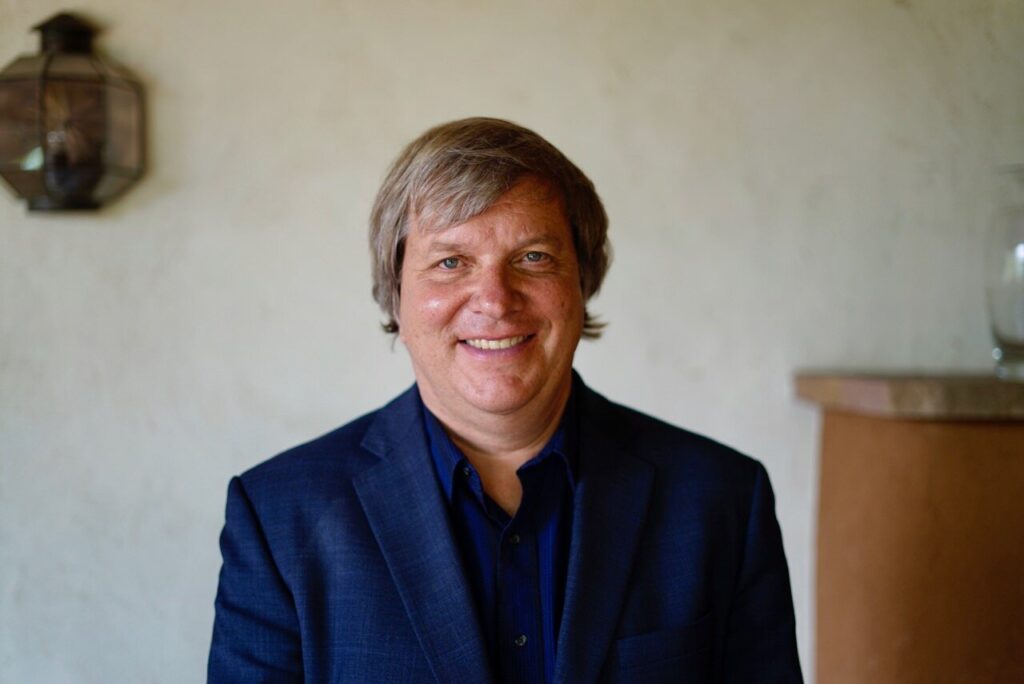
Brian McLaren:
Hi everyone, I’m Brian McLaren. Welcome to this episode of, Learning How to See. I spent much of my life in the Washington DC area. I grew up there, I raised my children there. I taught at area colleges and universities there. I served as a pastor in a DC area church. When you live in Washington DC, you get a lot of visitors who want to see the city, and so I got used to leading visitors on tours. We’d have many stops on the tours that I would lead, but I’ll just mention three of them.
Often we would stop at the Holocaust Museum. Obviously that’s not the kind of place you want to go to often, but I actually went there many, many times because I was bringing visitors. Walking through the Holocaust Museum, you can’t help but ponder war and the brutality that human beings are capable of, and the social disease of authoritarianism against which we must always be vigilant.
Often we would go to the Vietnam Veterans Memorial, that V-shaped wall of stark shiny black marble, with names that you read, and as you read the name you see your own reflection. I’ll never forget taking one friend there, a Vietnam veteran himself. I remember when he found the name of his close buddy, and how he knelt there and wept.
I would often bring people to the FDR Memorial. American President, Franklin Delano Roosevelt, didn’t want to enter World War II and only did so reluctantly. When others were urging him to war he said these words, “I have seen war. I have seen war on land and sea. I have seen blood running from the wounded. I’ve seen the dead in the mud. I have seen cities destroyed. I’ve seen children starving. I’ve seen the agony of mothers and wives. I hate war.” That was from an address at the Chautauqua Institution in New York in 1936. Well, at the FDR Memorial, those words have been taken and engraved on a wall. You read them and then you turn around and behind you, you see a second version of that wall, as if it had been bombed and reduced to rubble. The words appear on fragments of tumbled blocks. Of course, those blocks represent the breakdown of peace, the breakdown of international order, and the chaos of war.
Seeing with eyes of love means seeing with eyes of nonviolence. I’m so happy to be joined by my co-host, Carmen Acevedo Butcher, and by our guest, Father John Dear. Here’s a quote to introduce you to this amazing lifelong peace activist. “With every choice and action for nonviolence, we begin a new era in human history. This new age will be rooted in the best of spirituality, theology and morality. The best in all of us, for all of us. As we deepen nonviolence in every aspect of life, we herald the coming of a nonviolent world. A world without war, racism, hunger, killings, executions, nuclear weapons or environmental destruction. There can be no better use of our lives. Along the way, we fulfill our calling to become sons and daughters of the God of peace.” So, we welcome you to this episode of Learning How to See.
First my co-host, Carmen Acevedo Butcher. Carmen, so good to see you and be with you. Father John Dear, one of the people I admire and respect and just love to be around every chance I can. In jail or out of jail, I love to be around John. John, welcome.
Rev. John Dear:
Hey, thanks for having me, Brian. Great to see you and nice to meet you, Carmen. Thank you.
Brian McLaren:
Hey, Carmen, I’m curious. Where did you ever hear of John the first time? Have you known about him and his work for a long time?
Carmen Acevedo Butcher:
I just was reading about Daniel Berrigan, so I sideways found out about John that way. Then I read a lot of your books, John, and one of the things that stuck with me was your relationship with Mary Lou Williams, the jazz pianist. So, your books have meant so much to me, and your explication of the Gospels. I just dived in for years. Then finding out that you also had been in El Salvador in the ’80s with establishing the refugee camp. So, really for me, as somebody who was doing the academic thing, you are somebody who kept calling me back to the whole package. Like, don’t just be up in your head.
Rev. John Dear:
Thank you, Carmen. I am from North Carolina, where Carmen is. I went to Duke and to prison in North Carolina, and grew up in the Outer Banks. All my journey was to be a rock star, and I recorded and could play music and sang and had musicians come in, and went to New York. At Duke, this famous retired jazz musician was a professor, honorary professor. The whole school came out to hear her. I took her class and she taught me privately, and then I gave it all up to follow Jesus. I threw away all my recordings and started ministering to people who were dying, and she was in the hospital and died the week of my graduation. So, I was with her at a very personal level.
Her best friend, for example, was Billie Holiday. So, that was my life started right there with her. But she was one of the greatest people I’ve ever met. In one of her biographies, I said that she was equal to Mother Teresa, in my experience. Actually, Brian and Carmen, since you mentioned it, if you ask me about being seen through the eyes of love, I was going to say, there’s only one person I’ve really felt that, and that would be Mother Teresa, the other would be Mary Lou Williams, who was one of the most famous jazz musicians of all times. But she embodied love. She was an image of God for me, always was and always will be. One of the greatest people I’ve ever known, and I entered the Jesuit side after that.
Brian McLaren:
That’s amazing. How would you introduce yourself to folks who aren’t familiar with you?
Rev. John Dear:
I’m John. I’m a struggling Christian, who happens to be a Catholic, who happens to be a priest, and really very, very passionate about trying to carry on the legacy of Mahatma Gandhi, Dorothy Day and Dr. King in terms of active, creative nonviolence, in this insane world. As a way to understand what it means to be a Christian, as our way to understand Jesus and following Jesus. None of that was planned by me. I’m 65 now, I lived all over the United States, and since I entered the Jesuits when I was 21, and now I’m a regular Diocesan priest, from day one I was taught at the feet of my great mentor, Daniel Berrigan, he and his brother Philip, were the legendary anti-war figures of the 1960s and ’70s. Dan was a Jesuit. I was very eastern in a Buddhist way, in the sense that I had a guru and a teacher, and I just jumped ahead of everything. At 21, started to do whatever he did. He was writing books, giving talks, living in community, organizing regular actions, traveling war zones, and getting arrested regularly.
So, now here I am, 45 years later, and I’ve written 40 books and spoken to millions of people. I’ve been arrested 85 times, and I still haven’t got it down yet, Brian. I’m an ex-con, I can’t vote. I’m highly monitored by the government, can’t travel to a lot of countries. All of that’s very real for me. It sounds fun and funny, but I’ve been in and out of court my whole life, since I was 21. You grow up being a child of Dan and Phil Berrigan.
But the last thing I’ll say is, just because I’m friends with Brian is that, I was very, very passionate when I had decided to throw away all my plans. Well, I didn’t decide, I was thrown off the fraternity bar stool, unlike Paul and the horse. I didn’t have a choice. I saw the light and I thought I had to be a Jesuit. It’s a sad story, Brian. But anyway, I wanted to meet the great Saints and to get right to it. The thing was, I did. They all said, “Great, come with me, kid.” Including Richard Rohr, who I’ve known… He doesn’t even remember it, but I knew him since then. Mother Teresa and Tutu and Thich Nhat Hanh, all of Dan’s friends became my friends, and we were all very tight and still are. The point is, you’re a universal Christian, you’re to change the world and report back to me, kid.
Brian McLaren:
Oh, that’s beautiful.
Rev. John Dear:
I don’t know if that explains anything. It might just try to help people know where I’m coming from, because I don’t know what planet I’m coming from. I feel like I’m living in a zombie movie. For me, everything is about Gandhi and Kingian, total nonviolence. Which is the only way to understand Jesus. Yet I think we live in a world of total violence, and I can’t quite figure it all out, Brian and Carmen.
Brian McLaren:
All of us want to wrestle with this and struggle with this. Our theme for this season is learning how to see through eyes of love. In this podcast learning how to see, we’re trying to help people see the world in different ways and be conscious of the viewpoint that we bring, the way that we see, and learning how to see through eyes of love. I’m thinking in your life you would translate that learning how to see through eyes of nonviolence, and I’d love to just hear you reflect on, what is love, what is nonviolence, are they the same thing? What does the word nonviolence do that maybe the word love doesn’t do? I’d love to just hear you riff on that, John.
Rev. John Dear:
It’s so helpful that you asked that. I’ve been grappling with that question every day of my life. When I was 21, I started really studying Gandhi, Dr. King, Dorothy Day, Merton and the Berrigan’s, and I’m a fanatic of Gandhi and Dr. King. I’ve met all their relatives and know all their friends. My whole life, Coretta and all. Gandhi and Dr. King used the word nonviolence every hour, they don’t use the word love. Now, Martin is using the word love, but he’s really saying, “I don’t mean this. I don’t mean that. I mean agape, but we don’t have agape.” I don’t think the word love works anymore. I don’t think the word peace works anymore. I was taught by Dan to be a lover of words and language, so I’ve stayed with this clumsy word, nonviolence, which nobody likes, which nobody uses, and it doesn’t work. To me, that’s very exciting. Course we are talking about universal, all-encompassing, all-inclusive, non-retaliatory, sacrificial, unconditional love toward every human being on the planet.
The love that sees every human being is your very sister and brother, equal to your blood sisters and brothers. The deeper you go into universal love, the more you realize it doesn’t stop there. That the creatures we’re one with, that we’re one with Mother Earth, that God is universal, all-inclusive love, beyond our wildest imagining. Everybody would go, “Well, John, that’s just lovely.” But as someone told me in a church one day, an elderly woman when I was speaking out against the Iraq war, “But John, sometimes you just got to kill somebody.” She’s right. We’re all for love, everybody loves, everybody’s for peace. None of that language is working. Dan said, he had this line which is, here’s my translation. Okay, if you want to use this word love, why I’ve moved on to nonviolence is, there’s one catch with love. From a Gandhian Kingian hermeneutic.
There is no cause, however noble, which you or I will ever support the taking of a single human life ever again. No, wait a sec. You’ve got to kill somebody. You’ve got to kill Hitler, you’ve got to kill Saddam. You’ve got to kill the Osama Bin Laden. No. In love, universal love, we are people of nonviolence, so nonviolence draws a boundary line. We don’t kill people, we don’t kill people who kill people to show that you shouldn’t kill people. We give our lives to stop the killing. It’s not even live and let live, it’s live and stop the killing, and live and help live. Otherwise, it’s not love, it’s not universal love. It’s not God. It’s not working for me. I think the language is broken. I think it’s why the churches are in such a mess and why we’ve lost Jesus and why the world is in such a mess.
So, I go back to Gandhi and King’s clumsy word, nonviolence. Which to me means active love, pursuing its common truth, this basic truth of reality, which is that we’re all one. That we’re already united, that we’re already reconciled, that we’re all children, better yet sons and daughters of a God of universal love. Therefore we can’t kill anybody, much less sit by if someone’s hurting. Well, we killed 100 million people in the last century. There’s 40 wars happening today. We are on track to blow up the planet and destroy the planet through catastrophic climate change. So, there’s nothing passive about love. Love is active, creative, daring, public, nonviolence, that resists all the forces of death. Our language fails to capture this. This is why I like Gandhi and Dr. King, because they were struggling with the language of love and nonviolence. I just decided, Brian and Carmen, when I was 21, that’s what I’ll do.
Carmen Acevedo Butcher:
Well, I’m just taking it all in, John. So, one of the things that I really love about you is that you have the love of music, and I know Brian, you share that. I remember, we were talking a minute ago about Mary Lou Williams and she said, “Jazz is love. Then that love of music in you helps you to have love for others.” There’s that mystical experience of music. Then I think, and I’m going to ask you to riff on a quote of Dorothy Day, and I think of Dorothy Day and how she loved literature in that way. In a way that helped her turn up for life really. Like, she loved to quote this Father Zosima quote that, “Love in action is a harsh and dreadful thing compared to love in dreams. Active love is labor and fortitude.”
So, I think a lot of us today are looking at the social debacle, the cruelty, the harm, the pain. I teach students at Berkeley and a lot of them are homeless or have food precarities, and we’re all asking, “What can we do?” So, I wondered if you could talk just a little bit about your own experiences of how love in action is a harsh and dreadful thing. Active love is labor and fortitude. Because I know you’ve really done that your whole life.
Rev. John Dear:
Well, thank you, Carmen. First of all, I don’t know. I was raised in a violent family with very little love, and I’m quite aware of that. So, I’ve been on a journey of healing. Having studied the Gospels so much and Gandhi and Dr. King, and I read the Gospels, I don’t think I know how to love or can love, much less see love. I’m not nonviolent, I’m a violent person because I’m a human being in the world of total violence. Called and trying to become a person of nonviolence and to become a person of love, and therefore to have the eyes of Jesus, to see with love toward everyone. In the end, as I’m 65 now, it’s just a never-ending journey I find.
I’m learning, and I just finished a whole new book on this called, Surrendering to the God of Peace, which is, I give up, I can’t do it. I surrender. The only prayer is not my will, your will be done. If you want me to love others, you have to do it through me. So, Dorothy Day is saying, everything we’re doing is wrong. We have to get out of ourselves, totally change our lives, go against the whole culture of violence, greed, war, injustice, racism, and the church that supports that, and go to the bottom and stand with the poor and be against the whole filthy rotten system of violence and war, and be loved there and do everything we don’t want to do, which is God’s will, not our will. Certainly not my will. So, there’s nothing fun or comfortable about love. I think, I’m talking about the cost of discipleship versus… What did Bonhoeffer call it? Costly discipleship versus?
Brian McLaren:
Cheap grace.
Rev. John Dear:
Cheap grace. Cheap discipleship, cheap love versus costly love, cheap nonviolence versus costly nonviolence. I’m sitting at the feet of Dorothy Day’s mentor and best friend, Daniel Berrigan, and he’s telling me lots of stories about her. She struggled with this, and to be in a Catholic Worker was no joke. I feel so sorry for Dorothy Day, and what she did boggles my mind. But we have so many more resources than she did ever. But she’s saying, you have to get out and like St. Francis, well, that’s what Jesus did. You have to go where the pain is and go where the blood is and go where the suffering is because aren’t we willing to give our lives and lay down our lives in love for suffering humanity, to stop the killing and the suffering?
So, I’ve been praying for that and trying to do that for my whole life, and I’ve done it very badly and poorly. But as a friend said to me, “Anything worth doing is worth doing poorly.” I’ve been working with the homeless and soup kitchens and shelters forever, but my dream as a young Jesuit, was to go and live in El Salvador with these Jesuits who were such heroes. I did. I worked in the refugee camp with them and we were being bombed. When the death squads came out, my only job there, I had long blonde hair, I was a 24-year-old dopey kid. I was just to go out and greet them and they were going to take one look at me and walk away, which they did, because they were like, “This guy’s an idiot.” It changed my life. It was still the greatest experience of my life because those people, I’m living with 1,000 survivors of the Salvadoran death squads, and the US is bombing, and I’m under the tutelage of the Jesuits who are later all assassinated, my friends. Holy Toledo.
I experienced more faith, joy, love and hope there than I ever had in my whole life combined, because even in the poorest places, at any minute we also had death squads could show up and the bombs were falling. These people are obsessed with Romero. They’re talking about him as if he’s in the next room. They had a whole theology of resurrection that we simply don’t have in the United States. No one talks about Martin King as if he’s around the corner, or Dorothy. Although for me he is. But I learned that from the Salvadoran people. I don’t know if I’m getting off track, but love and deed in action is a harsh and dreadful thing. That’s what I think.
So, I worry what Dorothy Day would say about what I’m doing now, but we all do what we can. That’s why, right now I go on Tuesdays and work distributing food to hundreds of farm worker families, who have nothing and they’re all undocumented, in a village that I won’t name. I’ve been doing it for years and I don’t really talk about it and has nothing to do with me, they heal me. I totally feel… I always feel better after having been there, because they’re always laughing and making fun of me, and I’m just giving out food. I’m not giving a lecture or writing a book or doing something cool.
Brian McLaren:
But that’s a beautiful thing. That’s a beautiful thing. As you say, it brings them some benefit, but you gain something by that act of presence and service. Learning How to See will be back in a moment.
Carmen Acevedo Butcher:
For the next five minutes, you’re invited to pause wherever you are and however you’re listening. If sitting, walking, driving, cooking, washing clothes, working outside or something else, we begin by getting still within, and honoring the silence inside ourselves. Nothing in all creation is so like God as silence, Meister Eckhart says, and we bow in communal gratitude for the miracle of being here together, and in gratitude for each other.
We start simply by becoming aware of our natural breathing. The words of this breath prayer are inspired by Father John Dear, and they give our attention a place to rest. But the most important part of our praying is our intention. As the Cloud of Unknowings Anonymous says, “Our longing for God matters, and for love, as does our being together.” With childlike sincerity, as you inhale, say softly or silently, “God of love.” As you exhale, “Let me see with eyes of nonviolence.” For several breaths, breathe in, God of love, breathe out, let me see with eyes of nonviolence. Then as you inhale say, “God of tears.” As you exhale, “Let me see with eyes of nonviolence.” Breathing in, God of tears, breathing out, let me see with eyes of nonviolence.
Then we inhale saying, “God of peace.” As you exhale, “Let me see with eyes of nonviolence.” Breathing in, God of peace, breathing out, let me see with eyes of nonviolence. Then to end, inhale again with, “God of love.” This time exhale, “May we see with eyes of nonviolence.” Breathing in, God of love, breathing out, may we see with eyes of nonviolence. As we pray, we remember the breath is a sacred place, a sacred flow, making sacred community as we all pray together, not waiting to be perfect but embracing our imperfections in love. May we ask what is ours to do, love? Thank you for your presence and blessings on your practice and on your life.
So, John, we have a quote from you that’s very wise and one I think we can all use for today. You said, “When we go to the Pentagon with a non-dualistic vision that the people are good but the work is evil, that that’s one way to approach when we’re in a difficult situation and we’re trying to be kind and nonviolent.” So can you share with us a time or a story, I know you have so many to pick from, where you were showing up as a nonviolent Christian, and you met with such violence and how you handled it?
Rev. John Dear:
I learned the hard way that after a lifetime of self-righteousness and judgmentalism and arrogance, that’s my specialty. Especially with Jesuit training. I can’t judge them, the war makers and the nuclear weapons, they’re the only ones who know how to dismantle these things. I’ve got to love them and win them over to our side. I learned that the hard way. So, you do. I mean, Gandhi and Martin Luther King are the most practical people in the world. By the way, they’re saying, Jesus was too, this way of universal nonviolent love is the only thing that works. Everything else is idealism. So, I try to befriend all these people along the way.
I’m thinking about, for example, going to Iraq. I invited all the Nobel Peace Prize winners, 1999 on an all-expense-paid trip to Iraq. We were going to meet Saddam, as you do. But we were treated like kings and queens and welcomed with open arms. I’m very confused by that. Then you find that they’re not the enemy. If you really want to know my answer, Carmen, every time I’m with priests and bishops or at the Vatican, that’s where I am really challenged, because I get attacked left and right. I’ve been banned by speaking in over 30 dioceses in the United States about Jesus. Last year I was kicked out of several churches that were about to host me, to talk about my book, the Gospel of Peace, a commentary on the Gospels.
But if you’re talking some story like that, one that comes to mind. I was very involved in September 11th. I was supposed to be having breakfast there with my parents. My mother canceled the reservation at the top of the second tower the day before, and we were having breakfast somewhere else. They left town. I went down to volunteer, and by chance met the head of the Red Cross who asked me to coordinate all the chaplains. I’m really involved with Ground Zero, had 600 chaplains, ministering to 50,000 direct relatives. I’m up to my ears in it, in Ground Zero. Then Bush is going to start bombing Afghanistan and the US Catholic bishops vote 197 to four to support the bombing of Afghanistan. It was on NPR.
So, we started, Daniel Berrigan and I and our friends, demonstrations in New York, as you do, at Times Square. I’m going from Ground Zero to these demonstrations. We had a one or two really big ones, with thousands of people, and I would never slept for three months. But by the way, because of all this, the New York Times did a big article about me and the Jesuits kicked me out of New York. It changed my life. I thought love was, love your neighbors and love your enemies. I was showing compassion at home and compassion to the people of Afghanistan. I paid, it changed me completely because I moved to New Mexico.
So, we’re at Union Square where Dorothy Day launched the Catholic Worker. This is late October 2001, eight weeks after September 11th. It’s a happy day for me, because I’m not at Ground Zero. Dan and I and 20 of our friends are going to hold a massive banner that says, “Don’t bomb Afghanistan.” If you have been to Union Square on a Saturday in the beautiful fall of New York City, I mean there were hundreds of thousands of people around. There we are with our priest outfits on, there we are holding the banner. I’ve got Dan Berrigan on my left and my friend, Bob Keck on the right, and this guy, young Marine in full Army fatigues in the middle of the crowd, comes running, screaming his head off, totally insane, “What? How dare you.” He comes right up to me and goes, “How dare you attack our country. I’m going to kill you right now in front of everybody. What are you going to do?”
We thought he was. Well, Dan Berrigan turned and looked at me, that’s what got me. “Yeah. What are you going to do about that, John?” I said, “Well, I guess I’ll die and go to heaven and be with Jesus and the saints. You on the other hand will be arrested and go to prison for the rest of your life and end up on death row. But don’t you worry. My friends, your Father Dan and Father Bob will really speak out on your behalf and try to get you out of prison, and hope you’re converted to Jesus’s way of non-violence.”
There’s that beautiful moment of cognitive dissonance. You see, I’m kind of a smart aleck, but that was me being loving. I feel like I knew and loved this great bishop in Latin America named Dom Helder Camara. When the death squad showed up at his house and said, “We’re here to kill you,” he went, “Oh, thank God.” He threw up his arms, said, “Are you going to send me directly to Jesus?” They went, “Well, we can’t kill you then.” I have a lot of that in me. In fact, he walked away and then he went over and started talking to one of the Catholic workers, and he came back shortly later and burst into tears and apologized and said, “I’m sorry. I see what you guys are doing. God bless you.”
Brian McLaren:
Wow, John. Thanks for sharing that story. John, you mentioned earlier that you felt that there were two people who had really seen you with eyes of love, Mother Teresa and Mary Lou Williams. I wonder if you could just talk about what it felt like to be you being loved by one or both of these women, being seen by them in some way that really changed you.
Rev. John Dear:
Well, there I was at Duke, and really struggling with the question of what to do with my life. I was struggling with the guy in the fraternity room next to me, was my friend who became Dr. Paul Farmer. Here I’m meeting this mythical woman. You had to see her, Mary Lou, and she came into the classroom and says, “Jazz is love, and I’m here to teach you love.” I didn’t know what she was talking about. She did, because she showed me unconditional love. I was learning that for the first time in those days. She treated me like a friend and like a human being, and gave me dignity and hope. It’s very strange, this mysterious word, faith. But she was like, “I believe in you, John.” Which is the ultimate affirmation that you could ever say to somebody, “I believe in you, Jesus. You can do this. Oh. Oh, you’re helping Jesus.”
Anyway, that was what love was. So, the thing about Mother Teresa was, I had a similar story then our friend Shane Claiborne. Long story short, I was given her phone number and I had this brilliant, I thought, idea. Well, the only way I could stop an impending execution in Pennsylvania, this was in the mid-80s, by this Catholic governor who was friends with all the Jesuits, I thought was, I’ll call Mother Teresa in Calcutta and I’ll get her to call the governor. Ha, ha, ha. One of the priests I was with said, “Oh, I just gave her her retreat. Would you like her phone number?” What I did was I called the governor’s office, threatened to call Mother Teresa, and the execution was canceled. I didn’t even have to talk to her. I was real happy about that.
Now I’m in Berkeley in theology school, in 1990, the Democratic governor’s campaigning and he’s running to execute this awful young guy who killed these two little brothers. I thought, well, I have to call her. I did. Her number was 13 and a half hours ahead of… The time zone ahead of me in Calcutta and I said, “Hi, Mother, I’m John. I’m a young Jesuit. Would you be willing to talk to the governor of California tomorrow and ask him not to execute somebody?” We started talking and then I said, “Can I call you back, and get a statement from you and release it to the press?” “Of course you can, John, and we will be praying here.” This began a journey. I had dozens and dozens of phone calls with her and she intervened and saved eight lives. I had many, many letters from her and other conversations about other things.
Years later, shortly before she died, I called her back to say… In fact, after her conversation, the governor went ahead and killed this person. Mother Teresa said to me on the telephone, Brian and Carmen, “John, we can take heart because God sees only love.” I never heard that before or thought that before, and I was actually scared to hear that, because I feel so little love in me. At least I did then, because I want to be seen by God. We want to be in the vision of God. But to see God and to be seen by God, blessed are the pure of heart, people of total inner nonviolence. That’s where I’ve gone with that.
Well, I go, I’m in Rome and I’m at the 50th anniversary of Pax Christi and I got to meet John Paul and the head of the Jesuits, I’m just out of prison and I’m told, “Mother Teresa’s in town and heard you’re here and wants to meet you.” So, I go to see her. She’s taking the vows of another 100 young missionaries of charity, and I go up to her and they go, “Mother Teresa, this is John, your friend you’ve been talking to.” She starts yelling at me, screaming, and everybody moves back, and she’s all of 4’10”. I thought, oh my God, she’s nuts. I was very close with a guy on death row, and with her intervention in Georgia, we got the Georgia Board of Paroles to grant clemency for the one and only time in the history of Georgia. He not only was not killed, he was released from prison a month later. He’s a minister now, he’s my teacher of non-violence, Billy.
She’s yelling, “What did I tell you to do about Billy?” I don’t know what she’s talking about. I’m going, “You said, do what Jesus would do.” She said, “And what did they do for Billy?” “They granted him clemency and let him go free.” She goes, “Isn’t it fabulous?” She grabbed me and started dancing with me. So, now I’m dancing with Mother Teresa, and the 1,000 people around us are all stepping back like you’d see in a ballroom. She was wild. Then she slapped me on the cheeks and pulled my face down two inches to her eyes, and stared me in the eyes for 30 seconds. My mother never did that, my grandmother never did that. Nobody has ever done that. I felt more love from her than any human being in my life. I don’t know what it means, Brian and Carmen, but you asked me. In terms of being seen and being loved, I felt affirmed and I felt supported. She had written to me when I was in prison.
I’ve had so many blessings like that by my teachers and by so many friends around the world really, but these great mythic people like Dan and Phil, and Tutu and Thich Nhat Hanh and Mother Teresa, that it has disarmed me, and is disarming me and healing me, and encouraging me to keep taking another step forward to follow the nonviolent Jesus, and to do what I can. Which is not much. I can’t do anything actually, but God can use me and all of us to abolish war and poverty and racism and nuclear weapons and environmental destruction, and welcome God’s reign. That’s what happened when I felt seen by love, I got healed and disarmed and sent forth to be a witness of universal love. It’s encouraging just to say that. I’ve never said that or maybe even told anybody that story before in my life.
Carmen Acevedo Butcher:
It’s beautiful. Thank you, John, for sharing it. It’s absolutely beautiful.
Brian McLaren:
For what it’s worth, what Mother Teresa gave you in those 30 seconds, you’ve given us a dose of, it passed on, so thank you, brother. That’s beautiful.
Rev. John Dear:
I’d love to read as your closing meditation, Psalm 91, which has meant a lot to me as I’ve tried to practice nonviolence, especially in El Salvador and in all the war zones I’ve been. Especially in jail, the Psalms really came alive in jail for me. They make more sense and they make more sense when you’re under a lot of threat of danger. But I thought if you’re practicing nonviolence, you’re marching to Jerusalem to turn over some tables somewhere, and to confront injustice, so you’ve got to be preparing for danger. What does that mean? God is going to protect us. We’re going to be fine. Just be totally nonviolent and trust in God. So, this is this beautiful Psalm about trusting in God’s protection as we practice nonviolence.
“You who dwell in the shelter of the most high, who abide in the shadow of the God of peace, say to the God of peace, my refuge and fortress, the God of peace in whom I trust, God will rescue you from the fowler’s snare, from the destroying plague. Will shelter you with pinions, spread wings that you may take refuge. God’s faithfulness to you is a protecting shield. You shall never fear the terror of the night, nor the arrow that flies by day, nor the pestilence that roams in darkness, nor the plague that ravages at noon.”
“Though 1,000 fall at your side, 10,000 at your very right side. Near you, it shall not come. You need simply watch. You have the God of peace for your refuge. You have made the most high your stronghold. And so no evil shall befall you. No affliction come near your tent, for the God of peace commands the angels to guard you in all your ways. With their hands they shall support you. Lest you strike your foot against a stone, you shall tread upon the asp and the viper, trample the lion and the dragon,” the symbols of war and death.
Here it turns into the first person from God to us. “Whoever clings to me, I will deliver. Whoever knows my name, I will set on high. All who call upon me, I will answer. I will be with them in distress. I will deliver them and give them honor. With length of days, I will satisfy them and show them my saving power.” So, we give thanks and praise the God of peace for blessing us and protecting us and giving us courage to follow the non-violent Jesus and the path of universal love and gospel non-violence. Amen.
Carmen Acevedo Butcher:
John, thank you so much for being with Brian and me, and all of us listening, for bringing us such hope. Your ebullient spirit that has been through so much and remains full of joy. It really is encouraging to me, and I know those listening as we try to ask, what is ours to do? Thank you for inspiring us and for just being yourself, John. I loved it. Every moment. Thank you.
Rev. John Dear:
You’re welcome. Thanks for having me. It’s my pleasure.
Brian McLaren:
I feel so grateful that we had this chance to be in conversation with Father John Dear. I feel so grateful that each of you who are listening now has a connection to this dear human being, who’s been an ambassador, an agent for peace through his whole life. As John spoke, I kept thinking of some words of Jesus from the Gospels, from Luke 13, for example. “Jesus said, ‘Oh, Jerusalem. Jerusalem, the city that kills the prophets and stones those who are sent to it. How often would I have gathered your children together as a hen gathers her brood under her wings? And you were not willing. Behold, your house is forsaken and I tell you, you will not see me until you say blessed is he who comes in the name of the Lord.’ And when he drew near and saw the city, he wept over it saying, ‘Would that you, even you had known on this day the things that make for peace. But now they’re hidden from your eyes.'”
“To picture Jesus calling out to the city and weeping over the city. ‘If only you’d known the things that make for peace.'” I think all of us feel we share that grief about our world today. In the days ahead, when you see a headline or hear a news report that speaks of violence, speaks of war, speaks of violent crime, maybe you’ll let your heart echo these words of Jesus. It might be, “Oh, USA. Oh, USA. If only you knew what makes for peace. Oh, Moscow. Oh, Moscow. Oh, Jerusalem, Jerusalem.” We think of places around the world where people are suffering from conflict and violence. We think of Gaza and the agony of what’s happening there. We think of Ukraine and this long ugly war there. We think of protracted conflict in Sudan and Democratic Republic of Congo, and we could just go around the globe and see so many places where violence is breaking people’s hearts and stealing the quality of children’s lives.
I’m so grateful that Father John Dear is not only an agent of peace, a maker of peace, an advocate for peace, but he’s also a man of deep prayer. So, I thought it would be fitting to end our time together by taking that quote that I read earlier and turning it into a prayer. Let’s pray together. God of peace, may we choose and act for non-violence, so a new era in human history may begin. God of peace, may this new age be rooted in the best of spirituality, theology, and morality. The best in all of us, for all of us. God of peace, as we deepen non-violence in every aspect of life, may we herald the coming of a non-violent world. A world without war, racism, hunger, killings, executions, nuclear weapons or environmental destruction. May our lives contribute to this vision. May we fulfill our calling to become sons and daughters of the God of peace. Amen. Peace to all of you.
Carmen Acevedo Butcher:
Big thanks to Corey Wayne, Dorothy Abrams and Vanessa Yee, who produced Learning How to See. Thanks to April Stace for her musical support. This episode was edited and mixed by the team at Sound On // Sound Off. To learn more about their work visit soundonsoundoff.com. Thanks to the Center for Action and Contemplation for making, Learning How to See possible. And special thanks to you for your investment of time.