Mike Petrow:
Welcome back friends to the Everything Belongs podcast with our favorite Franciscan father, Richard Rohr. Each season of this podcast we’ve explored one of Richard’s books and each episode, Paul Swanson, my partner in crime and I, travel over to Father Richard’s house to discuss the wisdom of one chapter of one of those books with him. And then we’re joined by a guest who helps us live the teachings forward, to think about Richard’s teachings in new ways and ask new questions in a rapidly changing world. But this season is extra special because we’re exploring Richard’s brand new book, The Tears of Things: Prophetic Wisdom for an Age of Outrage. As a reminder, you do not have to read the book to follow along with us, but we’d love it if you do. Hey, perhaps listening will inspire you to pick up the book later.
Today, as always, we’ll join Richard in his hermitage. We talk to Richard about how to remember we’re not alone in carrying the suffering and the pain we feel, and in every tear there is an invitation to alchemize those tears into love and wisdom. I know I say every single conversation is special, but friends, this one is extra, extra special. After talking with Father Richard, Carmen Acevedo Butcher and I will be joined by Jungian psychotherapist, Rabbi Tirzah Firestone, to discuss the role not just of tears, but also of trauma and what it means to metabolize our losses and metabolize our grief. We’ll wonder together what it means to turn our wounds into wisdom and put our healing in the service of healing the world. Friends, I’m so excited for you to join us for these conversations. Without further ado, let’s jump in and head over to the house with Father Richard.
From the Center for Action and Contemplation, I’m Mike Petrow.
Paul Swanson:
I’m Paul Swanson.
Carmen Acevedo Butcher:
I’m Carmen Acevedo Butcher.
Drew Jackson:
And I’m Drew Jackson.
Mike Petrow:
And this is Everything Belongs. Richard, in this chapter you’re talking about one of the greatest gifts of the Christian contemplative tradition and I feel like it’s an unknown treasure, the gift of tears. I love when you wrote, “In my charismatic days, we often spoke of the gift of tears, as did many of the saints. It was a kind of crying for everything occasioned by the tragedy of any one thing.” And I first encountered this when I was in my Pentecostal Holiness phase and they talked about the gift of tears all the time, but they taught it as weeping over your own sinfulness. So you cried because you’re just such a bereft, inconsolably bad person.
And Richard, you taught me it’s not crying over my guilt and my sin. You could argue maybe the sin of the world, but in the brokenness and the suffering of the world. And in this chapter when you look at Lamentations you say, “In this way, Lamentations, the prophets, and Jeremiah in particular invite us into a divine sadness about reality itself, much more than mere outrage at this or that event.” So I have two questions for you about this. The first one is what does it mean, Richard, to cry over everything as opposed to one thing or to let one thing lead you to sadness for everything?
Richard Rohr:
Good. I’m glad you state it’s both. I think the mystical heart and mind does that automatically. It lets one become a stand-in for everything and you don’t even always realize. Like they say when you cry at a funeral, you’re crying for your own death. That’s one example. But every death. I think there’s truth in that. The mystic, not that it’s important to give it a name, but sees that. That the human condition is such a missed opportunity for the vast majority of people. It’s just tears of regret of how could we not know? How could we not see? How could we not enjoy? How could we waste so many years? I’ve been seeing on the news, those young men lined up on the floor in the prison in El Salvador. All so young. And you just want to weep. Probably didn’t have good parenting, good beginning, and now they’re treated like dirt. At least it appears. Just the missed opportunity of God’s humanity. We’re the purveyors of this. We seem to make one another suffer. Why do we do that?
Paul Swanson:
And you juxtapose that to the tears which feel like they reconnect us to the best of our humanity.
Richard Rohr:
I think so. And what I make in I think the very beginning of the chapter, note that tears, and this is what’s unique about them, they normally come unbidden, un-sought after in the presence of the great emotions of fear, happiness, awesome. Just in the presence of beauty. I see a beautiful landscape and I want to cry.
Mike Petrow:
One of the things that breaks my heart is that I feel very like this feels very Dostoyevskian. I just feel like humanity could be so beautiful and I feel like it is, but I feel like it could be-
Richard Rohr:
I know what you’re saying.
Mike Petrow:
So beautiful. And it breaks my heart to see people who are living revelations of the divine acting in hate instead of love and taking satisfaction from pushing someone else down instead of lifting them up. And it breaks your heart because you genuinely believe it could be better, they could be better, we could be better.
Richard Rohr:
It doesn’t need to be this way. And you normally know what hurt you that you enjoy hurting another person.
Paul Swanson:
Do you all know the poem Good Bones by Maggie Smith?
Richard Rohr:
No.
Mike Petrow:
No.
Paul Swanson:
It’s fantastic. She talks about how there’s these fears we keep from the young to this point and she talks about how she knows that half the strangers she meet would welcome her with open arms and there’s another half who might hurt her, and how we’re trying to sell humanity to our own children. There’s good bones here. Like a real estate agent. There’s good bones in us. We just have to cultivate that. And it’s like we’re holding both of these consistently, consciously where we have recognized our fears and yet are trying to build something because as you’re saying, the potential is so good and there’s good bones.
Richard Rohr:
That’s a great metaphor. The skeleton is so good. How is it that so many of us don’t get back to the skeleton of who we are?
Mike Petrow:
I wonder how much of it is a willingness to have a heart broken open. That’s painful, hard work. Saint Francis is described as crying all the time in his early biographies. You said, “I always wondered why. I now believe after 54 years in public ministry that the gift of tears and the gift of healing are almost one and the same.”
Richard Rohr:
Yeah. I don’t know if you can be an instrument of healing if you haven’t moved to this non-rational level of empathy, sympathy, compassion for things, for people, and it can be evoked by a suffering animal even. That has to matter to God.
Paul Swanson:
I think that’s so much of what this chapter is inviting us into. The preciousness of life and the solidarity in suffering. None of us escape this life without suffering, without us saying, this is so hard. I didn’t know it was going to be this hard.
Mike Petrow:
I feel like we live in such a dissociated culture. We’re so conditioned to shut off our tears. I’m sure a lot of people listening to this couldn’t cry if they wanted to. And yet you’re asking us in this chapter to feel our feelings and I wonder if we need ritual to help us encounter our pain and our tears just to turn that off switch on.
Richard Rohr:
That’s when the man’s rites of passage seemed to reveal for a lot of men. Ritual gave them the space, the permission to do that. You often remark when you come here, my dog, whose name is Opie and is laying here right now. I don’t know if you’re probably too young, but I grew up with the Andy Griffith Show and it might’ve been the first show where I had deep empathy. Little Opie, which is Andy’s boy, got a BB gun, maybe you remember this episode, and he shot a bird and he came to Andy so excited, and Andy in the fatherly way he often taught, he said, “Look at that nest over there. There’s three little baby birds in that nest and they’re squawking now because they don’t have a mother and Opie, they’re all going to die.” Oh my God. Opie just lost it. He had never made the connection of killing somebody’s mother.
So you’ve got to make connections with tears. What is it I’m crying about? I’m crying about this thing, but it expands to everything or to more things at least. And unless that happens, I don’t know that you have the gift of empathy or sympathy or compassion. Whether you can feel for what Gerald Vann called him his book, the Divine Pity. The Divine Pity. It was one of the most influential spiritual books I read as a seminarian. That God weeps over reality. There’s a straight line from reading that book to this book. Could we be emissaries of the sadness of God? I think we are. That God is sad more than angry. And that’s what I found in the prophets and what this chapter is about, that they represented in their mature state, the pity of God for Israel, not the anger of God at Israel. And most of the response at this point on getting to the book is this is what is life-changing for people. We ended up with a toxic image of God. And once you have that, a God who has no pity but only rage, how can you create a healthy religion out of that?
Paul Swanson:
Yeah. That’s what we become. Emissaries of divine wrath rather than divine pity.
Richard Rohr:
Yes. We’ve been given permission to punish Opie instead of, like a good father, take him to the window and say, “Look at that.”
Mike Petrow:
Well, I love you say, “Has God changed or have we just grown up enough to hear a grown up God?”
Richard Rohr:
There you go.
Mike Petrow:
Good sentence. I’m struck on how much it changes the story when you just shift your perspective to think of God as vulnerable and weeping with us as opposed to being angry at us. I think we talked last episode about Job. And in the Job story, Job loses everything. His comforters show up, they sit with him silently for seven days and that’s the best thing they do. And then he starts to grieve and give voice to his pain and they all start debating him instead of just listening. And not until way into the end of the story, God speaks. I was taught to read that as God shows up and God’s angry. That’s not what it says. And the question was always, well, why does it take God so long to speak? And it’s only right now in this conversation where I’m thinking, what happens if I think of God as a vulnerable and a weeping God that I’m like, oh, God was the only character in the story who sat silent and listened to Job for like 30 chapters.
Richard Rohr:
Excellent.
Mike Petrow:
That’s powerful.
Richard Rohr:
Thank you.
Mike Petrow:
That changes the whole way that I think about that story. It’s a lot of deprogramming to shift the camera on that.
Richard Rohr:
Good word. Deprogramming. Which I find almost all Christians need. We don’t change the reality, we change our perception of the reality. And my point in this book is follow the journey of the prophets and you’ll find the change. We have to change from rage to sadness.
Mike Petrow:
Richard, the story of Christianity that you just described to me is not the one that I was given. I was given all the same players and the same symbols, but the narrative was completely different. That wasn’t the myth. And using myth as story. That wasn’t the myth that I was given. I’m so struck with what you say in the book, and I’m going to read the whole passage if that’s okay with you, where you say, “If we do not mythologize our pain, all we can do is pathologize it.”
Richard Rohr:
And that’s what the passion narrative was meant to be. A mythological statement of this is what humanity is doing to itself, which symbolically is doing to God.
Mike Petrow:
That gives us a roadmap to think about it. Most of us don’t have that. You know I love this if we don’t mythologize our pain, all we do is pathologize it. I think we live in a culture that-
Richard Rohr:
That’s the best it can do.
Mike Petrow:
Yeah. We don’t have a mythology, so we pathologically pathologize and all we do is … Diagnosis is our story. Whether it’s attachment pattern or Enneagram number or my particular neurodivergence or the other tisms, it’s diagnosis, diagnosis, diagnosis, diagnosis.
Richard Rohr:
Even the wonderful 12 step programs. Because I’ve given it a pathological name and answer, I’ve healed it. Well, that’s a good first step.
Mike Petrow:
And don’t get me wrong, I’ve benefited from all of these things and the therapy.
Richard Rohr:
And I have too.
Mike Petrow:
So let’s take a look at how you write this. You say, “We Westerners have lost the ability to frame the significance of our own little lives. We no longer believe or live as if we’re an inherent part of a bigger story.” Richard, we’re force-fed so many stories every moment of every day that come through media and social media and our friends and our families. What big cosmic story do we need to plug back into to help us mythologize our pain?
Richard Rohr:
Of course, I’m a Christian, so I’ve accepted the story of the life, passion, death and resurrection of Jesus as the cosmic story that includes everybody. We’re all in that continuum somewhere. And in recognizing that walking that continuum is somehow redemptive, it makes my story a part of the story. Then I don’t have to be morally perfect anymore. I just have to walk the plank, as I keep saying, and trust that Jesus did it, other holy people, good people have done it without even needing to call it holiness or goodness. It was just what life demanded of them. They just do what is demanded of them and allow it to soften their heart.
And of course that’s the message. It wasn’t fair to Jesus. It’s never been fair. It’s an absurdity. And when you can bring the divine pity to the human absurdity, you have salvation. I know it sounds like a cliche now, but we’ve got to stop making the whole redemption message instrumental. Jesus saved us from our sins. Jesus saved us by our sins, through our sins, through suffering them, allowing them to teach us whatever it is they have to teach us. My own littleness. My sin makes me small or vulnerable. Vulnerability is learnability, teachability instead of just imputing blame and imputing redemption. But once we made the redemption story itself instrumental, there was some price to be paid, some debt to be paid, and Jesus paid it. Thank you, Jesus. The whole thing is inert. It’s ineffective.
Paul Swanson:
It’s smaller.
Mike Petrow:
Yeah.
Richard Rohr:
Small. Yeah.
Mike Petrow:
And that transactional component is such a shame.
Richard Rohr:
That’s the word I was looking for. Transactional.
Mike Petrow:
Yeah. Because you taught me this. There was always, well, someone had to pay the price for this. And when you move the camera to the vulnerable God and not the angry God, you don’t have to throw that language out. It’s that the price paid for love is that we have to be willing to suffer. And even God says it’s worth it. And that’s a fundamentally different thing-
Richard Rohr:
Nicely put.
Mike Petrow:
Than we need to be punished. But the other thing of God meeting us in our suffering is some things are too big to carry alone. The definition of trauma is just something that’s too big. It overwhelms our ability to cope. That’s one of the definitions. I think about Dr. B’s work on crisis contemplation and how she would talk about how some injustices, some suffering, some evil is too big for a person to carry alone and it requires a community. And the other thing that she taught is sometimes it requires more than the human community. I always say she taught me that we live in a crowded cosmos where animals and ancestors are there for us. You say that in the chapter, Richard, that Paul, not Swanson, but the apostle, talks about how we’re all partners with both the living and the dead, walking alongside countless ancestors and descendants who were wounded and longed for healing. This is the idea of the communion of saints and the idea that I’m supported in my healing by all those who’ve gone before me and I get to continue their healing by doing my own work. We’ve talked about critiquing the system, we’ve talked about big evil. How do you, Richard, remember you’re not alone in carrying all that?
Richard Rohr:
You don’t achieve it by figuring it out. You surrender to it. You’ll notice in The Mystics, the language that overtakes them is the language of let it be that we first find in the mouth of Mary. Let it be. Let it be. Let it teach you. Not who to blame. Stop trying to blame anybody for this huge human tragedy. That takes huge vulnerability
Paul Swanson:
In this conversation, I think you mentioned this chapter, but also it opens up for me too when Jesus says, “Don’t weep for me, but weep for yourselves and your children.”
Richard Rohr:
Oh, yeah. Go ahead.
Paul Swanson:
And it’s never really made an impact on me, but reading it in this context, it’s that invitation to deeper vulnerability and solidarity with the passion. Mike, you’re leading us like the community of saints to the ancestors. And I think about the ways that we live with this. This gets into our lineages, into our bodies. And Richard, you write about this when you say, “As therapists and researchers now teach, that trauma mostly resides at the cellular level in the body more than the mind. That is why the response to the mind and talk therapy, even if accurate, often falls short in healing a traumatized person. Note how in the gospels, Jesus almost always touches people when he heals them. It is the body itself that holds our fear, our anger, and our debilitating memory. It is the body that must somehow be held and healed and spoken to.”
And you say in this paragraph that there’s whole fields of studies and the popularity of the body keeps the score. And my grandmother’s hands talk about how this gets stored in the body. Why do we have to get out of our heads to heal? Why can’t we just think our way into healing? Why is it embodied?
Richard Rohr:
I suspect the irony of the Bible being a printed book. When it really got bad was after we started reading and printing and thinking you could understand things by logical formulations of words. You look at all the world religions in their ancient forms, they had much more to do with ritual and ceremony, ancestor worship, death, confrontation. And I love the Bible. I mean, the whole point of this book is to get people to love the prophets in the Bible better. But the Bible has done a number on Western civilization, thinking it can be figured out. And what we do when is make even the suffering of Jesus an exercise in necessary suffering to pay a debt to an angry God. And let’s be honest, that’s 80% of Christians believe that. It’s entirely instrumental, leaving God unchanged and us hardened. As Hebrews says in several ways, Jesus is the end of all sacrificial religion.
That there’s any sacrifice that could be used in a mercenary way to pay God off. And that’s why he has no patience with the caged up animals. That’s why he has no patience with the demanding of sacrifices from the poor in the temple. But we didn’t end the sacrifice, we just changed the location somehow. And still there’s a necessary sacrifice. That’s the phrase. And I remember having ministers in my young years when I didn’t know how to formulate this, stand up angrily, “You’re denying the redemption. How dare you? This was a necessary sacrifice.” No, it was the end of sacrifice. Because you’re using sacrifice in an instrumental way.
Mike Petrow:
One of the things that’s interesting about that is as long as sacrifice is about Jesus paying the price so I don’t have to, it gets me off the hook and then I don’t have to be crucified and I don’t have to be strung up between things and I don’t have to carry my cross.
Richard Rohr:
You just have to be, forgive me, nice. And nice-
Paul Swanson:
Oh, it creates a very detached God and a very detached humanity and no wonder individualization runs rampant in Christianity.
Mike Petrow:
And we’re so selective in the imitation of Christ, right? Because we should be like Jesus in that we should be nice, but it doesn’t mean that he bids us come and die or be crucified ourselves or take our own journey through the underworld or in the language used in this chapter, submit to the alchemical process ourselves, which is scary stuff. You write, “In describing the growth process, Carl Jung uses the brilliant metaphor of alchemy. Alchemy was an early pre-scientific form of chemistry by which people sought to create gold by mixing the right elements for the right amount of time to the right degree and at the right temperature. While the practical results of alchemy were mixed …” To say the least.
Richard Rohr:
At best.
Mike Petrow:
“To put it mildly, Jung nevertheless applies it as a helpful metaphor for human transformation.” And if I were to take all the things I’ve read about Jung and alchemy and try to boil them down, while scientifically it may not be possible to turn lead into gold, the idea that there is gold in our lead and that there’s gold in our shadow is powerful.
Richard Rohr:
There you go.
Mike Petrow:
And the only way to get there is to break it down and to melt it down. The whole, I think, essence of Jung’s teaching on alchemy is that things need to be broken apart to be put back together. Things need to be dissolved to be recombined. Like a caterpillar goes into the chrysalis, doesn’t just grow wings, it breaks down completely and is like goop in there and then rebuilt. And that’s the alchemical pot. The idea that Jung talks about solutio. The solution is in things being broken down into solution and then re-solidified differently. And to start with, I hear maybe you saying that tears are part of the solution-
Richard Rohr:
Solutio.
Mike Petrow:
That dissolves us and breaks us down.
Richard Rohr:
I just opened and I noted it’s on page 111. But I’m just going to read the seven … There’s more than this, but these are the ones I remember. Conjunctio. Just putting together contrary ingredients. We weren’t taught how to do that, so we don’t know how to deal with paradox. Solutio. Seeking a solution by the death of one substance to become not dead, but a new substance. Sublimatio. Coagulatio. Sounds like the ugly word coagulation. That you’ve got to let something come together to take a new shape. Calciinatio. Calcification. The hardening needed to coalesce into substance. Mortificatio. We spoke of mortification. That there’s a necessary dying. Not the one I was talking about before, but a losing that is really a falling upward. Use my language. And finally, the most ugly of all, putrefacio. Changing even to the point of appearing unattractive. Your sins, for example, might be your best teachers. I have to thank, as you just did, Carl Jung for making this marvelous connection that alchemy was the prechemical word for chemistry, for the mixing of different ingredients in new and creative ways. It works. This is what any good spiritual director is doing. Let’s coagulate this. Let’s sublimate this.
Mike Petrow:
Let’s break it down.
Richard Rohr:
Let’s-
Mike Petrow:
Let’s take it apart.
Richard Rohr:
Break it down. Take it apart. Notice what is not in there is eliminatio. No elimination. Let’s use all the ingredients. Even the worst enemy, as Paul says, death. Use that as one of the ingredients.
Mike Petrow:
It’s wild too that part of the alchemical process is one, trusting that things need to be taken apart to be put back together in a more healthy way, that life does this to us, but Jung-
Richard Rohr:
And that’s what a good therapist is helping you do. Giving you permission and space to do … I didn’t mean to cut you off.
Mike Petrow:
No, no. But you talk about the unity in the midst of it too, in that if you trust the alchemical process, the idea is that when everything falls apart, when you are completely dissolved, and some folks listening to this have gone through that where they’ve been completely broken down by life, Jung says there is something. Some scientists call it a reordering principle. There is something that holds you and puts you back together. I love in Psychology and Alchemy, Jung says, “The highest and most decisive experience of all is to be alone with our own selves. I must be alone if I’m to find out what it is that supports me when I can no longer support myself. Only this experience can give me an indestructible foundation.”
Richard Rohr:
Contemplation.
Mike Petrow:
Yeah.
Richard Rohr:
That’s why we named our center that. That’s why we teach that. Contemplation is holding. What the world teaches you, you can’t hold. Thank you.
Paul Swanson:
And I feel like it gets voiced in lamentations in that praise. After All the lamenting, there’s that praise that jumps up out of that thread being held underneath that singing.
Richard Rohr:
The Jeremiah is leading this toward. Read it, please, listeners. Read the book of Lamentation. And if you can allow it to lead you, you’ll be in a puddle of not private sadness, but universal sadness for the human situation, the human tragedy, the human absurdity. And everything in you wants to say, it didn’t need to be this way.
Paul Swanson:
I think about that universal sadness leading to universal solidarity, leading to universal salvation. And this is the alchemy that we’re experiencing.
Richard Rohr:
Very good.
Paul Swanson:
In those movements. The breaking down, the new forms. It takes that bigger myth to be able to participate and have the capacity to see that.
Richard Rohr:
Thank you. You’re getting to what I hoped would be a major point. As you know, I believe God is saving the world. God is saving everything. But the concomitant part of that is God is suffering in everything. Universal suffering and universal salvation are correlative terms. It’s a central point of the book.
Mike Petrow:
Sitting with it is the thing, right? I mean, that’s what I appreciated about … Again, the thing about sitting in the alchemical pot is it just has to do its work and you often don’t see where it’s going. Jung talks about it as going round and round in circles. You say this. “We move towards wholeness I’m convinced by holding these conflicts and paradoxes together in the soul more than in the mind and just letting them work their natural chemistry there. It’s all about waiting trustfully, holding without panicking and anticipating even in the silence that an answer will be given. It’s hope added to faith and love. Those who trust in the process, create a new future while others just repeat the past over and over again.” But it sounds like a lot of that is sitting in our tears without answers.
Richard Rohr:
Without. Yes. Let it come unbidden and end unbidden. I am moved to the first poem by Rosemary Traumer. The heart understands swirl. God, that strikes me as true. How the churning of opposite feeling weaves through us like an insistent breeze. The whole book is in that opening poem. Leads us wordlessly deeper into ourselves, blesses us with paradox so we might walk more openly into this world so rife with devastation. Gaza, Ukraine, Sudan. This world so ripe with joy. Oh my God. How can both of those be true?
Paul Swanson:
Why do you end this chapter with this line from Sister Clara about cooperating with grace?
Richard Rohr:
To trust these new alchemical reactions, we have to trust the swirler. That someone else is allowing these to mix and do their work on us. We can’t stir it right and expect the right solutio. It is done. And we look at our lives, at least I do at my age, almost like an apparition. How did this happen? How is it that this doesn’t bother me anymore? How is it that I can overlook offenses and I don’t need to punish people who’ve been mean to me? I really don’t. How did that happen? It was done to me. Thank you, brothers. Thank you.
Paul Swanson:
Thank you.
Mike Petrow:
Thank you, Richard.
Everything Belongs will continue in a moment.
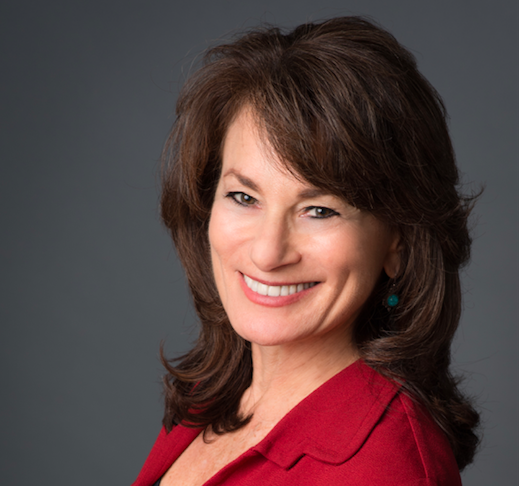
Rabbi Tirzah Firestone PhD is an author, Jungian psychotherapist, leader in the international Jewish Renewal Movement and a renowned scholar and teacher, widely known for her groundbreaking work on Kabbalah, depth psychology, the healing of intergenerational trauma and the reintegration of the feminine wisdom tradition within Judaism and her own memoir writing. Rabbi Tirzah lectures and teaches internationally about harvesting our ancestral wisdom, especially honed to assist us in this critical time in world history. Her latest work, combining research and depth psychology, neuroscience, and the field of collective traumatology is highlighted in the award-winning book Wounds Into Wisdom: Healing Intergenerational Jewish Trauma. Friends, I cannot recommend this book enough. It has so much wisdom for every reader. Today, Carmen and I get to unpack the seven principles of healing featured in this unbelievably helpful work alongside Rabbi Firestone.
Rabbi Tirzah Firestone, it is such a joy to get to have a conversation with you. Thank you so much for making the time to chat with us today.
Tirzah Firestone:
I’m so happy to be here. Mike, thanks for the invitation.
Mike Petrow:
Oh, goodness gracious. We are so honored. We’ve been looking at Richard Rohr’s book, The Tears of Things, and this episode we’re talking about chapter seven, The Alchemy of Tears: How We Learn Universal Sympathy and Grace. And I got to tell you, there is no more exciting of an opportunity than for us to sit and chat with you about this. Before we even jump in, I have to say thank you. Carmen, I know you’ve been loving it at least as much as I have.
Carmen Acevedo Butcher:
Oh, yes. Because I wish, that I had had this book when I was 20 and trying to process trauma. Because you bring in the stories and you give us a family of fellow people on the journey who are walking together. So thank you for that. It’s not isolating.
Tirzah Firestone:
Oh, thank you so much. And just as you said, Carmen, the book is drawing from Jewish stories, but it is about so much more. It’s about what we’re living with and what all of us are living through right now and it belongs to the world, not necessarily to one people.
Mike Petrow:
You give us in this book, seven principles of Jewish cultural healing and I, in reading them, learned so much. And also every single thing, I could find a way to apply to my own experience and my own journey. I grew up a Pentecostal Charismatic Christian.
Tirzah Firestone:
Really?
Mike Petrow:
I did. And Tirzah, one of the scriptures that I heard read a lot, and it was a source of confusion for me initially, was this verse from Deuteronomy chapter five, verses nine through 10 in the Elder Testament as I love how you refer to it, and it’s God speaking and there is this idea of laying the effects of bad choices or trauma or wounding upon children. It says, “The entire family is affected. Even children in the third and the fourth generations are affected.” And then God goes on to say, “But I lavish unfailing love for a thousand generations on those who love me and obey my commands.”
Tirzah Firestone:
Yes.
Mike Petrow:
And when I read your book, what I see right at the top is it seems that you’re telling us that while we think about our tears and our hurt and our loss, trauma and grief are intergenerational, but it seems like you’re telling us so is healing. Does that sound right?
Tirzah Firestone:
That’s beautiful. Beautifully said, Mike. I retranslate that particular passage to talk about not the sins of the fathers and mothers, but the wounds that they’ve incurred, which often accrue when they’re deferred, when grief is deferred, and the wounds that result from the trauma that results from the deferred grief get passed on. So when we cry our tears, there is something very deep that happens. There is a dissolution, as we say in alchemical terms. I’m also very steeped in Jungian psychology and dissolving the wounds through tears and turning them into something else. But when we don’t metabolize our grief and when we don’t metabolize what has happened to us, now science is showing us that it actually affects us physiologically, not the genes, but the expression of genes. You might ask, why are people talking about intergenerational this and that all of a sudden? It’s because there has been scientific data studies that have come out.
We understand that our environmental stresses, the wars, the displacement, the hunger, all the things that our ancestors and now we are living through in this age of echo anxiety and this age of wars and tremendous moral strife, which we can talk about, those things actually affect us physiologically. Not only us, but also our next generation. So yes, the wounds that are not metabolized get passed down generation after generation until someone says, “Ah. This is not mine. This is bigger than me. This didn’t start with me. I can work with this. I must stop this. I must stop the buck, so to speak. I must stop this and bring consciousness to bear.”
Mike Petrow:
In his memoir, Jung writes, “I feel very strongly that I’m under the influence of things or questions which were left incomplete and unanswered by my parents and grandparents and more distant ancestors. It often seems as if there were an impersonal karma within a family which is passed on from parents to children. And it always seemed to me that I had to answer questions which fate had posed to my forefathers and foremothers and which had not yet been answered, or as if I had to complete or perhaps continue things which previous ages had left unfinished.” And I’ve heard you talk about image deposits in our souls and I wonder, are we carrying around unfinished stories and unwept tears that were handed to us?
Tirzah Firestone:
Yes, I think so. How prescient of Carl Jung to know that before there was any science at all, but he felt the unfinished business of his ancestors, of his father. He was the son of a minister who had a lot of complexity that was not … A lot of stones. And here in his life, he turned over the stones and looked underneath and at what he called the shadow. And that’s the work that each of us must do because as we see currently, that unfinished business will continue to generate more and more problems. All of the traumatologists in the world talk about this unconscious tendency to reenact our injuries on ourselves or on others. And those are the words of Bessel van der Coke, a great traumatologist and many others. Everyone would concur. What is that knee-jerk reaction that wants to reenact? Freud called it a repetition compulsion that needs to reenact our trauma again and again. So now we have the science to back all this up and we have to start waking up.
Mike Petrow:
Your very first principle, you kick us off on this journey by saying face the loss. Face it head on. What would you say for listeners that’s sort of revolutionary for them because they’ve been taught not to cry their tears and not to face their loss, but to run away from it?
Tirzah Firestone:
Yeah. Well, let’s just say that we are all suffering a kind of moral injury right now. That’s a kind of trauma. It’s very subtle, but it’s not so subtle. And I hope that our listeners will identify or associate with this personal experience. It’s a kind of trauma that arises when we witness or fail to prevent acts that violate our deepest moral codes. Listen, it’s hard to read the newspaper today without suffering from some sort of moral trauma, like I want to do something about this. So we have to speak that. Not let it go into us, permeate us on a somatic level, but rather face into it and feel the profundity, feel the rage, the mourning, move the energy from the inside to the outside, if you will. And turn as Father Richard says so beautifully in his book when he talks about lamentations and talks about the prophet Jeremiah, metabolize the grief. Don’t let it turn into rage. Allow it to dissolve and pour through us as tears.
Mike Petrow:
Any tips for us on how not to switch off when we feel overwhelmed by the overwhelming hurt in the world?
Tirzah Firestone:
I deal with this question all the time. Sometimes I just put myself in the presence of God and allow myself to talk to God, journal, go into nature somehow. Sit against a tree. Lie down on Mother Earth and whale. There are many. I think moving it out of our nervous system is really don’t let it get stuck in our bodies because it’s so much better to be feeling what we are feeling rather than getting numb. Numbness allows all kinds of other problems. So feel it, let it move through your nervous system, let it move out.
Carmen Acevedo Butcher:
Rabbi Tirzah, what I so appreciate about your principle to harnessing the power of pain is that you give us hope. I know many of us have done the dissociation or the numbing and always feeling defensive. What trouble is going to happen next? Always reactive. And you put together at the beginning of that these ways that we can actually enter into what Father Richard calls the tears of things. You write, “Trauma disconnects us from our bodies, and we must learn to re-inhabit them so we can begin to harness the overwhelming intensity of our experience and put it to use. Body awareness is critical to reclaiming our lives.” And so I just want to sit with that notion for a minute. And then secondly, you quote from Rami Elhanan. Rami says, “We have an enormous ally on our side. The power of pain. It is very much like nuclear energy. You can use this energy in order to bring darkness and destruction and pain, or you can use this energy to bring light and warmth and hope.” Can you say more about how this works, how we can do it?
Tirzah Firestone:
Well, it’s not an easy key to turn, but it is a key that turns. And I’ll bring in my teacher Rami Elhanan here whose daughter, Samadar, was killed by a suicide bomber at the age of 14 on a mall. She was shopping with her other friends. They were all killed. And he admittedly, and I tell this story in Wounds Into Wisdom, turned into a raging animal. For a year, he was uncontrollable. He hated. He wanted vengeance. He was fuming. He couldn’t work. He was a volcano. And then he went through an experience, which I will tell very briefly, in which he had this awakening and he saw a Palestinian woman. He was invited to a meeting and he saw a Palestinian woman step off a bus with a necklace on, and the picture around her heart of her daughter who had been killed by an Israeli sniper.
And something inside of him went in a bizarre kind of moment of metanoia, you might say. And he had this transcendent experience where he realized, “Oh my God, this rage that I am carrying, this is happening on both sides. This is happening on all sides.” And his rage converted into this disillusion that Father Richard talks about. This outpouring. A sea of tears. And Rami Elhanan has become one of the great spokesmen for peace in Israel now, and one of the great activists because his heart melted at that moment. So this is his quote. Thank you, Carmen. That talks about harnessing the power of our pain and realizing it has so much power if we can just feel our pain, talk about it, use it in some way, harness it, but it is a body experience. It is not to turn away from, but it is to master it, to convert it into a kind of activism, into a kind of universalism. It is not only my pain, it is the pain that humanity is suffering right now. It is not a small case pain or small case suffering. It is the suffering in the world, and we are sharing it on all sides.
Carmen Acevedo Butcher:
That’s beautifully said. Beautifully said. Can I ask you also to talk just a moment about limbic lava? That is an unforgettable term. So can you help us understand what limbic lava is?
Tirzah Firestone:
It is simply a colloquial way that I understand what happens in the brain because I’m not a scientist. I’m the farthest thing from it. And limbic lava is when we are activated, our sympathetic nervous system gets activated in a way that we cannot control our responses because something has been said or we have seen something in the paper or on a report, and it just starts to boil in us. Unfortunately for me, I’m going to full disclosure here, say that this happens regularly nowadays, where I see the things that are going on on the world stage. I just like, “This can’t be happening. No, no, no.” And my limbic lava … That simply means that my emotional brain has been triggered and there’s a certain kind of sympathetic nervous system reaction that shuts off my prefrontal cortex, which means my ability to think in a linear way, in a logical way, in a diplomatic way, to hear someone else, to cognate another position.
All of a sudden all of that goes offline. And when I am triggered and my limbic lava is flowing, I can’t hear anything or anyone. I can’t hear the other side. So we all need to be able to, in this day and age, I think, be able, and this is the hardest thing, to be able to neutralize that lava to be able to do something that … I sit at my altar, I say a psalm, I go outside and walk my dog. Whatever I can do to cool out literally, and so that I can reclaim another part of my nervous system and I can cool out. Literally to chill. Literally to chill. And my parasympathetic nervous system comes back online where I can access hearing and logical thinking. I can be not reactive, but reflective. And that’s the difference that can happen when we can learn to, as his Holiness the Dalai Lama says, tame our minds.
Carmen Acevedo Butcher:
That’s helpful.
Mike Petrow:
Yeah. And I can see how it so clearly sets up principles three and four. I’m so intrigued that your third principle is finding new community. Here at the Center for Action and Contemplation, this is the thing we get asked about the most. How can I find a community that can hold all that I am, all that I’m going through, these new places that I’m going into as I’m transforming and healing and recognizing the pain of others? I’ve heard you talk about how important it is for us to be witnessed and experience with this, which is brilliant. Thank you for that. What guidance for us in the importance of finding new community and how do we do it?
Tirzah Firestone:
First of all, let me just say that all of these seven principles are the distillation of my narrators, the people who told me their stories, the people who lived through the worst traumas, the hardest tragedies. And they did that alchemical hard work of turning their heavy metals, their deep rage into tears of association, tears of feeling the grief of the world. And each of them, I would say, of many scores of people that I interviewed really got locked into isolation at first. Because you think no one could be feeling these things. No one. There is nobody who understands me. In particular, I would say we’re speaking in a post-COVID era where the isolation was horrendous. I think there was so much terror and fear of what is this pandemic? What is going on here? But we did learn that you can reach out in a magical way to a cyber community. More than ever, we are needing to find our kin. Family that can help us absorb the blows in the world and to help neutralize the stresses.
So finding our community, I can’t underscore enough. There are many ways. I have found that cyber communities can be equally positive and healing. It’s always good to meet people in person for hugs and handholds, but if that is not possible for us, it’s really important to reach out. Get online, find your community. And this also includes the internal community. I work a lot with ancestors in my work and doing the ancestral healing and finding our positive well and wise ancestors whose presence is blessing us and who can give us a feeling. We also lived through hell and high waters, and we can bless you now and give you strength just by calling upon us. I know that might sound a little strange to some listeners, but it is really powerful.
Mike Petrow:
This is what Richard’s doing in The Tears of Things. He’s pointing back to Hebrew prophets as elders and ancestors, potentially even for us in the Christian tradition as ancestors who offer wisdom.
Tirzah Firestone:
Absolutely. Well, they’re your ancestors too, because we’re all in one lineage, right? Think about Jeremiah, think about Isaiah, Ezekiel. Think about these people who lived through … It must’ve been the zealotry, the stupidity of the leadership. These are things that we’re feeling today. Like how could they make such a mistake? The indignation. The sense of rage and indignation that Richard writes about so beautifully in The Tears of Things. Yes, they were feeling all of these things and they have that written down in their scrolls that we can draw from and help us feel, okay, I’m not alone here. I’m not alone.
Carmen Acevedo Butcher:
I love that. I love also how that’s a natural segue, that if we are in community, then we’re also asking ourselves how we can stay human. And so we’re less likely to fall into the fear, the blame, and the dehumanizing. So in other words, we need community to resist this sort of default that can happen when we’re in isolation. So one of the people in Wounds Into Wisdom who I just would love to meet really is Reuven. The Romanian octogenarian. A refugee many times, oppressed and hated as you write, by the Red Army and Tinescu’s fascist Nazis. But his spirit is unconquered, and he says the true warrior is the one who converts his enemy into his friend. Now, I have to tell you, Tirzah, I struggle with this. I do. I struggle. So can you share with us a little bit more about how this is possible for us on a daily basis?
Tirzah Firestone:
Yeah. I love how you’re saying that, Carmen. Reuven was a magnificent guy who came out of the Holocaust with a little fiddle that he plucked off the wall. It was a gypsy fiddle. And he played for me, and he played his harmonica and he refused to hate. But as you say so well, it is a default in our human nature to objectify the other. Martin Buber called I it relating. We objectify, we make the other objects and fear them and blame them and then dehumanize them, and then that gives us license, God forbid, to do horrendous things because they are the enemy. Now, I want to point out that in the Torah, as I call it “the Elder Testament”, no fewer than 48 times does the Torah tell us in various language injunctions to care for the other, the stranger who lives in your midst.
It’s called the [foreign language 00:59:06]. To love the stranger because we ourselves have been the stranger. We know what it feels like to be othered. We know what it feels like to be outcast or to be the outlier, to be marginalized because each of us knows that. How it felt in the third grade to be bullied, but also our people, our ancestors, many of whom have been displaced, they’ve lived through wars and famines. We have that in our human totality. We have that in the collective psyche, the collective unconscious, but we also have it in our bodies. And so we are told no fewer than 48 times. Why is that? Because I think the divine intelligence that wrote these scriptures, the prophetic voice, understood that it is just, as you say, Carmen, a default for us to other the other and to disown. Oh, but those people, they voted like that. Or these people, they’re ignoramuses. Just however we do that. We also other our own selves, by the way. I want to just point that out. We do that all the time to put our own selves out of our hearts, to judge ourselves, mercilessly. Resisting that call to other. Getting in there with humanity and understanding that we’re all in pain.
Mike Petrow:
I feel like as we zero in on the fifth principle, which for me, I will admit my favorite chapter in the book, and I think super strong medicine, this idea of disidentifying from victimhood. Before I ask you for some guidance on that, I want to ask you about the both end of that, because in recognizing you talk about this so well. We have agency. We get to choose how we tell our story. We get to decide am I telling a story of victimhood or not? And yet I read all these accounts in your book, and at no point are you saying disidentifying from victimhood is not acknowledging that we have experienced loss and trauma. So my first question when we talk about disidentifying victimhood is how do we hold the both and of acknowledging our loss? Just like you said, it starts with facing the loss, naming the truth of what we’ve been through, and then not letting that become a story of victimization.
Tirzah Firestone:
And not letting it become our identity. It’s a continuum. And again, I think Father Richard talks about this so beautifully that when we dissolve, we move through experience and we don’t get stuck. We don’t coagulate. That’s another alchemical principle. Coagulatio. Things come together, but we want to move through. And yes, this happened to me. Yes, it is horrible. I am extremely vulnerable. I want to go into my cave and lick my wounds, but I have to keep moving through that tendency to isolate in the cave, to identify with my story. I’m a psychotherapist. You can’t tell a person, “Well, it’s time to move on now.” Absolutely not. But not to let it coagulate.
Years ago we used to say victims of incest. We never hear that term anymore because psychologists understood that’s a death knoll. If I become a victim of incest or a victim of sexual assault and that is all that I am, and they heard people introducing themselves as such, then it is a place of deep stuckness. Disidentifying from victimhood. And you’ve already kind of underscored this, Mike. It is the other side of the coin to the next principle, which is confronting our sense of chosenness and entitlement. My victimhood could entitle me to do things or to feel things or to think things that keep me and my people or keep me stuck.
Carmen Acevedo Butcher:
I appreciated that you brought up as your sixth principle, this you said redefining Jewish chosenness, and then you help us see that universally also. So you talk about that chosenness in some form is a cornerstone of the three Abrahamic traditions. And for me, being raised evangelical in my childhood, we were told we were chosen. Not in so many words. But we were saved by the Lord and others were lost and needed us to save them. And so it’s the same kind of a … And you write, “The notion of divine election creates an unbearable burden to fulfill a destiny that demands obedience and superhuman excellence.” Can you help us see how that can become a point of connection to a world that is suffering?
Tirzah Firestone:
I once sponsored a panel at my synagogue, and it was an evangelical Christian, a beautiful guide and teacher rabbi and the Muslim Imam. And in this panel it was talking about the things that we speak about behind closed doors, each of us, to our constituents. What do we really say, what do we really believe behind there that actually serves to separate, not join us to God’s community? What are the things? And it was just … I’ll never forget this because each one of those leaders … And I was the moderator. I had my mouth open as each one confessed that behind closed doors, we are triumphalists. We believe in special election, divine election. We believe that we have it and the others don’t. That each of us has in our sacred teachings, violent teachings or teachings that are a call to violence. It might be subtle in the prophetic … Let’s say in the Book of Judges. It’s not at all the Book of Deuteronomy. Not at all. So we have that in our ancient, ancient literature. And as some people are now saying, how do we repudiate those texts? Is it the time to confess those triumphalist notions? Because look what’s happening as a result of these deeply inculcated beliefs.
Mike Petrow:
All of this flows together. If we identify in victimhood, then we will act towards making sure that we will never be victimized again.
Tirzah Firestone:
That’s right. And again, that lives in a … At a nervous system, at a somatic level, we start to see the world as an existential threat rather than as we are all activated here. We start to live in a defensive posture rather than as servant leaders.
Mike Petrow:
I so appreciate that, and I appreciate the fact that you end all of this with the last principle where you talk about taking action and you clearly show us that there’s inner work to do that then can lead to outer work. We can put our healing in the service of healing the world, which is really, really beautiful.
Tirzah Firestone:
So in Judaism, we have, I’ll say very briefly, a kind of dictum that says there are two kinds of repair we are here to make.
The world is unfinished. The world needs us and needs each and every one of us. And the creator left it unfinished so that the creator could be partners with us in tikkun olam, in the repair of the world. But there’s also what’s called … It’s the other side of the coin, which is tikkun hanefesh. It’s the repair of our own souls. And so first, we must take care of ourselves. We must do self-care and true self-care is built on self-awareness. We have to have compassion for what’s running me, what’s inside of me, where I get lost. We have to parent ourselves lovingly so that we can then go out and take our wisdom and take our self-awareness into the world and shed it in the world and have compassion on others in the same way that we have compassion on ourselves. Taking action is taking inner action and taking outer action in other words.
Mike Petrow:
At one point you say, “When we overlook our suffering, our actions will likely bear the marks of the trauma we’re fleeing.” And so we are the Center for Action and Contemplation over here in Albuquerque. And one of the things we see when we talk about how contemplation and action go together, it’s inner work and outer work. If we don’t do our inner work and if we don’t do our inner healing, it seems like our activism can still have that unconscious trauma acted out, right?
Tirzah Firestone:
Yes. So well said. Sometimes it’s that limbic lava flowing. “I’ve got to do something. Oh my God, oh my God.” And we come to our activism from a sense of rage rather than heartbreak and our heart breaking open. And we feel that. You can feel that. And usually it galvanizes other people to react to us and push back. We get pushback rather than, “Oh, I feel your generous spirit. I don’t agree with you, but I love you because my heart is also in such pain.”
Mike Petrow:
I’ve so loved your book. I’ve so loved this conversation. And in this last principle, I realized that wisdom can lead us to our work. And it seems like what you’re saying is in the alchemy of transforming wounds into wisdom, our healing doesn’t have to be just for us.
Tirzah Firestone:
Deeply embedded in my tradition is the idea that every act that we do, every act of tikkun hanefesh on our own selves, act of healing, act of self-awareness, act of self-improvement, and every act we do, a smile on the street, a hand reaching out, a contribution that we make, every act that we do bears ripples. It ripples out into the whole. No act, just like no person, lives in isolation. Everything is in motion. And so I guess the closing to this chat we’ve had is a blessing for all of us that we remember that all of our efforts count. Every effort. Listening to this podcast, reading Father Richard’s book, moving toward more light and toward more compassion. Every act bears a strong reverberation and a resonance on the whole, making this life better, making this world better. And thank you so much. My heart feels so full of gratitude right now.
Carmen Acevedo Butcher:
Thank you.
Mike Petrow:
Oh, thank you so much. Thank you for showing us how our wounds can lead to wisdom and being a living demonstration of how our wounds can help us find our wisdom teachers. This has been a treasure. Thank you, thank you, thank you.
Carmen Acevedo Butcher:
Thank you, Rabbi Tirzah.
Tirzah Firestone:
Thank you.
Mike Petrow:
Oh my gosh, Carmen, what an amazing set of conversations this month. This chapter is so profound. I know I say this a lot, but in a lot of ways it feels like the beating heart of the book for me. When Richard writes, “The gift of tears and the gift of healing are almost one and the same,” and then talks about this process of alchemy where our tears help dissolve our anger and the hard stuck places inside of us so that we can find meaning and so we can heal. And he says, “In this way, the prophets in Jeremiah in particular invite us into a divine sadness about reality itself, much more than mere outrage at this or that event.”
Carmen Acevedo Butcher:
What I appreciate about it all is that it gives me, it gives us permission to weep as opposed to how some of us, I know I was, you’re raised to think tamp them down, stuff them down. And one of my favorite quotes, it’s like a Cohen for me of Richard’s here is, “Felt reality is invariably wept reality and wept reality assume compassion and kindness.”
Mike Petrow:
When Richard talks about God standing in solidarity and the invitation to become emissaries of the tears of God, and instead of me looking at God going, “Why are you doing this to me?”, or looking at God going, “Are you angry at me?”, going, “God weeps with me over the state of the world.” It’s such a game-changer.
Carmen Acevedo Butcher:
Absolutely. And when we pair that with Julianne of Norwich’s real insight that she’s also weeping because God loves her so deeply and loves the world so deeply. It’s like if you’ve ever had a difficulty with someone, but then you realize that they really meant things well, and you might have gotten it wrong and you realize, “Oh my gosh, I am loved.” There’s that weeping for Julianne of Norwich, of, “Wow. I hadn’t really noticed how much God loves me.” It’s that feeling you get when you’re out on the marsh beside a tree in the busy city and you realize, “Wow. This is really mysterious and amazing and miraculous and it’s love.” And then what can you do but weep, really?
Mike Petrow:
Tears, I feel like, dissolve unhelpful stories and invite us into the process of telling better stories.
Carmen Acevedo Butcher:
So one of the things I’m wondering, because you and I have talked about this some, is what happens when we are bowled over by grief and trauma?
Mike Petrow:
Rabbi Tirzah gives us so much wisdom there. And really, really what this podcast is all about is living the teachings forward, taking these beautiful gifts that Richard gives us, and then amplifying them and even being willing to ask new questions. And so what Rabbi Tirzah does is she not only helps us face our tears, her first principle in our conversation was face the loss, but she also brings in a lens on trauma. When I did my grief and trauma certification, on the very first day of the very first class, the chair of the program sat us all down and said, “Here’s something you need to realize. Grief and trauma are so related, but they are not the same thing. They have to be handled differently. And if you don’t deal with your trauma, you will not be able to grieve.” And what he actually literally said is that physiologically grief, the alchemy of pain into meaning and healing is a higher brain function, and trauma is a lower brain function.
And what happens is when our traumas are triggered, our lower brain kicks us into survival mode and tries to override our higher thinking to get us to take swift action to protect ourselves. But the problem is when we’re traumatized and those traumas get triggered and activated, it shuts down our ability to slow down and cry our tears and let those tears dissolve old unhelpful stories. Does that make sense and has that been real in your own experience?
Carmen Acevedo Butcher:
Yeah. And I love the way you explain that so clearly, because I think if you’re blindsided simultaneously by trauma and grief, it can be so confusing how to make sense of it and how to deal with it. And it really helps to know that … And that’s where Tirzah’s book comes in and her teaching. That when we go through these seven principles and really, really work with our trauma, then we can grieve better. We have space to grieve. And otherwise, it’s just so overwhelming. What I also love is that just the way you gave us this concrete understanding of grief and trauma, she gives us the language to understand our trauma. She gives us stories of others. So I really love all of this beautiful teaching of language that gives us the tools to enter fearlessly or fearfully into our trauma however we are at the time.
Mike Petrow:
So when Tirzah gives us these skills to slow ourselves down, to get in touch with that trauma, to look at those stories, to say, “Is this my story? Is this someone else’s unfinished story? Am I being invited to weep someone else’s unwept tears?”, that brings us to a point of clarity which can help us heal. Oh God, it’s such valuable teaching. I really hope people put Wounds Into Wisdom on their reading list for after they finish up The Tears of Things.
Carmen Acevedo Butcher:
She’s like the therapist we all would like to have.
Mike Petrow:
Oh my gosh.
Carmen Acevedo Butcher:
Rabbi Tirzah. Like if your car were broken down on the road and the car being broken down is trauma, and Rabbi Tirzah pulled up beside you, you’d be like, “Great. We can do this.”
Mike Petrow:
It’s so true, and it’s such an invitation, for me, honestly, to see the divine that way. Origin says that life is a hospital in a classroom, and he says that Christ is a teacher and a doctor. And if you put those two things together, what you get as a therapist. Someone who really is working with you and listening to you and helping you heal. We had this insight in this episode about even in the Book of Job, God being a character who listens deeply, lets job say everything he has to say and then responds helpfully. That’s such good counsel. What advice would you give our listeners for when that limbic lava erupts and when they feel themselves overtaken?
Carmen Acevedo Butcher:
The first thing is to take a step back and pause. And you’re not retreating, you’re pausing. So that we don’t react, but we respond. And just taking a beat, literally. So like an email comes in and the reptilian part of me, if it’s an email that sets me off and I take a step back, take my hands from the keyboard, and then I just pause. And I try to see it from the perspective of bigger rather than just my own small ego. And this also helps me have better response eventually. And then with limbic lava, I always think self-compassion. Like what part of me needs my attention? What part of me is in pain? And I think if we can, pause, walk out into nature. That is one of the biggest things. And even if we’re in a city. I used to do this in London. I’d go to my favorite plane tree, which was right around the corner and put my hand on the plane tree and just stand there. Listening, like you said, Job being deep listened to by God. There’s something about the way the plane tree in the middle of all the taxi cab honks and everything of London, I could feel that plane tree listening to me as I listened to it. So there’s a lot of love in creation available to us wherever we are.
Mike Petrow:
A lot of times when I work with spiritual directives, I talk to them about what I call SNAPS, S-N-A-P-S. So it’s when you feel yourself triggered or when you feel a story coming in, you stop. First of all, just stop, pause. Notice what’s happening. Ask what is trying to be expressed. If it’s fear, if it’s anger, if it’s sadness. And then do it on purpose. S-N-A-P. Purpose. Because when you do something on purpose, with purpose, it reveals its purpose. So if you’re feeling afraid, be afraid. Don’t do it by accident. Do it on purpose. If you’re angry, be angry on purpose. And then the last S is start again. And I find that it’s just contemplation. It’s pausing and listening. And I hear that so much in what you’re saying about go slow.
Listeners, thanks for being with us. We look forward to seeing you again next month. Until then, we give you every blessing as you embark on your own healing journey, face your own losses, cry your own tears, cry the unwept tears of others, and find ways to ground yourself when that limbic lava erupts, so you can start the whole process all over again. Thanks so much for being here with us today.
Corey Wayne:
Thanks for listening to this podcast by the Center for Action and Contemplation, an educational nonprofit that introduces seekers to the contemplative Christian path of transformation. To learn more about our work, visit us at cac.org. Everything Belongs is made possible thanks to the generosity of our supporters and the shared work of-
Mike Petrow:
Mike Petro.
Paul Swanson:
Paul Swanson.
Drew Jackson:
Drew Jackson.
Carmen Acevedo Butcher:
Carmen Acevedo Butcher.
Jenna Keiper:
Jenna Keiper.
Izzy Sptiz:
Izzy Spitz.
Megan Hare:
Megan Hare.
Sara Palmer:
Sara Palmer.
Dorothy Abrahams:
Dorothy Abrahams.
Brandon Strange:
Brandon Strange.
Vanessa Yee:
Vanessa Yee.
Cassidy Hall:
Cassidy Hall.
Corey Wayne:
And me, Corey Wayne. The music you hear is composed and provided by our friends, Hammock. And we’d also like to thank Sound on Studios for all of their work in post-production. From the high desert of New Mexico, we wish you peace and every good.