Mike Petrow: Welcome back, friends, to the Everything Belongs podcast with Father Richard Rohr. Each season, we’ve explored one of Richard’s books. Each episode we travel over to Richard’s house to spend some time with him and Opie and discuss a chapter with him, and then we’re joined by a guest who helps us to live the teachings forward, to think about Richard’s wisdom in new ways by asking new questions in a rapidly changing world. This season has been extra special because we’ve been exploring Richard’s latest, The Tears of Things: Prophetic Wisdom for an Age of Outrage. As a reminder, you don’t have to read the book to follow along with us, but we would love it if you do.
In this episode, we jump back into our conversation with Richard in his hermitage to talk about chapter 9, Ezekiel, redemption, and the grace of God. Here, Richard points us to the wisdom of Ezekiel, who he says is the rare combination of priest and prophet and holy fool. We’ll look at the ways God always acts, but is never reactive, the role of restorative justice as the divine freedom to do good at all costs and how that invites us into a vision of universal responsibility and universal restoration. Then we’ll be joined by CAC Affiliate Faculty member Reverend Dr. Randy Woodley. And I can’t tell you how excited I am about this. Randy’s activism, scholarship, and indigenous wisdom guide us through this chapter with such an insightful lens.
We’ll talk about the ways that symbols and tricksters play a role in the prophetic to circumvent the mind of empire. We’ll talk about how the greed and speed of empire are infections that could potentially destroy the entire world, but Randy will share with us an alternative vision, the vision of Eloheh, a Cherokee word meaning harmony, wholeness, abundance, and peace, and how the prophetic wisdom of this indigenous knowledge and practice could point us towards these possibilities of universal responsibility and universal restoration. I can’t wait for you to hear these two amazing conversations. From the Center for Action and Contemplation, I’m Mike Petrow.
Paul Swanson: I’m Paul Swanson.
Carmen Acevedo …: I’m Carmen Acevedo Butcher.
Drew Jackson: And I’m Drew Jackson.
Mike Petrow: And this is Everything Belongs. Paul, Richard, always a joy.
Richard Rohr: Good morning.
Paul Swanson: Pleasure to be together with you.
Mike Petrow: I’m particularly excited to talk about this chapter and I know you’re probably tired of hearing me say that it’s one of my favorite chapters in the book. I am-
Richard Rohr: It’s more readable than most of them, for some reason.
Mike Petrow: It’s a whole lot of fun, this chapter on Ezekiel.
Richard Rohr: Yeah.
Paul Swanson: Yeah. What a character.
Mike Petrow: When we look at the prophets, there are tropes that come up where they’re sort of crazy folks, right? They’re tricksters, they’re weirdos. John the Baptizer was like a wild man who was living on the edge of town. And Ezekiel is another one of these prophets with a wild persona, right? He’s quirky, he’s a visionary. There’s a lot of public drama and spectacle in his teaching. In the Eastern Orthodox Church, they call this trope the Holy Fool. They trace it back to the prophets and through the Desert Fathers and Mothers. As well with the Orthodox, they take it almost all the way up to the present time. You have famous Holy Fools in the Orthodox tradition.
We were talking earlier, Richard, about St. Basil who would torment Ivan the terrible, just torment him. One of the legends is it was Holy Week and he was there with his family in worship, and as he was leaving, Basil, who would walk around naked in the wintertime and do all these crazy things, is eating sausage, and he offers Ivan some and says, “What’s the point of not eating meat during Lent? If you are hurting the poor and executing revolutionaries, what’s the point of keeping the fast if you’re not actually paying attention to the more important commandments?” So these folks are almost like court jesters, right?
Richard Rohr: Yeah, that’s a good parallel.
Mike Petrow: Richard, why do you think it is that the prophet needs to push or break the boundaries of what dominant culture considers normal or polite?
Richard Rohr: I think there needs to be someone who reveals the shadow side of religion, the temptation of religion to be about being nice. I said years ago, the word nice is not in the New Testament, but it really took over in mainline Catholic, Protestant, nice people were Christian. Now, it doesn’t mean you try to be unnice, but neither do you concentrate on following social norms.
Mike Petrow: Being contrarian for contrarian’s sake is not the point, right?
Richard Rohr: No, that’s egoic.
Mike Petrow: How do you think a healthy and mature dose of holy foolishness might be important right now?
Richard Rohr: You have to have a bit of non-need to be loved, non-need to be admired, non-need to be looked up to, to not be a pleaser, as we say today. So to break out of that, if you are initially a pleaser is a huge discovery of inner freedom, to risk being disliked, to risk being judged, to risk being thought strange.
Mike Petrow: When I hear you talk about being a pleaser, I am still struck with this notion that if you are a pleaser, you are trying to align with the dominant system.
Richard Rohr: Curry favor.
Mike Petrow: Right.
Richard Rohr: Yeah.
Mike Petrow: But if you’re a displeaser and your only purpose is to not align and to push back against the system, you’re still sort of a slave to the system in the same way.
Richard Rohr: You’re pleasing another group, that’s all. It isn’t the mainline group, but it’s the people down on whatever street people live who try to be displeasing.
Mike Petrow: There’s a freedom. Oh, go.
Paul Swanson: It’s like status by affiliation, whether it’s with the dominant group-
Richard Rohr: Very good.
Paul Swanson: … or it fits with the subculture.
Richard Rohr: Yeah. Well, that’s Ezekiel, all of this leads up to. He’s just eccentric.
Mike Petrow: Yeah.
Richard Rohr: His rituals, his sayings, his parables, they’re all eccentric, which lead a lot of people to think, “He’s a bit crazy. Why would he be the voice of God, which would keep us from admiring niceness too much?”
Paul Swanson: Well said. And to get a little more specific about Ezekiel, you talk about how he wrote only while in exile in Babylon, and you note that he’s the rare combination of a priest and a prophet.
Richard Rohr: That’s right.
Paul Swanson: How does Ezekiel don both the roles of priest and prophet?
Richard Rohr: He begins with disorder, not order, which is what I say is the usual pattern. He’s an early psychedelic experiment. He’s got a strong sense of the distance, transcendence, holiness of Yahweh. And yet transcended, God is willing to let Ezekiel almost play games with God about God, who God is and how God speaks. I think it’s that combination that make him attractive. He balances what we call eminence with transcendence. God is distant and yet God is right here in the middle of his antics, and they are antics, many times. When you have too much transcendence, you create angry people who are afraid of God. You have a false eminence and God is hardly God anymore. He’s someone to play with or manipulate.
Paul Swanson: It’s interesting because Ezekiel, holding both of these, manages to critique the law while also showing obedience to him.
Richard Rohr: That’s right.
Paul Swanson: And you name that in this chapter, and again, this brings us back to kind of that trickster archetype, one of disruption and mischief, which feels like such a necessary role for our lives, for this remnant. When holding a power of evil is in the collective, Richard, how can we be sure not to fall too far into obedience to the law? How can we remain more trickster and be sure not to lose our footing? How can we critique and be obedient?
Richard Rohr: I suspect you have to have done a wrong a number of times and still experience God as holding you, not giving up on you, forgiving you. It must have happened to Ezekiel where you cross over the line and yet you know you have not been rejected. It takes a certain amount of observation of your inner journey, a certain observation of your soul, as we would say. I’m still being accepted. I’m still being forgiven. He completely disqualifies Israel as a good love partner and then requalifies him in the same chapter. That’s what the saint experiences. He knows he’s a phony, “I’m not a saint,” and yet God’s love still makes him saintly. The overcoming of that contradiction is the life of a saint, the whole life.
Mike Petrow: I will say I personally, my life, I said this once before on the podcast, has been a dance between these moments in life and contemplation where I feel myself so unconditionally loved and then a lifetime of effort to prove myself worthy of that.
Richard Rohr: Worthy of it, yeah.
Mike Petrow: It’s the worthiness games-
Richard Rohr: Me too.
Mike Petrow: … that get us, right?
Richard Rohr: Yes.
Mike Petrow: And I think in Ezekiel we see this. It’s like you’re not worthy and also you’re totally loved. What a paradox. It hits-
Richard Rohr: That’s his grace
Mike Petrow: And it’s different medicine, I think, for different people because some of us need to remember we’re not worthy and need the one humiliation a day and others probably need to be reminded that they are worthy. This book does this so well. It starts with this intense imagery. The people are in exile. I’m sure they’re furious at their captors. They feel the injustice of that, but Ezekiel comes in and talks about the people of Israel are the useless vine and the adulterous spouse. He’s reminding them of their own failure to achieve righteousness. But then in chapter 16, grace drops on the scene like a love bomb. It’s wild. Richard, would you read page 133? You have Ezekiel 16 versus 62 and 63 in there.
Richard Rohr: 133. I’m going to renew my covenant with you, and you will learn that I am Yahweh. And so remember and be covered with shame. And in your confusion, be reduced to silence when I have pardoned you for all that you have done, to be shamed into love by being unworthy of it. Oh my God, that’s it. He gets it. Ezekiel 16 is central to the entire biblical transformational message.
Mike Petrow: You write elsewhere in the chapter, “Like Jeremiah, Ezekiel breaks the link we all suffer from, the notion that love must be earned, that we can create worthiness.” You can see why I underlined this sentence over and over and over again and highlighted it too. Yet this infinite character can only be realized in doses. So can we tease this out for a second
Richard Rohr: Please?
Paul Swanson: Yes.
Mike Petrow: Humans love power systems, I think. I think we want control and we want predictability in our lives just so we know how to function. And I think religion does help us navigate it. It gives us ideas to engage with God, to make God and life more predictable, but it can very quickly become about power and control, right?
Richard Rohr: That’s right.
Mike Petrow: “How can I get what I want? How can I earn it? How can I put a dollar in and get back what I paid for?” And I think this is kind of the structure and the dynamics of the ego, really. It wants a sense of order and control in the world around it. And then life comes in, knocks that apart. It introduces a little bit of chaos. We realize life can be unfair and predictable. That’s deconstruction or disorder, right? And a lot of times it feels like the outside world has let us down, but what’s really happening is our ego is failing. Our ego can’t make sense of everything.
Richard Rohr: The structure. That’s right.
Mike Petrow: But what’s crazy, Richard, is you point out, then grace comes in and grace, even more than chaos, blows the idea of being able to earn and predict things out of the water.
Richard Rohr: What a surprise?
Mike Petrow: And grace is even more of a defeat for the ego. So I have to read this because I love it so much. You write, “All grace is prevenient grace.”
Richard Rohr: Prevenient.
Mike Petrow: Am I saying that word right? All right.
Richard Rohr: Yes.
Mike Petrow: “The kind that makes you desire or want grace to begin with. Grace is not what we deserve by doing the right things, but rather a gift freely given by the Creator in the very act of creation, even if we do not yet believe in its source. Knowing the source somehow just makes it easier to keep saying thank you.” Which is so beautiful. But now this sentence, Richard, “As such, grace is strangely a punishment for the ego, which always wants to believe in payments and punishments, a concept we unfortunately get from religion itself.” Richard, I’m going to quote you and say, “Darn it.” What do I do with that? Help me make sense of it. Grace is a defeat for the ego. Oh, my God.
Richard Rohr: It is for the ego, not for the soul. But the ego wants to really say, “I am objectively worthy.” You have to do this with your wife, your girlfriend. Maybe it’s 10 years into the marriage, but let her love you, even though you know, dammit, you don’t deserve it. And if one person like that doesn’t enter your life, often it’s our mother, hopefully, it’s our father, we discover that template hidden in the universe for undeserved love, unearnable and breaking that logic. If that’s never been broken, I don’t think you could understand the gospel. It’s the vast majority of everyday Christians, Catholics that I’ve worked with, they just automatically presume, “Well, I didn’t deserve any better. I’m not a very good person,” or whatever, because the link between love and worthy of love is so deep in the psyche.
Mike Petrow: I remember when I worked with at-risk youth in the mental health field, and one of the things they would drill into our heads is that, and again, I’m just repeating what I was told, but they said that they had data that could corroborate that even children who grew up in a home without parents who showed them a healthy sense of worth, if they just had one adult person who came into their life at one point to model for them healthy self-esteem and to show them that they were loved and worthy, it could literally change their life. It’s amazing how grace can break in.
Richard Rohr: Yeah. You need to have it modeled somewhere. I am quoting now Ezekiel 20, “I will treat you as respect for my own name requires, not as your own conduct deserves.” It’s God being true to God’s self, not being true to us. It ends up being true to us, but I’m not waiting for you to do it right.
Paul Swanson: It’s a whole different ledger.
Richard Rohr: There you go. You got it.
Paul Swanson: Can you just say that again, Richard? I feel like that’s another moment of God’s measure is God’s own self, so can you just read that line again because I think-
Richard Rohr: Ezekiel 20:44, “I will treat you as respect for my own name requires. I’m just being true to who I am, not as your conduct deserves.” We should print that in big letters and put it on the wall of every Christian house. Really, the egoic world is the capitalist world. It’s the same world. Buying and selling, buying and selling. We don’t realize what a number capitalism has done on the soul.
I watched the Antiques Roadshow the other day and these people, when they found out they had an object that was very valuable, they just get ecstatic. “I made money for something that I thought was nothing.” They just get ecstatic. “Wow, I can’t believe it. I had that in my garage and it’s worth $10,000,” or maybe not that much, but just way more than they expected. I just was surprised at the level of happiness, having something that made you a whole bunch of money for doing nothing, an antique sitting in your house.
Mike Petrow: Well, it’s so funny because that’s grace, right?
Richard Rohr: That’s it.
Mike Petrow: Overwhelming love overwhelms the system of barter and payment and this for that.
Richard Rohr: Thanks for using that word, good.
Mike Petrow: But even now thinking about, whatever, the penal substitutionary atonement theory, all these ideas of even God has to pay the price.
Richard Rohr: Even God is subject to our capitalism. And people think I’m a heretic when I talk that way, but don’t you realize you’re being liberated by the gospel from reward punishment?
Mike Petrow: It’s so ingrained-
Richard Rohr: Which is a prison.
Mike Petrow: Yes.
Richard Rohr: Which is a prison.
Mike Petrow: It’s so ingrained in there. I know for me, like I said, it’s been decades of every time I get that taste of unconditional love, it becomes a tiny bit more trustworthy and my felt sense of it lasts a little longer, but those worthiness games creep back in so quickly.
Richard Rohr: It never stops. We’ll move it to a different level. If it’s not my athleticism, it’s my looks. If it’s not my looks, it’s my friends. If it’s not my friends, it’s my country. I live in a rich country. We’ll find something to prove that we’re worthy.
Mike Petrow: Or what a accomplished contemplative I am.
Richard Rohr: Yeah. They’re very good. What a good Christian I am.
Mike Petrow: How good I am at telling you that these things don’t matter to me.
Richard Rohr: Yesterday was Palm Sunday and this parking lot just filled up. The church must have been packed. I said, “What makes them come in such numbers?” And my cynical self says, “Catholics will come when they get something free.” Ashes and palms. You just get a little gift. And I think it’s a hint of grace. Anything free from the church, I don’t have to earn it. It’s beautiful. And God respects that childlike love, but says, “I’m going to outdo you a hundredfold.” You’re maybe not going to believe it in this world, but God’s grace continues until God is finally free, and that’s in the next life. In this life, we’re still into weighing, counting, measuring. You’re in the kingdom of God when you stop measuring, when you stop counting.
Paul Swanson: Richard, do you recall when that broke for you to-
Richard Rohr: One I remember, in the novitiate, I’m 19 making this retreat with St. Thérèse, a little book by a French priest, and I got the message through her, which is why she’s still so important to me, that God loves you when you do wrong even more than when you do right. Now, that’s Ezekiel’s Good Shepherd. The image of the Good Shepherd comes from Ezekiel.
Mike Petrow: One of my favorite things that you say, and you say it in this book more than once, is that the only perfection available to us is our ability to accept our imperfection.
Richard Rohr: Yes.
Mike Petrow: I don’t think it lets us off the hook for wanting to make love more real than the world around us too. But it’s a different motivation than when you’re working for perfection or worthiness.
Richard Rohr: See, the insight that Thérèse gave me is that you’re not really ashamed of displeasing God. You’re displeasing to yourself. She says, “Whoever is willing to serenely bear the trial of being displeasing to herself, that person is a joy to Jesus.” That blew me out of the water, that I knew it was myself I wanted to be pleasing to. This pride the ego takes in itself and religion can do that. That’s the cult of innocence that you hear me talk about, and it’s only God’s grace, a deliberate direct experience of God’s undeserved love that can break you out of it. Nothing else.
Mike Petrow: Do you think that there are those who have been so convinced of their unworthiness by life and their upbringing, that it’s actually hard for them to accept that they’re loved? It sounds like no matter where we’re coming from, grace is really hard to accept.
Richard Rohr: Yeah. But many people have been hated, abused, rejected. It’s almost impossible. If they do, it’s all the more revolutionary. It was the great scene. Do you remember Victor Hugo’s Les Misérables, the Archbishop’s candlesticks?
Mike Petrow: Yes. I weep every time
Richard Rohr: Jean Valjean, he steals the candlesticks and the Archbishop forgives him.
Mike Petrow: He says, you forgot the best. You forgot, which I think is actually a real story from the Desert Fathers and Mothers.
Richard Rohr: It is.
Paul Swanson: You forgot the best.
Mike Petrow: Yeah. He chases the thief down and says, “My friends, you forgot the best of the collection.” Jean Valjean gets caught and they said, “Did you steal that?” He said, “No. It was a gift, and not only that, you forgot the best of what I have.”
Paul Swanson: Oh my God. Does it tip back into transaction?
Mike Petrow: I know, but he uses the language of transaction to flip the transaction, because I think he says, “I’ve purchased your soul for God.”
Richard Rohr: That’s it. Purchased. I have purchased your soul for God, which he has.
Paul Swanson: I want to read this brief passage, Richard, from Ezekiel 36, “I will take you from the nations and gather you from all the countries and bring you into your own land. I will sprinkle clean water upon you, and you shall be clear from all your uncleanliness and from all your idols, I will cleanse you. A new heart I will give you and a new spirit I will put within you. Then you shall live in the land that I to your ancestors and you shall be my people and I will be your God.” What was stunning to me about this, Richard, is that all the heavy lifting of this is all God, collecting, cleansing, putting the new heart, new spirit, and the only time that humanity steps into this passage is the enjoying, is the accepting, is the allowing.
Richard Rohr: The receiving.
Paul Swanson: I am still touched by this, because it’s the responding, the enjoiner.
Richard Rohr: You should be.
Paul Swanson: Yes. What picture is Ezekiel painting about God through this picture, as we talk about grace?
Richard Rohr: He’s saying that every ledger that humanity understands of payment does not apply once you enter the divine realm and you’ve got to let go of it, which almost means you’ve got to break the law. Now, you’re getting in clergy start fidgeting when you say that.
Mike Petrow: I’m sure if few their hackles just raised them.
Richard Rohr: Are you giving people permission to sin in the practical order? Yes, because they will anyway. But now they’ve got the freedom to admit it and to be utterly honest about themselves, every ledger of payment and punishment has to be undone. That’s the work of God. What else would make you fall in love with God?
Paul Swanson: Mike, I’d love to hear your thoughts on if we look at one of your tattoos in your arms, what does this bring us to?
Mike Petrow: Yeah. I have the word apocytostasis tattooed on my arm and that’s this idea that goes all the way back to the book of Acts and through the early church especially of the universal restoration. Jung talked about this idea of the apocytostasis, that the whole universe is moving towards healing. He said, “That’s the shape of the universe and the shape of the human person.” Since then, almost 20 years of reading origin over and over again and you are teaching and sitting with this idea, the apocytostasis, it sounds like the Cliff’s Notes version of it is we are made of love by love for love. Love will win out eventually because we cannot indefinitely fight our nature and our maker.
In thinking about grace defeating the ego, I was thinking of another one of my favorite Roman Catholic theologians who has the amazing name of Hans Urs von Balthasar. He has a sentence that has stayed with me for years. Check this out. He says that God’s love is more resourceful than the cunning wickedness of humanity. Does not mean that the creator has an unfair advantage in their ascendancy over the creature, for love does not conquer in the way that power conquers, but wins its victories precisely because it does not resort to power.
Richard Rohr: That’s so good.
Mike Petrow: Is that grace that defeats power by not resorting to power?
Richard Rohr: We almost can’t imagine that. We see the dictators of countries all over the world resorting to power and people admire them for it, because that’s what they secretly think is the way to save things is to resort to power. Not realize we’ve been given by the gospel a different gift, the soft power, which is really the hard power of love. How do you convince people of this? They have to need it real bad. They have to long for it, suffer for the lack of it. They have to beg God for it, and it’ll always be given. But God can’t give it to people unless they really have made space for it in the longing, in the desiring, in the needing, in the hoping, maybe years of self-loathing.
I’m not saying that it’s necessary because I’ve seen very innocent people who didn’t do anything sincerely bad. They’re just humble enough to think I’m nobody. That makes the space their littleness, and doesn’t Jesus say that he comes for the little ones? The ones who make space by not thinking they’re grand, they’re magnificent, they’re smart, they’re holy. I’m still trying to let that sink into my conscience.
Paul Swanson: What I hear you saying, Richard, is in that longing, in that suffering that the fulfillment has already begun because the longing and suffering are speaking to that poverty, that hunger, and it’s the paradox of it is the fulfillment is begins in the longing.
Richard Rohr: Yes.
Paul Swanson: This connects to something that you write in the book where you say, “This is why so many of the mystics and prophets describe the body of Christ as being permanently crucified and permanently resurrected.”
Richard Rohr: Apparently you have both.
Paul Swanson: Both.
Richard Rohr: Now, Martin Luther said that-
Paul Swanson: Martin Luther said that.
Richard Rohr: [foreign language 00:31:04] simultaneously. He wasn’t able to fully live up to it. I think he’d been too abused by his father. He became an angry man, but he at least believed it, and that’s more than a lot of us get to.
Paul Swanson: That’s huge. You say that’s first in the collective and moving from there to individuals both good and evil, until it eventually all melds back into the whole. This pattern of collective to personal, to remolded back into the collective is, I think really fascinating and instructive for us to try on and live through. We see so many of these patterns in how we grow up to differentiate from our family of origins and often go back into a new family or a creative family. I think this blends into our own sense of how we participate in the body of Christ. Is your sense then that there must be a sense of the self, and a sense of participation in the whole to create healthy collectives?
Richard Rohr: That’s good. I was liking what you were just saying. It works, but it has to be worked toward. We don’t naturally think that way. We have to be broken open to honor it in the individual self, our own self and in the collective self. Where it’ll be resisted the longest is in the collective. You can get it yourself, but hardly anybody shares in your joy. It’s sad. That’s the tears of things. If only they knew, I think so often if only they knew. You see the ravaged faces of people in the airport or on the street, and clearly I know I don’t hate them, but I do feel if only they knew they’re still hating themselves for being unworthy instead of realizing, you know what, it’s your ticket. The ticket of longing and desiring.
Paul Swanson: The mystics and prophets embody that and point to that, and Jesus of course, living embodiment of it.
Richard Rohr: Yeah. Living embodiment. That’s when I can’t give up on Jesus calling the last of the prophets because he makes this message his whole message, which we didn’t even believe from him. Read the prodigal son story. Read the Good Samaritan. His great stories are all about unearned, undeserved love, but we’re so unprogrammed that it could be read right to our face and it goes right over our head.
Mike Petrow: We already talked about Ezekiel’s eccentric behavior and his writing is even more over the top. He uses the wildest images. You say it’s psychedelic. It really is. He’s speaking the symbolic language of the psyche and the dreamscape here. It’s mythopoetic and it’s wild. We get wheels with eyes. He’s eating the scroll. At one point, dry bones are coming back to life. I wonder if part of the point of this wild imagery is that it shocks the ego and it’s another defeat for the ego. It’s hard to hammer it into our simple systems of understanding and control. What I love, and we’re just lightning round this real quick, if we could take a minute to talk about these three images. They’re so great. The first thing I love is you talk about he describes the wheels within wheels filled with eyes. Such a wild image. I love how you amplify and interpret that image and connect it to the moment that we live in.
Richard Rohr: The complexity.
Mike Petrow: The complexity
Richard Rohr: Yeah, of our world wheels-
Mike Petrow: Of our world wheels.
Richard Rohr: … with all different look it this way, look at it this way, look at it this way. He was foreseeing that it feels like.
Mike Petrow: Well, and even you say this, like the eyes everywhere. We live in a world of surveillance and performance because of technology and social media all the time. Everything we do is being seen and recorded and we’re constantly encouraged to put our lives online. It feels to me almost like a counterfeit of contemplation, which is truly seeing and being seen. The wheel could be a counterfeit progress at all costs as opposed to actual growth and transformation.
Paul Swanson: I think too, just a counterfeit of community in a way too being seen by all but not accountable or less accountable to us.
Mike Petrow: That’s really good.
Paul Swanson: Sorry, keep going.
Mike Petrow: No, no, that was great. Well, I was just going to say, Richard says, “I would hope Ezekiel might be a helpful teacher in our age of so many wheels and eyes moving in all directions.” He’s perhaps a prophet for the postmodern world we all now live in where social media makes us from childhood, both the beneficiary and the victim of a thousand opinions. But if he didn’t lose his mind and heart of Mitch, so much chaos, maybe we don’t have to either. That’s good encouragement. Richard, thank you for that.
Richard Rohr: Yeah.
Paul Swanson: Great culture commentary.
Richard Rohr: You’re two good listeners. Thank you.
Mike Petrow: I also love this image of eating the scroll. I was thinking about the notion of eating our words. Have you heard that phrase or you like you’re going to eat those words? Then also, Richard, you give us this idea of ingesting and alchemizing the teaching. Well, one word from you. What do you think it means to eat the scroll?
Richard Rohr: It’s moving from knowing to realization. Res in Latin means thing, the thingification, forgive the big word, when it’s not an idea. Idea is still amorphous. Thing is concretization. It’s concrete and real for me. Realization. That is what you cannot manufacture. That’s what I think Jesus means by the baptism in fire and the spirit, where ideation moves to realization, where it grabs you in the belly, where it touches your heart in a way that’ll never be the same. How do you program realization? You can ritualize pouring water, but you can’t program fire in the spirit. You just can’t. I don’t know why God let it be that way. Maybe he’s waiting to give them their fire in the spirit at the so-called last judgment, which is a terrible choice of word.
Mike Petrow: Well, the big resurrection. I think that’s why I like that last image. I can’t even comment on it. You do it so well, Richard. Page 136, you see the passage for Ezekiel-
Richard Rohr: “Prophesy over these bones, make them live says, thus says the Lord God to these bones, I will cause breath to enter you and you shall live.” Read the full text. It’s like a Disney movie with Ezekiel acting as, “The sorcerer’s apprentice.” It’s almost as if God is allowing the prophet to take some credit for the miracle. Even though God is clearly the primary mover in the partnership. Here we have unearned restoration and renewal given by God to the exiles. They’re in the middle of the exile. “For the taking, you shall know that I am the Lord, when I open your graves and bring you up from your graves, oh my people. I will put my spirit within you and you shall live and I’ll place you on your own soil,” and this is still the case. Our job too is to breathe together with God upon the dry bones that are always present throughout our world and make them live just as God has breathed on ours, mine now for over 80 years.
Mike Petrow: What a calling to join God in the breathing and the dry bones-
Richard Rohr: There you go.
Mike Petrow: … and to believe that they can be resurrected
Richard Rohr: Breathing is again a physical gesture, more than an understanding gesture. It’s a life gesture. Transference of life.
Paul Swanson: Richie, you say this at the end of the chapter, “For this book to have any transformative effect, it would be necessary to fully eat, absorb and digest our experiences of organizing anger and disorganizing sadness. Then reorganizing those deeply felt responses into praise and gratitude. Such transformation has always sweet in the mouth. This is the impact of God and of God’s prophetic speech. A major dose of reality is always good medicine, yet sour in the stomach because we realize we are now responsible for what we have come to know. How do you suggest that all those listening now see, digest and breathe with the sweet and sour of our times with a sense of responsibility?
Richard Rohr: All I know is to make a general statement. It will be a surrendering on allowing, not an achieving, not a performing. It will feel like dying at first. Not like living. It will feel like dying. Giving up… How do you describe this? It doesn’t first feel like winning. It feels like losing. That’s when I think, as you know, my best-selling book is Falling Upward, and it’s the title that appeals to people. They know they’ve fallen and they so desire to believe it’s upward. Could that be true? That’s why it’s gospel. That’s why it’s good news. Your falling can always be upward, not downward.
I have redefined winning and losing. I have redefined reward, punishment. That’s what divine love does. That’s its job description. As long as we clergy still keep pulling it back into a moral worthiness contest, we are not saving the world. We are not helping people. I don’t say that blaming them, they’ve lived it themselves. But you see it on the sour faces, forgive me, God, forgive me, of some clergy. They’re not happy. How could they be? Because they’re trying so hard to be worthy of it, so they think of another moral criterion. Work harder, work harder, fast, abstain, perform, and it never works. Never works, never works. But don’t hate them. Give them tears, not anger.
Paul Swanson: You’re inversing the invitation to instead of abstain and worthiness, project to enjoy, to listen to grieve. They’re all still very participatory, but it’s a dismantling of the worthiness game into a game of presence and vulnerability, and surrender as you started us off.
Richard Rohr: Hallelujah. Amen. Wish I had more students like you two. Thank you. Hallelujah.
Mike Petrow: I always learned so much from
Richard Rohr: Opie, did you hear that? This is great, man. He’s sleeping. You’re an image of the dry bones, Opie. You don’t even care about the good news. Well, maybe you do. It lets you rest.
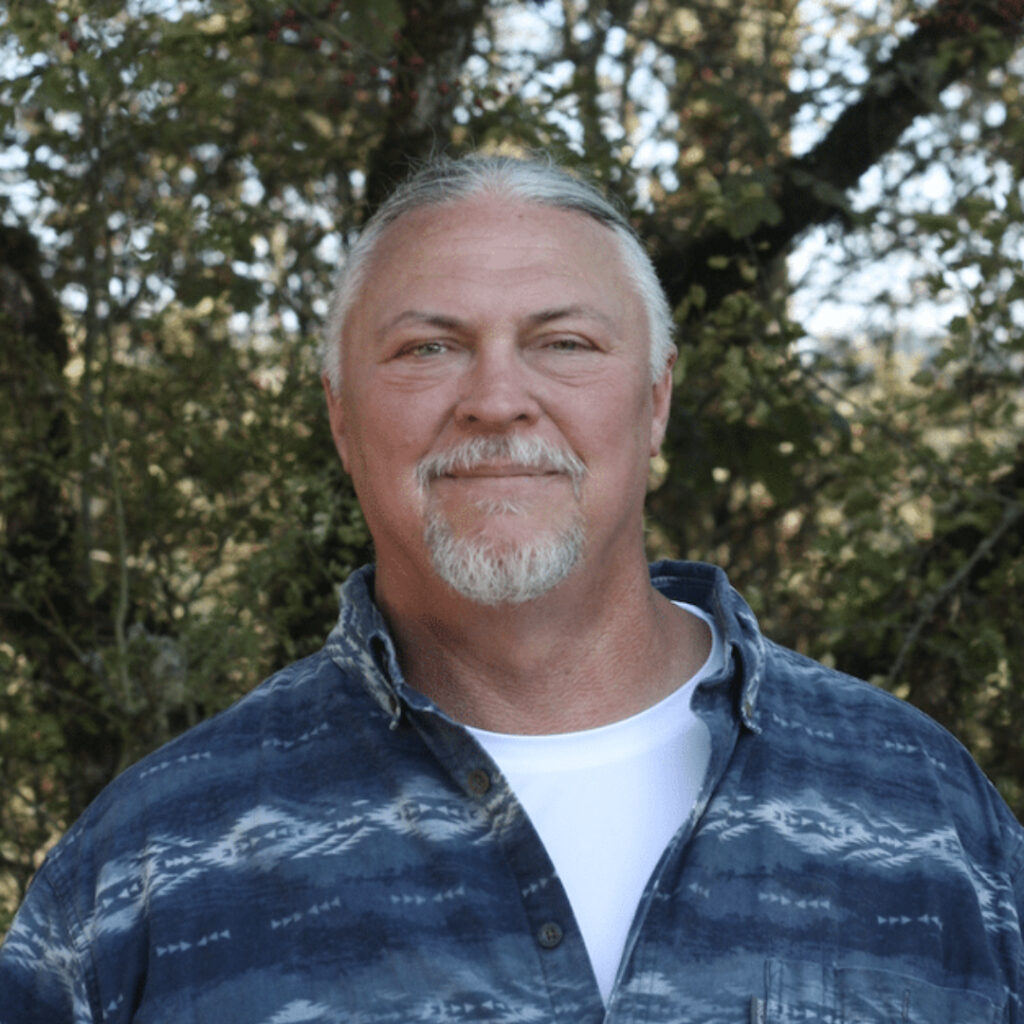
Mike Petrow: Every time I have a piece of beef jerky, he has dry bones come back to life. Everything Belongs will continue in a moment. Reverend Dr. Randy Woodley is an activist, scholar, author, teacher, wisdom keeper, and a Cherokee descendant recognized by the Keetoowah Band who speaks on justice, faith, the earth and indigenous realities. He’s the author of numerous books. He and his wife Edith co-sustain Eloheh Indigenous Center for Earth and Justice and Eloheh Farm & Seeds just outside of Portland, Oregon. I was so thrilled to get to spend time with him there just a few weeks ago, and my goodness, it was life-changing.
In this experience, we refer a lot to Randy’s book, Journey to Eloheh: How Indigenous Values Lead Us to Harmony and Well-Being, which he co-authored with his wife Edith and his upcoming book, which will be out next year, How Western Christianity Got it Wrong: Replacing a God of Fear for a Spirituality of Healing. For more about Randy and his books and his work, you can see our show notes. We recommend that you check out his Substack. Above all, I recommend that you buckle up for this fantastic conversation.
Randy, thank you so much for joining us on Everything Belongs podcast. Thanks for being here.
Randy Woodley: Yeah. Glad to be here. Add to whatever’s happening.
Mike Petrow: Randy, for anyone listening, would you mind sharing just a minute or two about the amazing work you’re doing up there at Eloheh?
Randy Woodley: Well, Eloheh, it’s actually our title. It’ll take me one minute to say the title, but it’s Eloheh Indigenous Center for Earth Justice and Eloheh Farm & Seeds, and we are a ten-acre regenerative teaching farm. We talk about spiritual things. Of course the land is spiritual and the seeds are spiritual and the plants are spiritual, so everything is to us. We talk about culture and society and all those kinds of things, but it’s all one thing to us. We have classes and schools and tours, and we sell our seeds online. Our seeds are open-pollinated. They never mess with no GMOs. Yeah. We’ve been doing this for quite a while. It comes from a vision that we had back in 1990, a dream, and this is a center for community gathering and our ceremonial practices and then farming and…
In our ceremonial practices and farming and yeah, just working with the lamb.
Mike Petrow: That is so amazing. Thank you so much. We’re also so thrilled to talk to you about this episode’s chapter, Richard’s chapter in Ezekiel. And in particular, it’s because you were so kind to share with us a look at your upcoming book. And I don’t want to get the title wrong. I know it starts with, How Western Christianity got it wrong. What’s the full title of the book we’re going to see from you next year?
Randy Woodley: How Western Christianity got it wrong, Replacing the God of Fear for a Spirituality of Healing.
Drew Jackson: Yeah, thanks Randy. It’s so beautiful to hear that full title. I’m looking forward to really kind of digging even more into that thing and as you were talking about Eloheh, and the fact that it really emerged from a vision, dream. I really think that connects us really well into this conversation that we’re going to have today on Richard’s chapter on Ezekiel, in The Tears of Things. Richard says, the book of Ezekiel will never be a bestseller or a popular read, but it is essential to the whole canonical movement, from a seemingly incoherent world, which the author’s bizarre visions clearly describe, to a universe filled with inner meaning and glory, that we must know is shining through everything. And the whole book of Ezekiel is a book filled with symbol and stories and images from the wheel within the wheel, to dry bones, to eating the scroll.
And in your upcoming book, you have a great chapter called, How People Stop Seeing the Bible as Stories. And you say there, “Indigenous people have been sharing stories since time, immemorial. These stories often tell us how to live in harmony with the people and the other creatures around us. The stories present heroes, villains, tricksters, and people or animals who take themselves too seriously. Sometimes the stories are made to stretch our imagination or shock us, or to draw our attention to some overlooked thing.” And so as someone who is a poet, I live in the world of story and symbol, and image, but I want to ask you, Randy, why do stories and symbols matter?
Randy Woodley: Yeah, just to place this in the chapter we’re talking about, I think Richard calls him both a prophet and poet and pastor or something, but I like the line where he says, “The messenger is a bit quirky.” So basically Ezekiel, seen through indigenous eyes, would be what we would call a trickster or a sacred clown. And the fact that you have a lot of trouble defining who they are and what they’re about, is probably the best indication that they are a trickster or sacred clown. Because there are so many things, but they bring us a sense of imbalance, a sense of, he used the word discombobulation, they change everything that’s the ordinary, to the extraordinary, and that makes us have to look at things differently. And so that’s who I understand Ezekiel to be, and that’s how we would talk about some of our sacred clowns or our tricksters. They are truth tellers, but not in the way you expect truth to be told.
And we have a lot of examples of this, but to bring it back to the idea of story. Story is really the basis of all human existence, we talk about his story and we talk about each of our personal stories and those kinds of things. But really, we are a compilation of our stories, we’re more than that, but we are a compilation of our stories. And that’s how we get to know one another, that’s how we get to see the images of things that we know in our past come out in today’s stories. And so if we don’t understand story, and which the scriptures are 90% story, and if we don’t understand story from the way that the people who wrote them intended to have them understood, then we are missing the point completely. We have no right to really begin to judge these things unless we begin to understand why did they tell the story? Why do indigenous peoples tell stories?
They don’t tell stories because of the sort of modern scientific view, to say, did this really happen? That’s not the important point. The point is not the truth of the story, but the truth in the story. And these tricksters or sacred clowns, if you will, are really meant to shake us up so that we understand the truth that’s being told. And that’s exactly what Ezekiel is doing here.
And so we have lots of examples of that, like one time I was down in Hopiland with a friend, and this was all in Hopi, we were watching a bean dance and we were up on the top of the flat roofed buildings and looking down into the square and all these men were doing their religious ceremony. And they have these things called Kosharis or Sacred Clowns. And this is not far from where you all are in New Mexico there. And these sacred clowns go around and they start talking to different people, these guys who are claiming to be sort of renewing their vows, if you will, to walk in a good way and all of that sort of thing.
And my friend and I were watching one of these sacred clowns, these Kosharis just start pointing at the guy and everybody is laughing. All the people around him are laughing, all the people on the rooftops are laughing. And so I asked my Hopi friend, “What is he saying?” And he says, “Oh, he’s talking about this guy, he says, he claims to be this really religious person, but the Koshari is saying, why is it every Friday night people see your truck parked behind widow so-and-so’s place, and you’re married.” And so this is the truth-teller at his best, right? He is like bringing the truth to the people and he’s doing it in a funny way, but it’s really a very serious truth that he’s bringing. And sometimes we need that sort of a alter reality to sort of shake us into understanding what’s really happening. And so we need these kinds of people, and what they have to do with story is they’re the ones who can probably tell story best. Yeah.
Mike Petrow: Randy, that’s so good. I see the trickster in these bombastic theatrics that Ezekiel gets into. Richard talks about him being told he needs to lie on his side for 390 days in public. But there’s also a trickster in the text, these symbols that Drew mentioned, the wheels and the eyes and the eating the scroll, and Richard points this out. He says, “Maybe eating the scroll means you really need to sit with this book and digest it.” In addition to the stories, what is it about a symbol, something like that, an image or a picture that hits us differently than just saying something straight on?
Randy Woodley: Well, just like we live by our stories, we live by our symbols. The thing about Western society, you have to understand, is that when, and I don’t have to go into this whole thing, but when Plato began to introduce his ideas of what we now call Platonic dualism and began to privilege the ethereal over the material world, it got deeply embedded in western society. I remember talking to a Baptist pastor one time, and he said, “Well,” and he was bragging, he was like, “We’re not like the Catholics, we don’t even have symbols.” And I’m like, “Really?” I said, “Could we walk up here to that pulpit for a second and talk about what the purpose of the pulpit is and what the purpose of the… And why do you all bow your heads when you pray? And why is it you hold hands sometimes for fellowship? And oh, those gold edges on your Bible there, do they make the word of God more precious? No. All of that, those are symbols, right?”
Indigenous people and other folks, basically our spirituality is one that is very concrete. It can be expressed in a way, like through one symbol, everybody can gather and say, “Oh, we are having the same experience,” because of this one symbol. And so these symbols are so important, and sometimes symbols are brought in that that make us wonder, like what’s going on. And I think that’s the case in Ezekiel too, you see all these wheels and eyes and all kinds of crazy things, and people are wondering, “What’s going on here? Did he just have an extraterrestrial visit?” Maybe we should have him on ancient aliens. Yeah, to say, I don’t understand what’s going on, but there must be something to this. And so they are made also to disorient us.
And when I say disorient us, I mean, we think we know the truth. We are like fish in our own water who don’t realize we’re surrounded by water until we’re taken out. Well, those symbols are made to take us out of the water and really, then cut through sort of our unreality, which is the one that we may be living, and bring us back into reality. And so we need these symbols, we need these prophetic people, we need these tricksters and these sacred clowns to shake us, to disorient us enough to bring us back into reality.
Mike Petrow: I so appreciate that. The wheels in the eyes hits me really deep. Richard says in this chapter, “I would hope Ezekiel might be a helpful teacher in our age of so many wheels and eyes moving in all directions. He’s perhaps a prophet for the postmodern world we all now live in, where social media makes us from childhood, both the beneficiary and the victim of a thousand opinions,” probably a thousand eyes. And he says if he didn’t lose his mind and his heart amidst so much chaos, we don’t have to either. And I would also add the wheels too, our society feels like the wheel is always turning. I’ve been thinking a lot lately about something I read in Carl Jung a few weeks ago, where he said that the greed and the speed of Western culture was like a virus that would destroy the whole world. And that resonates-
Randy Woodley: Yeah.
Mike Petrow: A lot with what I read in your book about how Western Christianity got it wrong.
Randy Woodley: Yeah. Like someone, I forget who it is now, that talks about the Three mile an hour God. And Americans are so, oh, we are so addicted to this fast-paced life. We want everything done, not just in our generation, but in our lifetimes and our span of attention that we have, like maybe within 24 hours. And so we don’t really realize what it’s like to be in a culture that sometimes waits decades and generations for things to actually happen. And we’re talking about people who were writing from those kinds of lifestyles, those kinds of understandings of that time is not something that happens quickly.
Drew Jackson: This whole conversation of greed and speed, it really, I think, bridges us to this next question I want to ask. One of the things that Richard talks about in this chapter on Ezekiel, and really, more largely in his commentary on the prophets, is he uses this phrase, “The mind of empire.” And he characterizes this as this obsession with winning, with domination. And he says that the prophets obsessively warn Israel against going there. And in your new book, you talk about how Western Christianity was formed with this mind of empire, this empire consciousness, if you will. And you say, “Domination and oppression runs through Western Christianity like the threads of a blood soaked tapestry.”
That’s so good.
Can you speak a little more to how you understand Western Christianity’s marriage with empire and what might it look like for the church in the West to be liberated from this?
Randy Woodley: Yeah. I’m an amateur historian, and so I love going back to history and saying like what’s the root of this stuff? So most people would say, oh, well, this is the marriage of Constantine, the Constantinian Christianity and Christendom. But I actually think it began to happen much farther back, and I think it happened innocently. I think what was happening, basically about 100 A.D, Ignatius of Antioch was trying to… Remember, the climate there, they’re under severe persecution from the Roman Empire. People are being killed, they are being burned alive, they are being thrown through the lions, et cetera, et cetera, all these terrible things that happened, this horrible, horrible nightmare that just wouldn’t end for centuries. And Ignatius got the idea of trying to somehow contextualize those functional offices of Christianity, to look more like the Roman Empire so that they could more easily relate to that, I think, is probably his thinking.
And so he sort of suggested that bishops become more like field officers and field marshals, and pastors more like centurions and kind of down the line. And so you had all these functional offices, which I would argue had no hierarchical value, they were basically sort of like, when you had leaders, it would be more like the Orthodox, a first among equals kind of idea. But there wasn’t this hierarchical thing. We know that Jesus taught against that. Jesus said, “Don’t be like the Gentiles, don’t Lord over one another, but instead, serve each other.” So we can’t imagine that early church as being rank and file answering to one another in a sort of a hierarchy. I just don’t see it.
So he tries to create that, and that sort of slippery slope of hierarchy, I think slides into something that by the time Constantine comes around, these offices are soaked in hierarchy and then ready for the sort of empire to take over the hierarchies. And so as a result, many of your theologians at that time became what I would call theologians of empire. And I’m sure they didn’t do it out of greed or power, they were trying to not be persecuted. They were enjoying the freedom that they were experiencing. But anytime you compromise with Caesar, or with whoever is your king or president at the time, whatever happens, you lose what’s essential of the faith, because that’s exactly what keeps us different, is by not adapting those structures that are anti-human structures. So when we adapt hierarchical structures, we automatically sort of infer more value to people “over us,” and instead of people around us who just have functional jobs, that’s my theory. I might be wrong, but this is, I don’t know, 69 years and this is what I’ve come up with, so.
Drew Jackson: The story of the marriage between Christianity and Empire, is a story that is so often not told in our churches and religious institutions. And quite frankly, living in a time where history is being challenged and changed to present a particular narrative, I’m just drawn back again to the importance of story and how in so many indigenous cultures, story is communicated orally. There’s this oral tradition of passing down stories. And it almost makes me think about how that technology of passing down stories orally is almost in itself, there’s an anti-imperial strain to that.
Randy Woodley: Exactly. There’s something weird that happens when things get written down. I don’t know how to explain it, but it’s sort of like that thing that’s written then becomes the truth, rather than the story becoming the truth. I’m probably one of the few native followers of Jesus who will say this, but I say, we should have never had the scriptures translated for us, because we already had and still have, to some degree, a method of transmitting stories, that was probably more accurate than anything people could write down. Writing things down doesn’t make them more accurate, it actually narrows down their focus. So yeah, and of course much of the scriptures, these are oral stories that were told and written down hundreds of years later, often. It is a sacred act, if you will, to be a storykeeper. It’s a sacred position, it’s a sacred place within our indigenous communities to be a person who keeps stories.
And a lot of times, families keep certain stories. I spent this early summer, my wife and I, and a friend, Lenore three stars, a Lakota woman, we spent three days interviewing Lakota elders from 8:00 AM till 5:00 PM, for three days straight. And these were people telling stories in their families and stories of their tribe, and these stories, many of them are thousands of years old, and yet they’re still being told. And it was such a sacred experience for us. We were just, oh, just elated to be able to have the privilege to be able to sit there and hear these things. But it reminded me, our people know how to keep stories, as I’m sure in ancient Israel, they did as well, and they had story keepers.
Mike Petrow: One of the most beautiful stories that I’ve encountered in early Christianity, and forgive me for using a Greek word, but there’s this Greek word called the apocytostasis. And it’s this idea that the human story, the Christian story is going somewhere good, or the invitation for us to take it somewhere good. That’s what Martin Luther King Jr. refers to when he says, “We shall overcome because the arc of the moral universe is long, but it bends towards justice.” Something that’s hitting me deeply is, one, in the first 500 years of the church, this was a prevalent idea, it was a story. Some people would say it in the way, God’s saving everyone and everything. And then after the sort of imperialization of the church, they tried to write this story out and things became a lot more about a lot of folks going to hell.
And I’ve always thought if we could just get back to this story of the apocytostasis, the fixing, the writing of everything, we’d be recovering a part of the true Christian story. And I’ve thought about this, how do we get there? Is it about getting back to good theology? Is it about some big social idea, some universal intervention? And when I was sitting at your kitchen table two weeks ago, Randy, it occurred to me for the first time, and I feel really dumb saying this to you, so please forgive me, that this might just be about the human family finally listening to nature and learning to live in sustainability and harmony. And this is what you’re talking about, I think, in Eloheh.
Randy Woodley: Yeah, the harmony way. Let’s look at it from this point of view. What would we call a relationship that is just a one-way relationship?
Mike Petrow: Selfishness, narcissism.
Randy Woodley: Narcissism, maybe, Stalker.
Drew Jackson: Abusive.
Randy Woodley: It’s not healthy, right? It’s dysfunctional. We are coming to the point now where Western people are beginning to say, “Oh, nature matters, creation matters.” And they’ll even come to the point to say, “I see God in nature,” and go into what we would theologically call panentheism, like the spirit of God is in everything. But still, it’s a one-way relationship. So what is the agency that nature has for us and toward us? What is that relationship that makes it not a one-way relationship?
And I think what Richard’s talking about is exactly that, is that God’s grace flows through creation and gives us so much, so much gift to be able to calm us, to be able to inspire us, to be able to feed us, to be able to shelter us. How could we ignore it and say, “Oh, this is a relationship that’s just for me?” And so therefore we have a very serious obligation then to take care of creation, because this is God’s grace being expressed directly to us. And then can you see how defiled that is, to say, “I don’t care about this stuff, it’s all going to burn,” or, “Humans are the most important ones?” This is the kind of thinking that will delay what you’re talking about. But when we begin to understand how God works through nature and how this is intended to be a two-way relationship, then we’re coming much closer to what we would call harmony.
Mike Petrow: Randy, for folks who don’t know your latest book, the book that you co-authored with your wife, Edith, Eloheh, the Harmony Way, could you tell us a little bit about what Eloheh is, how you came to the idea and what kind of a vision it offers humanity?
Randy Woodley: I mean, this is really sort of my life’s discovery, if you will. This is what really changed my life. I was actually on something called Pilgrims for Reconciliation with a religious group. And I was leading a two-week journey on the Trail of Tears. We read Walter Brueggemann’s a book, Shalom, our Peace, and we wanted to see where Shalom had been broken. And so we spent a week in studying that, two weeks on the Cherokee Trail of Tears, and two weeks on the Freedom Trail, the Civil Rights Trail. And so we went all across the United States with this. And as we read Brueggemann’s book, I kept thinking, our native people have something like this. I know in Cherokee we have something like this, this sort of harmony way, if you will, and I knew the Navajos have hozhó.
If you will, and then I knew the Navajos have [Foreign Language 01:09:04], which is a beauty way or harmony way, and I went back and talked to some elders and I found out, “Oh, yeah. That’s [Foreign Language 01:09:09],” and I remembered, yeah, and what is that exactly? And so, I began that journey, and then when I did my PhD work, I decided I want to find out how widespread this is among our indigenous people in the US and Canada, all in North America, really. I did a series of interviews with the leaders, spiritual leaders, and people who spoke their own language across the US and Canada. Every single group, all 45 said, “Oh, yeah. We have that construct. It’s called whatever, [Foreign Language 01:09:39].
Each tribe had a different name for it, but they were all similar, and so then my PhD was based on, “Well, then what are the values that are found within this harmony way?” Which is a sort of a generic way of describing it, and as I also found out that Muthu and so many other constructs around the world also have similar constructs. And so, then I, basically, looked at these values that sort of, and I’m sure there are more, but basically we found 10 with a lot of sort of subsets, and so this book, Journey to Eloheh, is a kind of final chapter on writing about this, because I’ve had a little bit in a lot of my books. Then, it became Eloheh Indigenous Center for Earth Justice and Eloheh Farming Seeds where we practice this and farm, because the land has everything to do with this as well.
Mike Petrow: One of the things I love about the book is you start off by saying, “This is not a self-help book. This is not a book about pursuing your own happiness. In fact, pursuing your own happiness is probably not going to make you happy.” You write, “Eloheh, what some traditions call the harmony way, describes a state of being when all is as it should be or as it was created to be. Eloheh means that people are at peace not at war, that the earth is being cared for and producing in abundance, so no one goes hungry. Eloheh means people are treating each other fairly and that no one is a stranger for very long.” What a beautiful invitation.
Randy Woodley: This whole idea of what I call the “Shalom Sabbath Jubilee Construct” throughout Scripture, all of Scripture, is very much about this harmony way. Jesus came to bring us this harmony way and make sure that the least of these, the widow, the orphan, the immigrant, are taken care of, right? And so, it has everything to do with what we are experiencing right now, because we’re seeing inequality rise. We’re seeing safety nets taken away in healthcare and disability, and so we are moving toward a more unjust society, the exact opposite of this, and so we need this harmony way. We need this vision that you talked about, more than ever right now.
Drew Jackson: How do we move back in this direction of Eloheh? What does it actually look like to begin to live into this beautiful vision?
Randy Woodley: Well, I probably won’t say anything revelatory, more than anyone else that’s come on here said, but I’ll reinforce probably what needs to be said, which it all boils down to understanding what our relationship is, right? And not an anthropocentric one, not just about human beings, which is sort of where Western Christianity has really liked to go, but we have to think, when we look at scriptures, like Colossians and where it says that, “He holds all things together,” we have to have a all things sort of view of harmony. We can’t just be thinking about human beings. We have to think about everything else on the planet and the future generations.
The thing I like about our native ways, we talk about the next seven generations. If we learn to talk with one another, if we learn to dialogue with one another, if we learn about each other’s families, if we learn what makes us cry and what makes us laugh, we would be more apt to work on a consensus basis, understanding that who we are as human beings and, as human beings, we are not enemies of one another. We need to make friends with one another. How do we do that? I think it’s both, not just personally, but we actually have to change the structure, and so that’s what I’m suggesting this. I think this one won’t be out. I’m about four behind of my substacks now.
It won’t be out for about a month or so, but if we can learn to operate in a consensus, even if it becomes an informal way, I’m talking about formalizing it, but even if it’s informal, everybody has a voice. It gives everyone dignity. When I was a pastor of a church in Carson City, Nevada, we ran our church this way. We met once a month, and everybody got to share. Yes, things slow down. They don’t move as fast, but that’s not a detriment. That’s actually a blessing, because we have time to think. Like this, we were talking about earlier, Three mile an hour God, we have time to think through these things. We have time to think about how human the other person is. We have time to build the relationships. We don’t need to agree on everything, but we need to love one another.
Mike Petrow: I love that so much, and I love your referencing back to the Three mile an hour God. It’s fun to play with the idea, imaginarily, that if Jesus is a revelation and an incarnation of God, that could have come at any moment in human history, but chose not to come when he could have had a massive following on Instagram, the ability to have a podcast, publish books, and broadcasts across the world, but instead chose to come at a moment where conversation happened face to face, walking down the road together, what that invites us to.
Randy Woodley: And I don’t know if you’ve ever noticed in the Book of Mark, one day I was reading Mark, and I went, “There’s a theme here. What’s going on here? Every time a crowd gathers around Jesus, he splits. He’s not trying to win a popularity contest.” That says something to us about our quest for power.
Mike Petrow: Yeah, I appreciate that. The quest for power is a particularly interesting way to think about that as well. Drew, keeping with the theme that you were asking, and then what I was saying about the sort of story that got lost in Christianity. Richard writes, “Universal responsibility would’ve been so much better of a lesson than the almost completely universal damnation,” which our present reading of the rules and scripture implies and predicts. That seems to be what you’re talking about here, and it seems to be what the wisdom of nature is leading us to, right? It’s a universal responsibility?
Randy Woodley: It is, but it’s all part of the same thing. When we can bestow the kinds of grace that we see reflected in creation, and that we see reflected in Jesus, and that we see even here in Ezekiel, I love the scripture that Richard quoted, “I will treat you as respect for my own name requires, and not as your own conduct deserves. God’s only measure is God’s self,” Richard says. We can never forget that. This is beautiful. This harkens to my favorite story in all of scripture, which is the story of the Luke 15 of the three parables that people sometimes try to make into three parables, but they’re really one parable, but my favorite verse.
This is exactly what Ezekiel is describing when he talks about what God is saying, is the prodigal son has this other two prodigal sons there in the story, by the way, but the prodigal son has this speech, “I’ll tell my father. I’ve sinned against him and against heaven, and I’ll do this and this, and treat me as one of your servants,” and sort of that, and it says, “Of course, while he was far off.” He was looking for him, and then he doesn’t wait for him to come to him. He runs to him. This is the God who runs toward us, and then he begins to recite the speech, but the scripture says that he didn’t hear him. That stuff didn’t matter. All that mattered was this love, this grace that the father had toward him, and this is exactly what the scripture is about. God treats us according to who God is, not according to who we are.
Mike Petrow: It’s an amazing invitation for us to try to live that.
Randy Woodley: And be that way toward each other, right?
Mike Petrow: Yeah. Richard talks about, in this chapter as well, is that healing is not just for us, right? He talks about moving towards this universal responsibility, but he also tells us, then, that healing can be intergenerational. So I’m responsible for more than just me, and that goes out to the community around me and the community of creation around me, but it also goes forward into the future and back into the past, and you mentioned, was it the seven generations that you mentioned? Could you tell us a little bit more about that and what it shows us about how our healing is not just for us?
Randy Woodley: Yeah, so the idea of the seven generations is, and a lot of tribes have this, I wouldn’t say it’s universal, but I would say that the majority, the idea is that when you make a decision for your people, you look seven generations down, so at your great, great, great, I think it is maybe great one more time, grandchildren, and how this is going to affect them. We’re so used to the Americanism of individualism, getting what we want and getting it now, and it’s all short-term thinking, but if we think like, “How’s this going to affect our legacy? How’s this going to affect our children’s, children’s, children’s children?” we would be a whole lot more wise in the kinds of decisions that we made.
Drew Jackson: Randy, there’s so much to sit with, to meditate on in this conversation, so much wisdom that you’ve shared, so I just want to say thank you for offering us the gift of your presence and your wisdom, as we think collectively about what it means to journey toward Eloheh together, to move in this direction as we imagine what it looks like to move beyond this empire, Christianity that has the West so bound.
Randy Woodley: So, as people are listening and they’re beginning to imagine this, and often, because of our past, we think, “Oh. I’ve got to tell this story over and over.” Actually, if you use your imagination, a picture’s worth 1000 words. If you can begin to enact this in your own community in any small way, and then let it grow, that’s how things really change. I used to think, “Oh. If I become this great evangelist, and I speak all over the world and I tell thousands and thousands of people the message, things will change.” That’s not how really things change, how things change, and that’s what we do here at Eloheh, we are a demonstration farm, a demonstration model in school. And so, I would just encourage people to start exactly where you are, start in your own church, your own community, your own affinity group, whatever that is, and begin to talk about, “Let’s begin to treat ourselves, each other, and those non-human creatures around us with the kind of respect that we’re talking about and love on this program.”
Mike Petrow: Randy, thank you so much for saying that. I hear from so many folks, when they become aware of how big and loud, evil an injustice is, they feel like they need to find a way to do something as big and as loud to counter.
Randy Woodley: Yeah. It’s about mustard seeds, right?
Mike Petrow: Wow, yeah. The invitation to plant small seeds. Wow, there’s so much wisdom there.
Randy Woodley: Well, thank you for having me.
Mike Petrow: Drew, there’s that saying, “When the student is ready, the teacher appears,” and every now and then a teacher really becomes alive for you, and everything they say and everything you read from them is just so life-giving. I feel like that with Randy Woodley right now. What a gift that conversation was.
Drew Jackson: Every time we get a chance to talk with Randy, there’s so much wisdom, and I felt that in this conversation again, where we opened this conversation with him on Ezekiel. It’s just bringing forward so much.
Mike Petrow: Ezekiel is such a strange book, like real talk. It’s complex. There’s so many symbols, there’s so many stories, and Randy sharing with us the indigenous wisdom of the trickster and what the trickster figure is, that idea of the holy fool, that hit me so hard, especially because I feel like trickster energy has run rampant in the world right now, and to see the holy version of that coming in and subverting the machinations of empire, wow, that hit me pretty heavy.
Drew Jackson: Yeah. It reminds me a lot today, as I think about who are the tricksters among us, the holy tricksters. There are certain comedians that I feel like are going to fall into that space, where they’re able to subversively turn a thing through a joke, and you don’t even always realize what’s happening until you’re like, “Oh.” It kind of comes around, comes to the side door, and it gets you.
Mike Petrow: I got to mention origin. Origin talks about these scandals, the scandalons, the stumbling blocks that trip us up, but make us think deeper. The things that scandalize us sometimes have the most to teach us, and wow, we need that right now. Thank God for the artists, the comedians, and the prophets, who can get us to pause and think again in a different way.
Drew Jackson: The thing that I’ve really been lingering with since Randy said it was, when we started talking about the role of story and the oral nature of story, and how there’s something that happens when you write it down. It almost codifies something, but in a way where, what you write down becomes the truth of it, and sometimes that loses the essence of it. I’ve been just thinking about that in the context of the times in which we live, where the written word, in a lot of ways, is being challenged, particularly when it comes to how we tell the story of history and who gets to tell the story of history.
I can’t help but think and just be reminded of, just within the Black tradition here in the US. I mean, abroad too, but I think specifically here in the US, there’s been just this tradition of this oral storytelling because of the ways that our version of telling history, there’s been this surveillance over it, and so you’ve had to tell the oral version of it and pass it on in a way that can’t quite be captured by Empire, so I keep thinking of that and just what is the role of passing down story, telling history, and even telling of what’s happening in this moment? How do we tell that in a way that’s not going to be smoothed out, smoothed over, but tell the rawness and the grittiness of it in a way that it needs to be told?
Mike Petrow: Oh. I so appreciate that, this slippery subversion of storytelling. I heard a story that’s been told to me, be told in a new way. I love this teaching that we hear in Richard, and I think I read in the Gospels and in Scripture, of universal salvation, but what was so interesting in this conversation was for me to hear that story and think about it in a new way, as an invitation to universal responsibility.
Drew Jackson: I mean, what a story to be formed and reformed in universal responsibility, that there is a collective responsibility both to one another, and also as I think we hear come through in so much of what Randy shared too, our responsibility, to the earth, to all of creation, that responsibility extends to the entire cosmos, and it’s such a beautiful thing. It’s weighty to me, right? It is weighty to consider, “Okay. What does universal responsibility mean?” But I think there’s also this other side of it too, where it’s, “I’m a part of this universe, and there is also a responsibility that others have toward me in this. It’s mutual. It’s reciprocal. It’s not all on me. There’s this reciprocity in it.”
Mike Petrow: And it connects to what Randy was sharing with us, about Eloheh and the harmony way. We can’t get there on our own. We need each other to come to that place of harmony. It’s not something that we’re sitting back and waiting for God to give us. It’s something that God’s asking us to work together to make real in the world. That’s pretty profound. Drew, I can’t help but think of a poem of yours that I heard recently. It’s actually in our latest edition of CAC’s wanting publication, the one titled, A Living Tradition. I know that it has some from the book of Ezekiel, and I think it speaks so deeply to this idea of universal responsibility, and so to our listeners, I would say I think we leave you with a question. How can you live into a sense of universal responsibility? How’s your life inviting you to carry that responsibility for more than just yourself, but to make that Eloheh harmony more real? And one way to sit into that is to listen to these words, Drew, if you’d be willing to read us that poem?
Drew Jackson: Absolutely. This poem is called Let This Silence Become a Bridge.
“I wake in the morning and sink down into the quiet center before the news and the heartbreak, before the world becomes all fire and brimstone. Tell me, is this salvation? I could stay here alone and away. I could place my life in the company of the undisturbed, but if I do, I will surely lose you. Friend of sorrows, acquaintance of grief, let this silence then become a bridge. Let me walk it to where love is at the edges amidst the rubble, trudging among the bones where the prophets call to the four winds and a voice cries out saying, live, live. Let this silence become a forgotten thing if it does not lead me to the hill outside the camp.”
Paul Swanson: Thanks for listening to this podcast by the Center for Action and Contemplation, an educational nonprofit that introduces seekers to the contemplative Christian path of transformation. To learn more about our work, visit us at Cac.org. Everything Belongs is made possible thanks to the generosity of our supporters and the shared work of-
Mike Petrow: Mike Petrow.
Paul Swanson: Paul Swanson.
Drew Jackson: Drew Jackson.
Carmen Acevedo …: Carmen Acevedo Butcher.
Jenna Keiper: Jenna Keiper
Izzy Spitz: Izzy Spitz
Megan Hare: Megan Hare.
Sara Palmer: Sara Palmer.
Dorothy Abrahams: Dorothy Abrahams.
Brandon Strange: Brandon Strange.
Vanessa Yee: Vanessa Yee.
Cassidy Hall: Cassidy Hall.
Corey Wayne: And me, Corey Wayne. The music you hear is composed and provided by our friends, Hammock, and we’d also like to thank Sound on Studios for all of their work in post-production. From the high desert of New Mexico, we wish you peace and every good.