Searching in the Shadows
Jungian therapists Connie Zweig and Steve Wolf describe shadow work as a path to deeper moral integrity and intimacy with our own soul.
For most people … greater shadow awareness can lead to greater morality. In fact, Carl Jung, who coined the term “shadow,” posed it as a moral problem. He suggested that we need a reorientation or fundamental change of attitude, a metanoia, to look it squarely in the eyes—that is, our own eyes:
The individual who wishes to have an answer to the problem of evil … has need, first and foremost, of self-knowledge, that is, the utmost possible knowledge of their own wholeness. They must know relentlessly how much good they can do, and what crimes they are capable of, and must beware of regarding the one as real and the other as illusion. Both are elements within their nature, and both are bound to come to light in them, should they wish—as they ought—to live without self-deception or self-delusion. [1]
This idea—that to face the best and the worst in our own natures is to live an authentic life—is not new. Theologians and philosophers in many traditions have pointed to the hidden reality of our split nature, and its secret value…. Russian writer Aleksandr Solzhenitsyn put it beautifully: “If only there were evil people somewhere insidiously committing evil deeds, and it were necessary only to separate them from the rest of us and destroy them. But the line dividing good and evil cuts through the heart of every human being. And who is willing to destroy a piece of his own heart?” [2]
Zweig and Wolf suggest we search for answers in the mystery of what we have placed in the shadow:
Throughout human history, wise women and men, in their own ways, have understood the old Sufi parable of the person who looks for the key under the lamppost because that’s where the light is, but it’s not where the key was dropped, which is in the darkness.
Looking into the darkness or living with shadow awareness is not an easy path…. Rather, to live with shadow awareness we follow the detours; we walk into the debris, groping our way through dark corridors and past dead ends. We look for the key where it is difficult to find. Shadow-work asks us to turn in that direction.
It asks us to stop blaming others.
It asks us to take responsibility.
It asks us to move slowly.
It asks us to deepen awareness.
It asks us to hold paradox.
It asks us to open our hearts.
It asks us to sacrifice our ideals of perfection.
It asks us to live the mystery.
We suggest that you relate to the shadow as a mystery, rather than as a problem to be solved or an illness to be cured. When the Other arrives, honor that part of yourself as a guest. You may discover that it comes bearing gifts. You may discover that shadow-work is, indeed, soul work.
References:
[1] C. G. Jung, Memories, Dreams, Reflections, ed. Aniela Jaffé, rev. ed. (Pantheon Books, 1973), 330. Note: Minor edits made to incorporate gender inclusive language.
[2] Aleksandr I. Solzhenitsyn, The Gulag Archipelago, 1918–1956: An Experiment in Literary Investigation, I–II (Harper and Row, 1974), 168.
Connie Zweig and Steve Wolf, Romancing the Shadow: Illuminating the Dark Side of the Soul (Ballantine Books, 1997), 7–9.
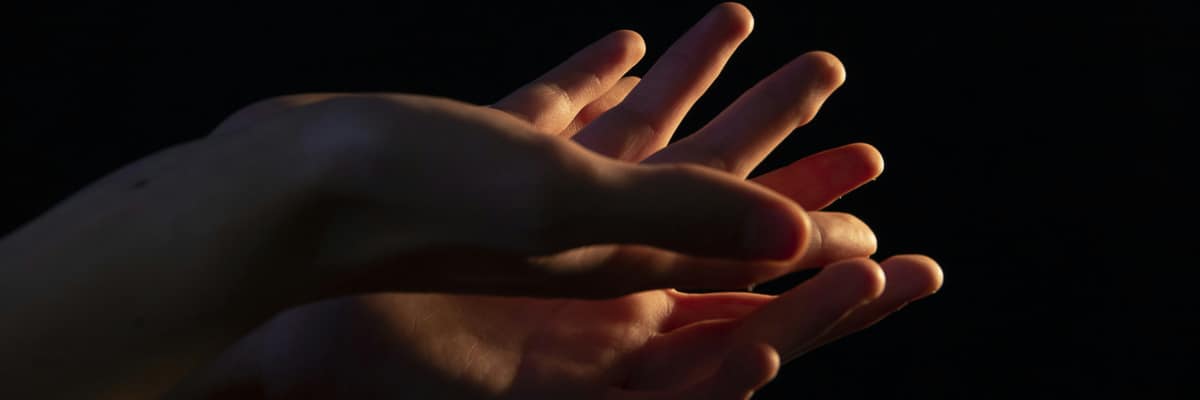
Image credit and inspiration: Flavie Martin, untitled (detail), 2022, photo, Unsplash. Click here to enlarge image. With cautious breath and glimmers of light, we step into the shadow—drawn by the gifts it holds—seeking the clarity and courage to name what hides.


Story from Our Community:
I have often wondered—am I the only person who has entertained the thought that planet Earth is purgatory? I think of it as a temporary place where lives are born and die and rise again—a place of great suffering and pain in the shadow of hope, love, joy, and sorrow. It’s a place of transformation and struggles, embedded with wisdom and truth that love is possible. And in my experience, only in love do we glimpse the divine experience.
— Michael W.