Mike: Friends, welcome back to the Everything Belongs podcast with Father Richard Rohr. Each season we’ve explored an aspect of Richard’s deep teachings usually focusing on one of his books. Each episode we travel over to Richard’s little house to unpack some big wisdom with him and his little dog too. And then we’re joined by a guest who helps us live the teachings forward to explore and expand on Richard’s foundational wisdom in new ways by asking new questions emerging in our rapidly changing world. But this season is a little bit different because this season we’re going back to one of Richard’s early passions. We’re exploring the Enneagram, a contemporary tool that draws on ancient wisdom for discernment, solidarity, and self-discovery. We know that a lot of you first met Richard years ago as an Enneagram teacher and we now get to chat with Richard in his 83rd year asking him about what he’s continued to learn 36 years after his book, Discovering the Enneagram: An Ancient Tool for a New Spiritual Journey was first published.
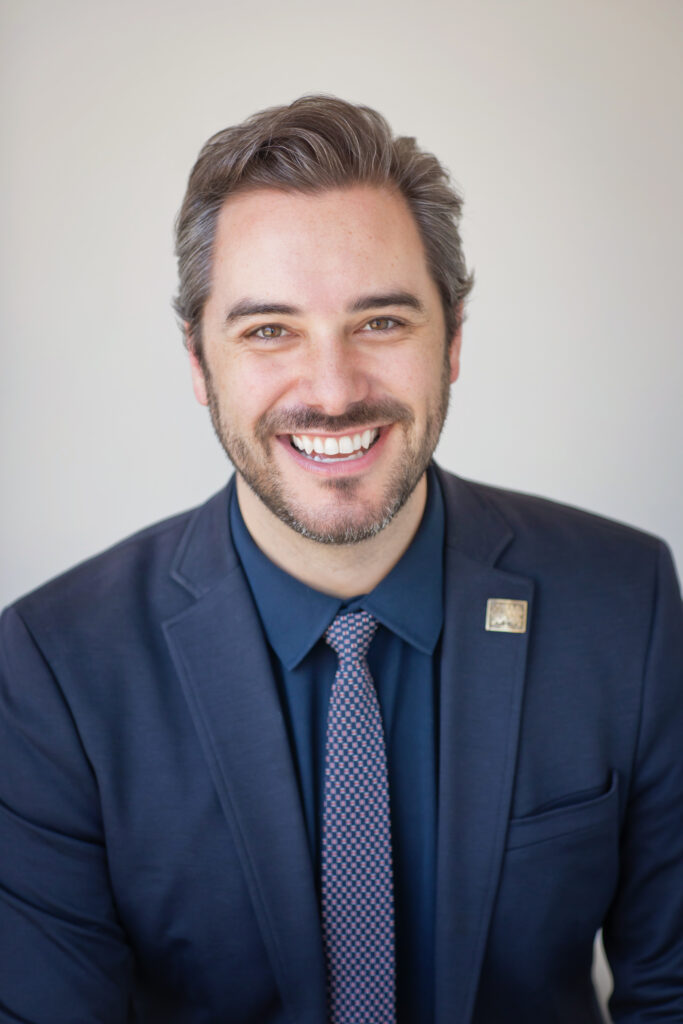
Today we talk about the terrific 2s. Cassidy and I get to chat with our guest, Hunter Mobley, who is an accomplished Enneagram teacher, who gives his personal and expert take on being a two and who specializes in helping us understand the Enneagram as a contemplative tool for living into our truest selves. But first, we head over to hang with Richard Opie and Paul to learn about the wounds, the work, and the wisdom that Enneagram 2s have to offer each and every one of us.
From the Center for Action and Contemplation, I’m Mike Petrow.
Paul: I’m Paul Swanson.
Carmen: I’m Carmen Acevedo Butcher.
Cassidy: I’m Cassidy Hall.
Drew: And I’m Drew Jackson.
Mike: And this is Everything Belongs. So Richard, we are here today to talk about terrible and terrific 2s, their wounds, their worthiness games, their wisdom, and their work. And I love in your book, you write, “A redeemed 2 is very capable of love. Anyone who’s had the good fortune to be loved by a mature, integrated 2 has a tremendous beloved, a wonderful lover, and enviable friend. Such people feel your pains with you and take care of you because they know the pain of relationships and loneliness. At all costs, 2 want to spare others from going through what they have gone through. This is the strength and the beauty of a mature 2. And you say they long to be loved, to love with their whole hearts, to be allowed to live for their beloved. Our social networks would collapse without all the 2s who sacrifice themselves for the welfare of others. They’re benefactors, givers, and helpers. This is their greatest gift. Sounds pretty great.
Richard: Yeah, that’s all true.
Mike: Sounds to me like 2s are helpers. I think about the helpers that Mr. Rogers told us to work for.
Richard: They love to help.
Mike: She leads me to wonder if Fred Rogers was a 2, actually.
Paul: Yeah.
Richard: You just say the word need and you’ve got them. Just the word need. You need me. Oh, my God, I’m in your arms. They love to be needed.
Mike: Goodness gracious.
Richard: And they’re very needy of your response. That’s the beginnings of the shadow part. They’re very needy but they don’t want to admit it or don’t even want to know it. Not I. I’m not needy. I’m loving. And they are. That’s the confusion. They are very loving. The people who are very loving want it back. They want payback and they’re so ashamed of that, that they hide it. They don’t even admit it very often. Oh, I’m not needy. Yes, you are.
Mike: Well, I don’t relate to that at all.
Richard: A spiritual director has to gently move in.
Paul: Let’s zoom in on the 2 here with this. I’m going to read another quote from you, Richard, about the 2 where you say, “The need to be needed. Twos employ their gifts for the needs of others and care for their health, nourishment, education, and welfare. They impart a measure of acceptance and appreciation that can help others to believe in their own value. Twos can share generously and give their last shirt for others. They stand by others when they have to endure suffering, pain, or conflict and in this way, they give them the feeling that someone is there for them and accepts them. The 2s love of neighbor and presence, however, also has dark sides that may not be recognized at first glance. Twos desperately want to be liked and have an exaggerated need for validation. So what I’m hearing that there’s that need to be needed and then the validation for it, even as they show up in caring service to others.
I find the description of the 2 confusing because of the cultural things that are put upon certain groups as well as the need for validation. Can you speak to the heartbeat of the 2 about what are the telltale signs of that goodness of the 2 in the Enneagram?
Richard: They have a natural empathy and sympathy for others and their needs. And when they see you’re in need, they’re almost magnetically drawn to help. So many become nurses. They have deep satisfaction in meeting your needs. And then if they’d be honest, it takes a long time to be honest about it. They’re very hurt when you don’t reciprocate it. That’s very hard for them to admit that there is a hook to their love. They want to be loved back. Well, who of us doesn’t? But it’s a bit exaggerated in the 2. God, they appreciate love and gifts and touch. All five of the love languages, whatever they are. I can’t remember them. Do you remember them?
Mike: Oh, yeah.
Paul: Touch.
Mike: Words of affirmation, service, quality time, gift giving.
Richard: All of them, yeah.
Paul: But they’re conscious of it too, it sounds like, of that need for validation.
Richard: No.
Paul: No. Healthy 2s would be conscious of it.
Richard: Healthy 2s, but it takes till your late 20s until you can begin to see that. You just like all of us do, you think, “Well, isn’t everybody this way?”
Mike: Yeah. And we’ll get into this later in the conversation. I’m guessing that’s where the resentment comes from is because 2 sometimes don’t understand why everyone isn’t taking care of them the way that they’re taking care of other people, right?
Richard: That’s right.
Mike: Gosh.
Richard: It just doesn’t make sense. Why wouldn’t other people be as empathetic and sympathetic as I am because they are naturally. Now that can become manipulative and that’s the 2 at their worst where they start playing games for love, for notice, for validation, for touch. It’s so deep a need. Yeah, playing games is as good expression as any. They love to engage you by saying interesting things because that keeps you needing me. So they’ll keep talking, they’ll keep cooking, they’ll keep serving whatever it might be to keep you hooked in. That sounds so devious, but we all do it, but the 2 really does it. They’ve got to keep you in their friendship circle.
Paul: I’m so struck by all the subtle forms that each number takes.
Richard: Isn’t that true?
Paul: That shows up in… It feels like manipulation. It’s not just the 2, but every number seems to have their own subtlety.
Richard: Every manipulation in its own way. That’s right. That’s right.
Mike: So if we start right at the wound of the 2, it seems like a lot of 2s have to take on way too much, way too soon. What some folks call, they have to become parentified children. You write, “Many 2s had a childhood that seemed gray and sad to them. Real security and a feeling of having a home were sometimes lacking or less than needed. And then other 2s report that they have experienced only conditional love. The love of important people in their life had to be bought by good behavior. If they met the conditions they could under certain circumstances get plenty of love and security, but they were continually being urged to exaggerated good behavior. And you say some 2s also recall early on that they had the feeling of having to be a support for the emotional needs of other family members. They had to make themselves useful in order to be loved and noticed.
And this is the one that hits hard and I feel like it’s going to hit hard for a lot of people listening, especially our 2s. There was a fatal role reversal between parents and children or parent and child. The child had to mother the adults and deny some of their own legitimate needs.
Richard: Yeah. Everything you said strikes me as the heart of the matter.
Mike: I said this to you earlier. My sister and I often talk about how she was raised to be the material caretaker of our family so she had to make sure everyone had enough food. All their needs were met. If family came in from out of town, they had somewhere to stay. And I was raised to be the emotional caretaker of the family. So if anybody was upset, I was the person that checked on them. I was the one that everybody talked to.
Richard: That’s why I think you’re 2.
Mike: That’s why you have me nervous, because I really like being a four. You have me really nervous. But this sense of responsibility that from a young age, you have to take care of the people around you. What can you tell us about that in the early life of a 2?
Richard: Well, you used the word before: role reversal. A child is supposed to be the caretaker of the parent or the other siblings, but they think they are. And thank God there are such people because they save many families. If no one has a caretaking instinct, all the more they fulfill it. I cannot not be helpful. And sometimes you recognize they need to help me more than I need them to help me. That’s when you feel manipulated. They create situations where you have to need them. I had a secretary. I can say this now she’s dead, so she won’t hear this recording, but she was that way. She just constantly created scenarios where I could not operate without her and I started feeling trapped. I am your servant, but really you’re my servant. You start resenting them if that’s the case.
Paul: Yeah.
Richard: They make themselves indispensable.
Paul: Let’s keep circling around this. We’d love to ask you about the worthiness games that 2s fall into as we’ve talked about the need to be needed. And then there’s this way that it internally gets catalyzed and you write through helper syndrome, Messiah complex, martyr fantasies, sex and relationship addictions. All these typically 2 games sooner or later lead to the experience about which so many members of the helping professions report. And what I find fascinating about this is the way that these internal worthiness games require an imposition on somebody else, or it’s a drawing out of that needing to be needed in sometimes fantastical ways, whether it’s sex addiction or martyr complex or Messiah complex. I’m curious just to hear your thoughts on the interiority of those worthiness games and how they might experience that.
Richard: Well, for sure in the first half of life, let’s use that old distinction that I use too much. It’s almost totally unconscious. They assume everybody is that way. Why wouldn’t you be that way? And it’s a slow discovery that it’s an exaggerated deed in their life and everybody is not that way. In fact, some people don’t like to be helpful at all. I mean, you wouldn’t call the five helpful. It’s not in their nature. They do other good things, but they don’t perceive need or feel that it’s their place to meet need.
Paul: You used a phrase just recently, you just said exaggerated need, and that seems to be true for all numbers and all types, but the exaggerated need starts to take on a life of its own and some of the addictive ends of this.
Richard: Yes. Their sin is called pride. And at first, because we think of pride as vanity, you can’t live without my love and I’ll make sure it’s true. I’ll make you need me. It’s “I’m saving you. I’m saving this family.” It’s what the Greeks meant by hubris, an exaggerated sense of my importance, particularly in regard to my helpfulness, my service. So they’re definitely attracted to the service industries.
Mike: Richard, we talked last episode about how there’s this character in the book of Job, the accuser, which is the Satan character. We talked about people having an inner accuser that is their inner critic. What do you think the voice of the inner accuser sounds like to an Enneagram 2? What negative message are they always responding to?
Richard: It’s always, “You’re not doing enough.”
Mike: Yeah.
Richard: “You’re not generous enough. You’re not giving enough. You’re not caring enough.” It’s a neurotic voice in them, which is really unfair because here’s a major point to talk about. Others take advantage of that. They know that the 2 will rush in to save the need so they stop serving. They stop caring because I know Sandra, just a name, will do it. They can be easily shamed into helping, easily shamed into service. They’re shame-based people more than most numbers.
Mike: Tease out a silly idea with me for a minute. Growing up, my favorite superhero was Spider-Man and Spider-Man’s mantra is with great power comes great responsibility. So there’s a great lesson.
Richard: He says that?
Mike: Oh, yeah. His uncle says it to him just before he dies and he tells Spider-Man that he has a responsibility because he has power, he has to use that power. He has a responsibility to help people. And the mantra that with great power comes great responsibility is a great idea. But in the stories, Spider-Man can never hold down a steady job or a steady relationship because he’s always swinging off to help everybody. I wonder about the dark side of this idea that with great power comes great responsibility. If you’re raised to think that you’re responsible to take care of the people around you, that could just translate out for the rest of your life. And I wonder if the hidden message in that is, not only am I responsible to take care of you, I know what you need. I’m responsible to take care of you and to know what you need because you can’t.
That is hubris, right? Not only do I think I need to take care of you, I think I know what you need better than you do.
Richard: Well put. That’s true.
Mike: Do you think responsibility then, like an exaggerated sense of responsibility is a big deal for Enneagram 2s?
Richard: Precisely to help. Responsible to be your helper and for you to need my help.
Drew: Yeah.
Mike: Well, that’s the other thing about Spider-Man. He swings around on webs. So there’s always strings attached to everything he does.
Richard: Oh, how clever.
Mike: Is that a 2 thing as well? Like I have a responsibility to help, but there’s strings attached.
Richard: Yes, which they’re totally unaware of. Maturity for 2 is as they begin to see that and they often will weep. I’ve had over the early years when I used to teach the Enneagram a lot. When I’d give Enneagram retreats, when the insight would come that I’m a 2, they’d actually start sobbing. It’s so shameful. My God, this is what I do all the time. And they don’t want to be that way. They really don’t. They never overcome the conflict of needing to serve, but not wanting anybody to see how much they need it.
Mike: And it seems like there’s also a pretty vicious seesaw there of feeling like you have to take care of everything and save everything. You’re the savior of the world. You’re the person who knows what others needs even when they don’t know and you have to do it. So the inflation, I have to save everything. And then the deflation of no matter how much you do, it’s never going to be enough.
Richard: It’s never enough.
Mike: That sounds exhausting.
Richard: I think it is even for them.
Mike: My mom a hundred percent was an Enneagram 2. And after she passed away, I lost count of how many different people came to me and were like, “I just want you to know your mom and I were very special friends. She told me things she never told anyone. We were confident.” I never had the heart to tell anyone of these 10 or 20 people who claimed to be my mom’s best friend that that’s just the way she was.
Richard: Yeah. They make everybody think they’re special.
Mike: Made everybody feel like they were her best friend.
Richard: With Opie laying here in my lap, the 2 is the dog profile. Twos, some breeds more than others are just, he will do anything to please me, but he has a lot of needs. Like now he needs to lay here in my lap. Even though I’m not talking to him, I’m talking to you. He’s claimed to me because you’re in competition coming into the house. He’s mine. You can’t have him. Do you know you’re a 2, Opie?
Mike: Something you said just in passing in the chapter that really gave me pause is you talked about the multiple self nature of a 2. They can connect so deeply with so many different types of people-
Richard: That’s true.
Mike: …that they become-
Richard: That’s their beauty.
Mike: …different people in different conversations. And I have friends and I’ve felt like this at times where the worst thing that could happen to them is a birthday party or a wedding where all their friends are together in one place because they have nothing in common because they’re all so different. And then the 2, the person in question, doesn’t know who to be around all of them. Is that a worthiness game or is that just being really good at connecting with lots of different types of people?
Richard: I’ll choose the second. I don’t think it’s a worthiness game. They really are good at meeting other people’s needs.
Mike: Okay. Well, so this is where I think religion sets the hook for a lot of 2s and a lot of us, even if we’re not an Enneagram 2, we’re affected by this. You write this. The path between selfless love of neighbor and a manipulative helper complex is to be sure a tricky one. The demand that we deny ourselves and serve others has often been played with fast and loose above all in the church. And this is something I wrestled with growing up through my entire religious journey. The implication that we have to save others.
Richard: That’s right.
Mike: It’s in the DNA of Western Christianity, whether we’re saving people from poverty and injustice or the flames of hell. So I think for all of us shaped by Christianity, we need to get what you’re teaching us about the Enneagram 2. We want to put our healing in the service of healing others, but our obligation to save the people around us because they can’t save themselves can hook and hoodwink us into pride assuming we know what people need and into giving ourselves away till there’s nothing left saving the world but losing our soul.
Richard: You’re describing, Michael, why boundary keeping, boundary making is at the heart of the maturing of a 2. They’re not good at boundaries. They will give them away in a moment until they’ve been used by a couple boyfriends or a job or a profession. They’re constantly losing their boundaries in the first half of life. And so you’ll see them go through an overkeeping of boundaries by a harsh no, no. And then they feel terrible shame, terrible guilt. But it’s necessary for a 2 to grow up to learn the appropriate boundaries. This is mine to do, this is not mine to do and not feel shame about that. If you’re a good spiritual director, you put a lot of time helping them to do that. All the heart people have trouble with boundaries.
Mike: What happens to a 2 when they just can’t give anymore or can’t fix? Do they run out of gas? Do they have to see in the mirror what’s going on?
Richard: I’ll be honest, a lot of them become bitter. I’ve known a lot of bitter old 2s who spent their whole life serving in my community, the Franciscans, they became brothers instead of priests and came in to wash and clean and help and serve and somewhere in the middle of life they realized they’ve been used and taken for granted. Nothing is worse than the bitterness of a 2 who is tired of being used because yes, 2s manipulate us, but they eventually feel very manipulated by others’ perception of them. And it’s true. We all need to say, Lord, have mercy. I’ve taken advantage of so-and-so. Twos are programmed to be codependent and to create codependency from others and call it love. Twos are complex because of that. A whole difference between love and codependency. That was one of the greatest discoveries for 2s of any number.
Paul: We’ve talked so much about the harder aspects of the Enneagram 2. I would love to know, Richard, what is the deep wisdom of the 2? Is it all about loving well?
Richard: It pretty much is. If you get a healthy 2 to love you, you’re going to feel loved. You’re going to feel taken care of. You’re going to feel people who can go above and beyond, give the extra mile and not count the cost. Once you experience love from the 2, everybody else’s love seems less than. They love to cook too. They’re always cooking things for you.
Paul: So there’s a generosity of love that oversells.
Richard: Yeah, that’s a good word. Yes. A generosity that you don’t see in any other of the nine types. Very good.
Paul: You’ve already talked about one of the primary tasks of the 2 is that healthy boundary setting.
Richard: Yes.
Paul: So as 2s seek to live in this wisdom, we want to ask you about the inner work of what a 2 looks like. And I’m going to just read something that you’ve written. You write how many 2s are afraid of silence and loneliness in practices because they are afraid to find nothing in themselves except a black hole or alarming unrest, but 2s must learn to be alone. Twos like all heart types and activists need a place of silence and objectivity where they can be alone, where they can make friends with themselves and seriously reflect. And to bring it home to our own context, Richard, it sounds like there’s something about the DNA of the CAC, recognizing that we need contemplation to make our actions sustainable and healthy. Would you say that fits in nicely for the inner work of what the 2 needs to do in their own working with their inherent wisdom?
Richard: Yes. In some very real ways they’re programmed to be mystics because when they learn to go in and the life of union is the divine romance, the divine love affair, the divine ambush. All the language of love applies to the inner life. They can really rest there. I think it’s my own 2 wing, which has led me to the contemplative to rest in God’s love is enough. God’s love is everything. I need nothing else. That’s all the 2 in me.
Mike: I love that. Richard, we talked about the people wrestling with the inner accuser. I wonder what the voice of the advocate sounds like. What’s the voice that tells the 2 that they’re enough? What do you think 2s most need to hear in their journey towards health?
Richard: Probably people who don’t take their love for granted or think they deserve it, who are able to communicate sincerely how much I appreciate your caring. Now use the five love languages. It might mean through a gift. It might need be special time. It might be through a touch to know that we don’t take them for granted. Signs of appreciation and gratitude. Twos are deeply grateful for gratefulness. Yeah.
Mike: Yeah. And I imagine it’s a task to find and receive that from folks and then to give it to yourself, to trust that you are loved and enough. You said that earlier, that word enough seems to resonate, I think. I love this teaching from the desert fathers and mothers. I talk about it all the time, apathea. Sounds like apathy, which is not caring, but it’s not not caring. It’s not caring about what doesn’t matter. So you have more room to care about.
Richard: I like how you always say that.
Mike: Yeah. And not carrying what’s not yours to carry so you have more strength to carry what is. Richard, I would imagine 2s. Is that a journey for them to figure out exactly what is theirs to carry and to let go of everything else?
Richard: That’s what I mean by boundary, creating, learning. That’s not mine to do. That’s very hard for them. Even painful to say, “I do not have to save the world. I just do what God has gifted me to do and the rest can be left to others.” That’s a mature 2.
Mike: Sounds like there’s a lot for us to learn about sustainability.
Richard: That’s the lady letting go of their pride.
Paul: It reminds me of that quote of where is your… I’m going to get it wrong, but to paraphrase, where’s the world’s great need and your great passion needs?
Richard: Oh, yeah.
Paul: And then to be able to hold that in tandem with the wider body of Christ, you do your peace. Seems like a real grounding for it to move into that space. Would you say that that’s what the outer work of the 2 looks like is about carrying the sustainable service forward without having it be an over-responsible act on their end?
Richard: Without needing to let everybody know that I’m helping, when you can do it without gratitude, without people appreciating it, that would be the saint in the 2, and it’s our classic Christian definition of a saint who can love without needing to be loved back. Now, none of us get there till the second half of life, but that’s certainly the task of a 2. Now, I do it to use our old language for the love of God, not for your love. I’ve let go of my need for you to notice it or to love me back or to even appreciate it. I do it for its own sake. That’s the final stages I’m sure. Yeah.
Mike: I love that. As we’re closing, this reminds me of Henry now and somehow his teaching on the healer and the beloved. Do you think he was a 2?
Richard: Oh, at least with me many times. He was a classic 2.
Mike: Did you know him?
Richard: Oh, he used to visit me in Cincinnati.
Mike: Really?
Richard: Yes.
Mike: Get out of town.
Richard: I remember him walking the streets of New Jerusalem. That was the lake community. And it was summer and people were out in the yard and the front porch and everybody… Martin Richard. And he’d look at me. He said, “I don’t have that. I don’t have a community that loves me.”
Mike: Oh, my gosh.
Richard: He had a deep need for love and it made him write brilliant books.
Mike: Such beautiful books.
Richard: Brilliant.
Mike: I always thought he was a four because he had such deep melancholy.
Richard: I can see why you’d think that.
Mike: But he loves so well and his teachings on the wounded healer, it feels so much like a 2.
Richard: Yeah. I would say he was a 2.
Mike: Oh, my gosh.
Paul: He can articulate vulnerability and love in-
Richard: Beautifully.
Paul: …ways I think is really helpful.
Richard: Because his feelings were hurt a lot.
Paul: Yeah.
Mike: Yeah.
Richard: Which is true of every 2. They want other people to be as sensitive as they are and they’re not as caring as they are and they’re not. And that wound is just a stab in the heart.
Drew: Yeah.
Richard: Thank God we have some 2s.
Mike: For real.
Richard: Who else would work in hospice care except a 2 who really wants to love without expecting it back?
Mike: Yeah. I think I know a lot of good therapists who are too is like healthy too.
Richard: Oh, I agree. Good therapists too.
Mike: Yeah. Thank you, Richard. Thank you, Paul. Thank you all the Enneagram 2s out there.
Richard: Did you learn anything Opie? Huh?
Mike: I think he learned he’s getting the love he needs.
Paul: He’s like, “I know it all.”
Mike: Everything Belongs will continue in a moment.
Cassidy: Welcome back to Everything Belongs. Hunter Mobley is a nationally recognized Enneagram teacher, contemplative guide, speaker, and author. His book, Letting Go Finding You Uncover Your Truest Self Through the Enneagram and Contemplation, explores the relationship between contemplative practice, the Enneagram, and discovering our true self. Hunter draws from his experience as a former pastor, attorney, and contemplative instructor. And I just love his intimate approach to the Enneagram. I find it really awakens me to the importance of not leaving my body behind on this journey of self-discovery. You can learn more about Hunter and all of his offerings by following the link in our show notes. Now, let’s join the conversation with Mike, Hunter, and myself.
Mike: Oh, my gosh, Hunter, I am such a fan of the gentle and authentic way that you teach. I’m so thrilled to be here with you and I’m especially excited to talk about the Enneagram 2 for reasons that will become clear in just a little bit. I’m super stoked for this one.
Cassidy: So Hunter, we’d love starting the conversation with asking about your own Enneagram journey. How did you discover the Enneagram and what led you to studying it further?
Hunter: Absolutely. So I love talking about this because the way that I discovered the Enneagram is perfectly on track with what my Enneagram number is. I am a two, as Michael mentioned just a moment ago. I was at a dinner party in Boca Grande, Florida and I was seated at a table next to Suzanne and Joe Stabile. Had never met them, had never heard the word Enneagram before, but I’m an Enneagram 2, which I later came to find. Suzanne, of course, as you all and many of your listeners will know is an Enneagram 2. So we just became fast friends over chicken and potatoes. And so that was the beginning of my Enneagram journey. I was fundamentally compelled in some way to it beyond just an interest and now it’s just been a great joy that now she and I and her husband, Joe and I teach together. And it’s all been grace and it’s all been a surprise. It’s all been unexpected and it’s all been right.
Cassidy: Wow. What an incredible story. I love in the book how you correlate the true self, false self with the Enneagram and make that a part of the conversation. And I also love the way you explore the false self as our small self.
Hunter: Yes.
Cassidy: And for those listening, when I say that I kind of clench my fists and fold into myself, this imagery of the small self, it feels so embodied. And I’m especially excited to learn more about the 2 today and what they can teach us about love, relationships, the importance of our own authenticity within that and how we can be more of our true selves. And as you say in the book, our larger selves, that expansive self. And as I say that, I push out my chest and roll back my shoulders. So my question is that so many people find that they are initially mistyped.
And as a queer woman, I really resonated with your story and that imagery of shrinking into the small self and what society or what normative culture expectations are of me and shrinking into that. And so I wonder if you could speak a little bit more to the importance of us doing a personal exploration of the Enneagram that is expansive and not shrinking, that takes us closer to that true, that larger self.
Hunter: When I first came to the Enneagram, and I think that a lot of people have a similar reaction, I resisted the language of false self, true self. I think because, Cassidy, as you say, as a queer person myself, it kind of felt like this bifurcation of selfhood and so much of, I think, what my own just spiritual and soul development has been about has been about integration and about seeing that two things can be true, much of what I’ve learned from Father Rohr, that really if everything doesn’t belong, nothing belongs. So when I first encountered all of the small self, true self language inside of the Enneagram, it felt to me like we were making almost moral judgments about, well, there’s this false or bad or wrong less than part of you, but then there’s this right and better than part of you.
And what we all know, I think, who have learned about our own shadows and light and our own personalities is that our Enneagram numbers, our personalities, they help us and they hurt us. They make the way and they block the way. They’re blessing and curse. So I’ve come to really learn and discover that false self-true self is really just a way of describing two sides of a coin and it’s really a 180 degree paradox description and the virtues and the passions are, I think, our best clue to that. The virtue really describes the true or the larger self. The passion describes the small or the false self, but that’s not a moral inventory. It’s two sides of the same coin. It’s really two things that live in paradox of one another. And I’ll tell you my favorite words to describe small self, false self and true self, larger self are really Henry Nowen’s words. I have a Enneagram 2 kinship, I suppose, with him.
Henry Nowen, he uses language for true self, false self that is this. He says, our false self or our Enneagram type is really our relevant self. It’s the self that is capable of doing and building and producing. It’s the self that we spend our lifetimes building in our work, not just in our income producing work, but in our good justice-oriented work. It’s the part of us that gets things done and does important things for God, air quotes with that. But then he says, “Behind and beyond relevant self, we each have an unadorned self, which is the self,” these are his words, “that is capable of giving and receiving love apart from any accomplishment.”
And what I love about that way of framing false self, true self is saying, relevance, the relevant part of ourselves, the part that does and builds and proves and accomplishes, there’s nothing wrong with that. In fact, that’s how we get through our days, but it’s not the most interesting or even true thing that could be said about who we are, that unadorned self, that soulful self, the self that is capable of giving and receiving love apart from accomplishment.
Again, to just borrow and steal one of Father Rohr’s metaphors, that’s the immortal diamond. That’s the thing within the thing that frankly is the oldest thing. It’s the truest part of us, but it’s just the part that is so precious and so true that we learned that it is also the part of ourselves that is the most capable of injury. And so as young people, we became experts at guarding it and protecting it. As children, we’re so smart. We’re so intuitive. We all learn that the safest way we think to hide something about ourselves that we just don’t want to be on the bleeding edge of what everyone knows or sees is to share a projection of its opposite.
And so that’s why these true aspects of ourselves, which are reflected by the Enneagram virtues or the holy ideas, these sort of articulations of what each Enneagram type looks like in its most soulish space, that’s why those are actually protected by their opposites and the passion for each number we see is just the opposite of the virtue. And then the challenge is that we become so good at projecting this opposite that we ourselves forget that there was ever anything behind it. And so our big journey is a journey of remembering the big message I think that I’ve had to unlearn as somebody who is a doer and an accomplisher, as somebody who’s in love with his own relevant self and came up through kind of the evangelical movement and felt like it was my responsibility to do big things for God. The big unlearning for me has been that the work is not to go outside of ourselves and to climb the hill and to take the hero’s journey to find the thing that we don’t have that we need.
The work is to shed the bulk and to detach from all the accumulation of the years, of personality and layers and additions and projections and defense mechanisms, to release as much of that as we can during our lifetime so that what was always fundamentally there can be re-revealed.
Mike: Before we go any deeper, I have to ask this question. Cassidy mentioned being mistyped. I’ve been so excited to talk to you. Honestly, I’m having a little bit of a low-key crisis as we’re doing this season. I have been under the impression for the last few years, like the last 10 years that I am an Enneagram 4.
Hunter: Okay.
Mike: But I will admit that after deep dive studying for this episode and our conversation with Richard, I am worried that I might actually be a 2. And I know there’s a connection between the 2 and the 4. We’re going to circle back to that later in the episode. And I want to be clear, not that there’s anything wrong with being a 2 to all the wonderful 2s listening. It touches places in me that when it touches them, it’s like touching a live electrical current.
Hunter: The one that hurts the most is usually the one. So I resonate with that feeling.
Mike: Yeah. Well, so here’s the thing. I want to ask you a question. Riffing on what you’ve been talking about, I’m facing this question wondering if I might be a 2 and recognizing that I show up to this question as a male bodied person, recognizing that a lot of what I’ve been taught about the Enneagram 2 has been through the lens of heteronormative gender roles that I think influence the way we learn and even the way some teachers teach. And so it’s made it hard for me to see myself as a 2. So here’s my question. Do you find that traditional cultural gender roles fence a lot of women into being typed as Enneagram 2s and fence a lot of men out? And if so, what wisdom would you offer to anyone else who’s listening going, “Oh, I am a caretaker, maybe not a caretaker in the way that this was originally described to me.”
Hunter: I love that question. As you’re mentioning, Michael, there are certain numbers and certain what I’ll call layers to the onion that are almost predictive in how we might first think or believe that we’re showing up in the world. So gender, as you mentioned, is a big one. I live in the American South and I go teach at a lot of churches and at some of these mainline churches, I’ve got a room in the American South full of people in their 60s and 70s, okay? So just picture it for a minute, go with me. A couple of weeks ago, Suzanne and I are teaching in Jackson, Mississippi, and we’ve got a room that’s mostly full of people from about 55 to 75 that are a part of a United Methodist Church congregation, okay? That’s a lot. First of all, there’s a lot in there. We’ve got a denomination, we’ve got a geographic location, we’ve got an age demographic. I mean, there’s so much more that we’re not even mentioning about other factors.
And most of the women in that room identified as Enneagram 2s. Now just as you mentioned, and it’s kind of low hanging fruit, but it’s a helpful caricature that just teaches all of us about a variety of topics. If you are a woman in the United Methodist Church in the American South between the ages of 55 and 75 and you are involved in your local parish and congregation enough that you come to an all day Saturday workshop with Hunter Mobley and Suzanne Stabile, were you allowed to not be a 2, right? I mean, we’ve got all of those kind of things. And then on the same framework as you just mentioned, Michael, I’m an Enneagram 2 male. Well, all the messages in my atmosphere coming up were, “That’s really not what we would love from you, Hunter.” I mean, really, “Could you be a little bit more strong and less sensitive and less of a feeler?”
And so as an Enneagram 2 male coming up in the world, what I learned to do is cover with a big 3 wing and you find most Enneagram male 2s, it’s very common that they have learned to cover a lot of their life with a 3 wing. And there are so many ways in which, unfortunately, the tables that we sit around do not set a place for us to show up how we really are wired and built to show up and so we cover in so many ways and that makes it very hard for some of us to really get to our true core number. And I’m a big believer that our Enneagram number is a doorway and a gateway. Okay? Let’s think about it back in terms of the passions, virtues that we talked about for a moment.
Our particular passion that is associated with our number is really our entry point into the room of passion. It’s the first one that we pass through as we head toward an access point and a room that gives us connection and access to all of the nine passions. Pride is my passion as an Enneagram 2. Well, when I really just go deep into pride and I’m sort of just wallowing around in it and in excess in my number, I mean, you don’t have to look far to find all of them, lust and gluttony and sloth and anger and fear, all the passions are there. And at some point it becomes even not interesting to try to say, “Well, which is the one that you’re hooking into right now?” Well, pride got me there and then I’m swimming now, but the opposite is true as well. This is the hopeful part.
When I rediscover my way back to, and all those words are important because it’s a journey back, it’s a journey of returning. When I find my way back to the virtue of humility that is just naturally forgotten and lost to me a little bit in my life of building relevant self, when I find my way back toward humility, it is my entry point to the room of virtue where all of a sudden available to me is serenity and sobriety and non-attachment and action and all of the virtues, which is why, and this is the connection to mistyping sometimes for people, is why when people are at their unhealthiest, it’s all the numbers. It feels like all the numbers. And when people are at their most evolved and healthiest, it feels like all the numbers. The more tools that you have embraced and the more connection to soul and true self that you have found, the more access to the room of virtue.
So that’s not the answer for mistyping for everybody, but there are moments, Michael, where I think when we’re at our worst and we’re at our best, those are the moments where we actually can see ourselves more in all of the numbers. And so, sometimes the typing question gets best answered when we can catch ourself in average space, not our worst, not our best, but in the everyday average, that’s usually our best fertile ground for discovery of the Enneagram type that is going to be the truest for describing our story.
Mike: That’s a great answer. It’s wonderful. Thank you so much. I appreciate it.
Cassidy: I want to get a little bit more into who the 2 is, what the 2 is, what the 2 looks like. And from what I know, 2s are known for giving and giving and loving and loving and oftentimes at the cost of themselves. And I wonder if there’s something we especially learn from 2s about the journey of not rendering ourselves invisible from all that giving from all that loving.
Hunter: Gosh, Cassidy, that’s such a generous and kind and grace-filled way of describing “two-ness”. I think as you just mentioned, one side of the coin is this invisibility or shrinking from 2s. What that means is 2s lose touch with who they really are and what they really feel and what they really want because they have just become so over-invested and identified with the exploration of who you are and what you want and what you need and what you feel. But the big challenge for 2s, for myself, I’m speaking to myself here, is the pride that you’re describing inside of that invisibility is that we have not let ourselves be known by others. And of course the fundamental reason to offer ourselves some grace, the reason why we haven’t let ourselves be known by others is because we have not let ourselves be known by ourself.
And so I’ll tell you, my biggest check personally of am I doing well in a particular season or not, is this: After I’ve had maybe a week of meetings with people, lunches, coffees, dinners, just interactions with people, when I hear multiple times during that week this, when I hear, “Gosh, Hunter, this was so awesome to be with you. I loved this time. Wow. It’s so good to be with you, but gosh, we didn’t get to talk about you at all, Hunter. We spent the whole time talking about what’s going on with me and next time we get together, Hunter, I want to know all about what’s going on in your life.” What I’ve learned to hear in that is I’ve learned to hear the other person saying to me in their kindest way that they can say it. “I want to know you, Hunter, and I actually want to have a mutual reciprocal relationship with you, but you are blocking me from doing that and I’m asking you for an opening to soul and true self.”
And what I unfortunately, Cassidy, have learned about myself and what I, again, part of my lifetime of work is as a 2, if I’m not careful, I will have a world of admirers and people who will say, “Oh, my gosh, Hunter, man, they broke the mold.” Or, “If you need somebody, he’s the one to call. I just couldn’t do life without him.” But at the same time, they will say, “But you know what? Gosh, I never really knew that much about him. I’m not sure that I knew exactly who he was or what made him tick.” And so it’s like what I notice, sometimes appropriately for really healthy people, it’s a turnoff to them because it’s like, “Well, that feels kind of manipulative.” When you encounter really healthy people, sometimes they see through that. It’s like, “Well, I’m not really looking for a helper. I’m looking for a friend, or I’m looking for a lover, or I’m looking for a companion or a peer. I’m not looking for a guru.”
Then sometimes people who they are looking for help, then it creates these weird power dynamics and relationships sometimes that get just messy and ultimately it keeps us as 2s from really finding the true love and connection that we really want. We find admiration and we find validation and we find appreciation and the question is, is any of that really love and connection? When you don’t offer the whole you, you also don’t posture yourself to receive the whole embrace of love from the other. I’ve had a lot of friendships that, especially earlier in life, ended because the person finally was able to say, “In a way, it’s like you’re smothering me. You don’t even make enough room for me to show up as I am.”
And the problem with 2s is the both endpiece. The truth of 2s is we are glue players and centerpieces in the relationships and communities and contexts that we’re in, but the challenge is I can be a glue player or a centerpiece in a way that is loving and freeing, or I can be a glue player and a centerpiece in a way that’s manipulative and controlling.
Mike: I so appreciate that. Hunter, the question for me, really the question is about the connection between responsibility and resentment. The number one reason I suspect I might be a number 2 is because I have such an overwhelming, overinflated sense of responsibility for everyone around me. I said this to Richard, Spider-Man was always my favorite superhero growing up because he had this “with great power comes great responsibility” mantra. And somewhere deep down, I genuinely accepted some kind of message that it’s my job to take care of the people around me and I’m embarrassed to admit embedded in that is a message that it’s my responsibility because I know better what people need than they know themselves and yes-
Hunter: Pride.
Mike: Right. There’s the pride. There’s the pride. And then the pride comes out to mitigate the invisibility as the two of you were just talking about when I’m overworking to take care of everyone around me and then the resentment builds up and I go, “Why is no one taking care of me even though I’m not asking for help?”
Hunter: That is the fundamental life cycle of a 2 in passion and pride is you do. You give and you give and you give, but you get tired and you get worn out and your body needs a reset and the next thing you know you start to become resentful.
Mike: This notion of what happens when a two hits a wall and I ask you this very specifically because I have to tell you, Hunter, I cried when I got to the part of your book where you talked about being diagnosed with MS and coming into confrontation with the limits of how much you could give and what you could do. Can you share with us a little bit about that story and to anyone listening what happens when a 2 or really any loving person crashes into the limits of their ability to give?
Hunter: Yeah. When a 2 or anybody crashes into that limit, it’s the inflection point. It’s the moment in a way of truth where, for a lot of us, it’s finally the moment of teachability for us. Father Rohr says that suffering and loss and grief and pain, they’re our best teachers, right? So in many ways, when our personalities are working great for us, when everything’s just working, there is nothing to invite us to get off the personality train. And on the flip side, when we hit the wall, when we encounter a 7, when our friends who are 7 encountered the grief that cannot be avoided and reframed. When the 2 reaches the place where they just have nothing left to give or they physically can’t do the thing that they would want to do, the tables have flipped. That is actually the offering.
That’s the great moment where for just a minute we have probably more access to reclaiming of true self than we’ve had in a long time. And it’s the moment where we embrace the journey of descent, which will take us to true self and will take us to soul and will take us to transformation, or it’s the moment where we claw our way back up to the journey of ascent and we find some new way to start climbing again and take the hero’s quest. And we’re presented with both options. And of course, the spiritual story as we know, is all about a journey of descent. Everything in spirituality is about subtracting, not adding and descending, not ascending, all of that, becoming the holy fool, not the rising star.
And so for me, in my MS journey, I can only speak about these things in hindsight because when it’s happening in real time, it’s just happening. But when MS came for me, it has been my greatest teacher because it made me make a choice of whether I was going to just claw my way as hard as I could on that journey of ascent and I was going to not let anything change my course or whether I was willing to embrace the suffering and the loss and the moment of fear and panic and pain, physical pain. And because thank the Lord, I had some tools that other companions had offered me along the way because I was curious enough about the journey of descent to take it for a moment. That’s where I found the gift and the grace of true self. I finally realized there is one thing for us to do, not avoid the suffering. And if we just won’t avoid the suffering, which every one of our Enneagram types gives us an almost endless bag of tricks to avoid suffering.
Now they’re different for all of us. So for 2s, it’s my easiest pathway to avoidance of suffering is just rescuing and intervene and jumping in and trying to save the day for somebody else. But if we just won’t avoid the suffering, then the suffering will have its journey in us and we will naturally, through the work of the Holy living within us, find our way toward endurance and character and ultimately hope. And so my journey with MS, my journey of life, my journey with everything, my journey of finally embracing queerness of telling the truth about myself and who I am, just my journey of a life is fundamentally a journey of letting the suffering have its way in me long enough for the whole process to happen that ultimately takes me to hope, takes me to truth, takes me to soul, takes me to joy, essence, all the good things.
Mike: I so appreciate that. Hunter, you’ve mentioned I think the hero’s journey twice and I know we live in a culture that’s currently obsessed with this idea that each of us is called to go on a heroic quest and accomplish what is ours to accomplish and become who we’re called to be. And I know we see that in old stories, but I think there’s a story that’s older.
Hunter: I do too.
Mike: And that’s the story of facing our wounds and letting our wounds lead us to wisdom. Origin talks about our wounds becoming health bestowing wounds and then out of our healing, offering our healing in the service of healing the world. And I think it takes more courage to walk that path than it does to walk the supposed path of the hero, to climb the top of the ladder and accomplish the things that culture tells us we’re supposed to accomplish. So thank you.
Hunter: I do too. Well, thank you. And if I can say one thing about that, that is so important to me because it’s what ties all of this work together that you all do at the Center for Action and Contemplation. And it’s why, to be honest with you, I’m not that interested in having Enneagram conversations that do not also make space for something within the spirituality conversation to also be included. And I say the spirituality conversation and the biggest tent way that I can say that. And it’s because when we are trying to work on ourselves or change or do something different or overcome these personalities, ultimately we’re just on that heroic journey that you’re describing. We’re just adding, we’re climbing the hill, we’re remaining in charge. And so what I learned was that the only tool that I have in my toolbox that actually allows me to let go and take that journey of dissent, that journey of attending to the suffering long enough for it to have its way in me is contemplation.
Honestly, contemplation as compared maybe to an active spirituality or an active posture in spirituality of I’m going to do big, great things for God and we’re going to accomplish and we’re going to take the hill, that approach to the spiritual life and to Enneagram work, all it does is build more personality and build more ego. So when I go places and people ask me, “So Hunter, what are the two steps and the three books and the five conferences and the four mantras to healing my essence or to fixing my number?” It’s like there are no three steps, there are no four mantras, there are no five books because all of that is about remaining in control. However, when we embrace a posture or an ethic of a contemplative way of living, letting go, subtracting, centering prayer, all the tools of contemplation that are bigger and broader than just even the Christian way of hooking into those tools and those practices, those are the access points to true self and to soul.
That’s the way of finding our way back from ego to essence. And so honestly, I almost never now don’t talk about the Enneagram and contemplation together in one conversation in one moment because I’m honestly not very interested in the Enneagram without contemplation. You don’t need any of the words of the Enneagram to journey back toward essence and soul and virtue when you embrace a posture of letting go and opening up and embracing the true inner witness and the holy in you.
Cassidy: How might you word or express how we can love and show up for 2s? And with that, I mean, I know it’s also a recognition of the ways 2s have shown up for us.
Hunter: Yeah. Well, I think the most loving thing that we can offer to a 2 is the intentional invitation and space for them to really declare who they truly fundamentally are to us. So what I mean by that is in some ways it sounds weird, but it’s like the best way to love me is to not take what I say at face value. That seems strange, but it’s like to not let me off the hook so easily, to be invested enough to ask maybe the follow-up question or to sit with a silence long enough for me to arrive at the answer. When my therapist says, “Where is this showing up in your body?” I have no stinking idea. I mean, I’ll make something up just to get to the next question, but do you know what’s really loving in a weird way? Is when he is silent for what feels like about 20 minutes, for me to just sit with my body long enough to actually get towards something that might be a true answer to that.
So how do we love 2s? I mean, in a way, it’s not really through expression of our appreciation or some of the things we might think because that’s just part of the addiction. That’s the thing that I want from you. It’s not the thing that I need from you. But when you are invested enough to slowly and intentionally prod and poke a little bit so that I can arrive at my own expression of who I am, what I want, what I need, what I feel that is not just a reflection of who you are and what you want, what you need and how you feel, because that’s the first answer I’m always going to give you to any of those questions. “Wow, that’s pretty loving,” but it’s weird. It’s not easy. And of course, it has to be done in wisdom and gentleness because I don’t want to feel attacked like, “Well, no, give me a real answer, Hunter.” We have to figure out how to show up like that for each other.
Mike: So good. We’re coming to you from the Center for Action and Contemplation. We believe that our contemplative practice, that our healing, our transformation should be put in the service of healing the world and transforming the world. When I think about action and activism, I have the deep sense of appreciation that it is the Enneagram 2s that humanize activism and action.
Hunter: I do think that’s the image of God that we are invited to bear out. We’re all image bearers of the holy and I think the gifts and the virtues particularly inside of each of our Enneagram types are the best revelation of a particular part of the image of God. And then as Father Rohr says, then the whole Enneagram together is the face of God. And I believe our beautiful part is really that relational connective. At the end of the day, it’s all about love. That’s all that remains. Faith, hope, and love, and the greatest of these is love. The tongues cease the symbols crash, all the words of knowledge come and go. And ultimately the love that tethers and binds us to the holy and to on another is the fundamental thread that is the thing that remains always and can never be lost.
Mike: That feels like an amazing note to go out on. This has been so rich and so good. Hunter, thank you so, so much.
Hunter: Thank you all. Honestly, it’s a gift to feel connected to you all and your work. Thank you for everything that you all are offering the world. Thank you for all the work that you’re putting out there for us as well on our journey because we need as many tools as we can pick up to make it through what the world is experiencing right now and I’m grateful.
Mike: Oh, my gosh, Cassidy, Hunter is just the best, isn’t he?
Cassidy: It was such an incredible and rich conversation. I’ve learned so much about the 2s and so much about myself because all of the numbers are a part of us.
Mike: I think about that conversation with Richard followed by that conversation with Hunter and all the ways that it invited me and I think all our listeners into thinking about how we love ourselves well, how we love others well, how we face our limits and how we learn to ask for help. What a gift the 2s have to give to all of us.
Cassidy: I sense there’s so much about the 2s teach us about fitting and belonging, that lifelong search for that we all experience in different ways, but the ways we need to first belong to ourself and first fit in with ourselves.
Mike: Yeah. And I so appreciated that in our conversations on the air and off the air, Hunter and Richard both mentioned Henry Nowen, who I know is a cherished teacher for both of us and I think about all the things that Nowen taught me. I started reading him in college about being a wounded healer and when I think about it in the terms of the two, a wounded helper, this idea of learning the balance of filling our cup and pouring it out for others, what a gentle art form to figure that out.
Cassidy: Absolutely. I always think about Nowan’s book, The Inner Voice of Love-
Mike: Ooh, love that.
Cassidy: …that I think he wrote in the late 80s and its excerpts from his journals where he says he came face to face with his own nothingness.
Mike: And isn’t that what you were talking about with Hunter about where the 2s can become invisible because they pour themselves into others’ needs and focusing on others. And I think that is a task for so many of us, whatever our Enneagram number is, is to encounter our own glorious identity as beloved children of God and-
Cassidy: That’s right.
Mike: Yeah, shine our light.
Cassidy: For sure. And another thing Hunter said that I really loved was we not only have access to all the virtues of every number, I can learn humility from the two so deeply, but also we have access to all of the passions and so we have to recognize Kip saying both sides of the same coin, the ways in which once we access that room, everything is there and we can learn from all of it. We can learn from the passions and the virtues or as we talk about the wounds and the wisdom.
Mike: What a gift it is so early in this journey. We’re two numbers in and I’m already learning so much about myself and so much about people that I love and how to love. And I mean, that’s the reason we’re here is to learn from our wounds, let them lead us to wisdom and help us find our work in the world. And I will admit I am very seriously in dialogue with the fact that I might actually be an Enneagram 2 after listening to this episode.
Cassidy: It’s hard to not listen to these and have these conversations and not think, “Oh, wait, is that me?” Because there are so many parts that speak to us, that speak to our inner being and in our deep spiritual lives. And I think that that just keeps pointing me to the fact that all the numbers are a part of us and that’s important.
Mike: That’s it and that’s it. And there’s that first number that is the front door that leads us in. But once we step in, as Hunter was telling us, it’s all there. So we have so much to learn from every single entryway, all nine of these doorways to self-understanding and love have so much to give us. So this is so great. Cassidy, what do you think are some good reflection questions we can leave folks with as they have their own conversations?
Cassidy: Well, first a shoutout to all the 2s out there because I love what Richard writes in his book when he says, “Our social network would collapse without all the 2s who sacrifice themselves for the welfare of others. They are the benefactors, givers, and helpers. This is their greatest gift.” So thank you to all the 2s out there. We need you, we love you and maybe Mike, that’s also you.
Mike: Yeah.
Cassidy: I’m glad you’re here. Yeah.
Mike: Yeah. And we know there’s a special connection between the 2 and the 4 because they are connected in the Enneagram and 2s move to 4 in health and 4s dissolve into two under stress. We’ll talk about that at the end of the season, but what an invitation to learning and loving.
Cassidy: Yeah. So in thinking about reflection questions, one of the first ones I want to begin with is 2s teach us a lot about the pain of not fitting in and that longing for belonging, but also the importance of belonging to ourselves. So how are you finding the journey of the Enneagram, a journey into your own self-transformation and self-belonging?
Mike: Oh, gosh, what a great question. Another thing that folks might want to think about, there’s so much injustice in the world right now and so much work to do. I think for our listeners I would ask, when you hear the statement, it’s the reality of personal relationships that saves everything and Merton asks us to think about relationship over result, what does that mean to you?
Cassidy: Yeah. And in listening to the idea that the true self and the false self are similar to that larger expansive self and that smaller shrinking self, where do you feel yourself shrinking and where do you feel yourself expanding? And Mike’s going to offer us maybe an embodied practice, or at least I hope.
Mike: Absolutely. Let’s go out on these two last notes and then for sure, what did this conversation about the Enneagram 2 help you learn about loving yourself well and loving others well?
Cassidy: And honestly, this last one is the shortest but the absolute hardest at least for me.
Mike: Oh, yeah.
Cassidy: And that question is, how do I need to learn to ask for help?
Mike: Folks, you can get all those questions in writing if you sign up to get our monthly supplemental materials and conversation guides at cac.org/belongs2026. That’s cac.org/B-E-L-O-N-G-S-2-0-2-6. And now Cassidy, as you signed me up for… I will say this, when I was listening to you talk about shrinking and expanding, I literally physically constricted when you talked about shrinking and then I physically expanded my body. And so I think something that I’ve found useful in sitting with this and I would encourage folks to try this out. When you are thinking about whether or not something is inviting you to shrink or expand, when you feel that shrinking feeling, literally act it out in your body. When something makes you feel small, clench your fists, hunch in your shoulders, cross your arms, tuck your head in and really embody what it feels like to shrink and then sit with that for a minute and imagine yourself expanding.
Stretch out your arms, arch back your shoulders, reach your head up towards the sun, put a big smile on your face. Imagine your heart shining and expanding and ask yourself, what does it mean to lean into expansion into and expand itself? Just as Hunter reminded us, the Enneagram can be a tool that puts us in boxes or it can be a tool that sets us free. Let us always lean into the practice of living from our expanded true self.
Cassidy: Amen. Thanks, Mike.
Mike: Thanks, everybody. We’ll see you again soon with our episode on the Enneagram 3.
Corey: Thanks for listening to this podcast by the Center for Action and Contemplation, an educational nonprofit that introduces seekers to the contemplative Christian path of transformation. To learn more about our work, visit us at cac.org. Everything Belongs is made possible, thanks to the generosity of our supporters and the shared work of…
Mike: Mike Petrow.
Paul: Paul Swanson.
Drew: Drew Jackson.
Carmen: Carmen Acevedo Butcher.
Jenna: Jenna Keiper.
Izzy: Izzy Spitz.
Megan: Megan Hare.
Sara: Sara Palmer.
Dorothy: Dorothy Abrahams.
Brandon: Brandon Strange.
Vanessa: Vanessa Yee.
Cassidy: Cassidy Hall.
Corey: And me, Corey Wayne. The music you hear is composed and provided by our friends, Hammock and would also like to thank Sound On Studios for all of their work in post-production. From the high desert of New Mexico, we wish you peace and every good.