Mike : Friends, welcome back to the Everything Belongs podcast with Father Richard Rohr. Each season, we’ve explored an aspect of Richard’s deep teachings, usually focusing on one of his books. So far, we’ve looked at Falling Upward, we’ve looked at Eager to Love, and last season, we looked at Richard’s latest book, The Tears of Things. Each episode, we travel over to Richard’s house to unpack some wisdom with him in his living room and then we’re joined by a guest who helps us live the teachings forward to explore and expand on Richard’s wisdom in new ways by asking new questions emerging in our rapidly changing world.
This season, we’re exploring the Enneagram, a contemporary tool that draws on ancient wisdom, a tool of discernment, solidarity and self-discovery that focuses on how our wounds can lead us to our wisdom and to discerning our work in the world. Today, we begin our journey through the nine numbers of the Enneagram, and we start, of course, with Richard’s own number, the Type One. In the second part of our episode, we’re joined by contemplative practitioner, teacher, and pioneer, Tessa Bielecki, who shares with us about how being an Enneagram One helped her build monastic communities in Arizona, Colorado and Ireland, but how she later weathered a betrayal that totally defeated her sense of order and control and what wisdom she learned from that, that she can pass on to us.
But first, let’s head over to Richard’s hermitage. I’ve got snacks in my pockets for Opie and a fist bump for Paul and I’m so excited for us to learn from Richard about what it’s like to be a One, what their wounds are, what their work in the world is and what wisdom these wonderful Ones have to offer to all of us. From the Center for Action and Contemplation, I’m Mike Petrow.
Paul : I’m Paul Swanson.
Carmen : I’m Carmen Acevedo Butcher.
Cassidy : I’m Cassidy Hall.
Drew : And I’m Drew Jackson.
Mike : And this is Everything Belongs. Richard, it is so good to be here again with you today. Thank you so much.
Richard : Good to have you.
Mike : Thanks for welcoming us in. Paul, good to see you.
Paul : Great to be back.
Mike : Richard and Paul, I’ve already shared with both of you that, at times, I have felt like my life is a dance between mystical breakthroughs of unconditional love and then falling back into the worthiness games that I play when I feel like I need to earn that love. Starting to realize that’s not unique to me. I think a lot of people experience that.
Richard : Almost everybody.
Mike : Oh, that’s comforting. That’s comforting.
Richard : It just takes different forms.
Mike : Yeah. Well, I’m starting to wonder if the Enneagram is, for me at least, helpful to think about it as nine different ways that we try to experience love. We’re all wounded-
Richard : That’s good. Yeah.
Mike : Oh, good. Origin talks about how we’re all wounded, but those wounds can become health bestowing wounds, right? And each wound gives us wisdom and that wisdom leads us to our work in and on ourselves and in the world if we can avoid the trap of those worthiness games. So today, we’re super excited to ask you about Ones and their wounds and the worthiness games that they play on the way to figuring out what their wisdom and their work is. So, Richard, you write the Type One is about the need to be perfect. Ones are idealists, motivated and driven on by their own-
Richard : By their own definition of perfect.
Mike : By their own definition of perfect.
Richard : Yeah, the caveat.
Mike : That’s helpful. Well, because if they’re motivated and driven on by a longing for a true, just and moral world, they have to decide what a true, just and moral world is first.
Richard : Yeah, which they spend far too much time doing.
Mike : Oh my God. Well, you say they’re honest and fair and they can spur on others to good work and mature and grow, but they have a hard time accepting imperfections, other people’s and above all their own.
Richard : Exactly. Yes.
Mike : I got to say, that sounds exhausting.
Richard : That’s a good insight. Maybe that’s why I’m tired.
Mike : You’re just tired from being a One. Only when they’re focused and at rest can they accept living in a still imperfect present and trusting in the gradual growth of the good in Christian terms, the kingdom of God. Richard, I’m so excited for this conversation. You’ve mentioned John Calvin is an example of a One.
Richard : Almost all reformers.
Mike : But the example of the One that I’m most excited about is you because you are an Enneagram One. So that makes this a very personal episode, doesn’t it?
Richard : Yeah, it’s easy to start with the One for me.
Paul : I want to begin by reading something that you wrote about being a One. You say, “From an early age, Ones try to be modeled children. Starting back in their tender youth, they internalize the voices that demand, ‘Be good, behave yourself, try hard, don’t be childish, do it better.”
Richard : All of those.
Paul : All of them. You go on to say, “It is if they had decided even then to earn the love of everyone around them by meeting such expectations and being good.” Then you also mentioned often one of the parents of a One is moralistic, perfectionistic, or eternally dissatisfied, stingy with praise. This parent takes above average goodness for granted. The little Ones were precocious achievers because they didn’t want to lose the love of their nearest and dearest.” Richard, was this you growing up?
Richard : Yes.
Mike : That’s a quick, confident yes.
Richard : I was a good little boy and I helped the nuns and stayed afterwards to clean the blackboards. And God, I was obnoxious, just pleasing everybody, thinking then they will love me. Of course, I never thought of it that way, but now it’s obvious. So it worked. It gets you a lot of friends. We desire to be a good boy and we don’t understand bad boys. Why would you be a bad boy? You’re not getting any payoff like I’m getting.
Paul : Richard, how did that show up in your family life? In that quote, you talk about a parent being perfectionistic, moralistic, that would often have a huge impact on a kiddo who’s a One.
Richard : Yeah, it was definitely my mother. She demanded a lot of us, the four of us kids, “There was always a right way to do everything, “That’s not right. You can’t do that. That’s wrong,” extremely moralistic. And then she put a whole religious overlay to it. Probably why I went off to a seminary. It’s a perfect way to be a perfect person. Oh, it’s all built on such delusion.
Paul : To dive in a bit further on the Enneagram One, you’ve talked to us about how our understanding of the Enneagram is rooted in the way of the wound, the idea that the wound is the way. Richard, what in general would you say is the wound of the Enneagram One?
Richard : We automatically see what’s wrong. We don’t even … It’s no cogitation to think about it. It’s immediate. A little alarm bell goes off. If anything is lazy or late or loose, reality is not as it should be. You see, all my work is trying to solve that problem. Why do I say everything belongs? Because by nature, I believe it doesn’t belong. Why does everything have to fall upward? Because I fear. There’s no hope for me if it doesn’t because everything is falling. And how much of my teaching is about mercy, compassion, forgiveness. There’s no hope for me if that isn’t true. It guides everything I teach. The looking for the medicine. And the medicine is to not just allow, but to choose imperfection, to dive into it and make it a gift.
Mike : Is that why you hang out with Paul and I so much, you just need that imperfection? One of our students once asked me, “What is the best book that Richard has written for an Enneagram One?” and I said, “Well, probably everything he’s ever written, really.” And then I said, “Read Tears of Things,” because it was the most recent one and I think Tears of Things really speaks to that in some ways.
Richard : Lamenting everything. Forgiving everything because it’s all imperfect.
Paul : Do you think that’s why you were drawn to St. Francis? Because here’s a man who rushes towards the leper to kiss him, embracing imperfection
Richard : Yeah, I’m sure. I’m sure I would’ve never figured that out when I was young, but the One operates with body knowing, immediate, instinctive, intuitive. It’s not in the brain. It’s not mental. It’s instinctual. And that’s why it’s hard to change or fix because you’re there before you know it. But it’s our greatest gift. Like my whole public life, I preached without notes and it just always was instinctual what I have to say. And if my instincts were right that day, it was a good talk. It’s not thought through. So we’re not really logical people. We hope we’re not illogical, but you who think things through, we’re always a bit of a mystery to you because we can’t do that. We just get to the conclusion without any [foreign language 00:10:28] reason.
Mike : I’m going to continue to meditate on this through the conversation. I already said what’s been really helpful for me is to think about worthiness games. Richard, what are the worthiness games that the Ones get caught up in to prove themselves worthy of love, right, good, good enough?
Richard : They always have a moralistic tinge to them, which makes me very much resent moralistic people because that’s me at my worst. And I forever don’t want to be that way, but on a deep shadow level I am, but it takes very subtle forms and I resent it in other people. I don’t allow other people to be moralistic. I dislike John Calvin because he’s me at my worst.
Mike : Oh, that’s funny.
Richard : Yeah. He made Christianity so moralistic. Seeing Francis, as you said, was not moralistic. He was perfectionistic, but with his own unique criteria, “Was it poor? Was it humble?” That was his form of perfection.
Mike : And he didn’t start out that way, right?
Richard : No.
Mike : Initially, he loved only the beautiful and he didn’t want to look at anything that was ugly or outside his sense of how things should be.
Richard : That’s right. You’ve got it.
Mike : Well, I’m thinking about this passage from your book. It says, “For Ones, the demanding voices within them never fall silent. Ones try to be good, so they won’t be punished. They want at all costs to stop their conscious from condemning them. Inside one’s court is continually in session. They’re their own prosecutor, defender and judge. The conflicting voices keep nagging them. They bicker, interrupt, contradict and correct one and the other. Anybody who isn’t a One can hardly imagine how exhausting it is to go through this inner trial. You know what this reminds me of? You and I share this love of the Book of Job.
Richard : Yes.
Mike : And in the Book of Job, there’s this character, Satan, which means the accuser. And then the whole Book of Job is driven by accusation. Satan accuses Job, Job accuses Satan, Satan accuses God, God accuses Job, and on and on and on. Job’s friends accuse him. I’m wondering sometimes if the insight there is that all of us have an accuser in our head who’s constantly telling us we’re not doing it good enough.
Richard : Yes, good insight.
Mike : What does the voice of the accuser sound like to the Enneagram One?
Richard : It’s because of my old age now. I’m about to turn 83. I’ve worked on it so hard that I don’t give it much voice anymore, but it’s still there. I don’t know how both are true. It’s still there whispering, but I just don’t believe it. I don’t trust it. I don’t like it. But in middle age, when I hadn’t done any of that work yet, it just was a domineering voice, “How can I be a better friar, a better priest, a better man?” It’s always how to do it better and impatience with people who aren’t trying as hard as I am, “I don’t even understand it. Why wouldn’t you try?”
Mike : “How dare they?”
Richard : Yeah. We exert a lot of energy trying to be perfect by our criteria. I keep adding that. It’s not necessarily objective perfection at all. It’s just what we think today.
Mike : It sounds a lot like how you describe order or construction, those stages of growth, right?
Richard : Yes. Very good.
Mike : Sounds like Ones are the-
Richard : We’re the order people. And that’s why I spent so much time legitimating disorder because the undoing of that was my salvation. The letting the world be a bit disordered. Not too much. So we’ve got a lot of contradictions if the truth be told. We live on the edge of hypocrisy as most religious people do. We’re attracted to religion. It gives us purity. It gives us rightness, righteousness, which is the last thing we need more of.
Paul : I’m sure there’s a lot of Ones right now listening, wondering what is that work that you did in that middle period of life to accept, grow beyond the internal accuser, constantly chattering in your ear.
Richard : You keep seeing it and it doesn’t go away. It just takes more subtle forms. It’s why you probably overuse that quote from Terez, who along with Francis was my major feminine teacher. Whoever is willing to serenely, serenely … Remember, serenity is our gift. When we triumph over our perfectionism, we’re more peaceful than anybody else. I’m enjoying that in my gazing now, in my old age. And it’s been my salvation. When I’m starting to hate myself because I’m doing it wrong again, I’m not perfect. When I could serenely bear that instead of hating myself for it, I’m free.
Mike : That’s beautiful. It explains to me why-
Richard : It really is.
Mike : Yeah. And it helps me understand why everything belongs would be such a profound part of your teaching.
Richard : Big thing for me.
Mike : Yeah. When that accuser is pointed inward, which sounds exhausting, and you are constantly living in a state of self-critique and trying to be good enough and then I wonder about when that accuser gets pointed outward, you write that Ones are angry because the world is so damn-
Richard : Resentful is a better word.
Mike : Oh, interesting.
Richard : Because we don’t allow ourselves to be consciously, deliberately angry. That’s a bad boy.
Mike : So two things. First of all, there’s this quote I love from Carl Jung in Answer to Job where he says,” Irritability, bad moods and outbursts of affect are classic symptoms of chronic virtuousness.”
Richard : Oh, yes.
Mike : In other words, you’re cranky because you’re just so pent up because you’re trying to be good all the time.
Richard : That’s one. They’re sometimes rather unpleasant to be around.
Mike : Well, and then-
Richard : They’re picky.
Mike : Yeah. What?
Richard : It’s terrible.
Mike : I’ve never experienced you as picky, Richard.
Richard : Oh, I hope so.
Mike : So what happens when that gets pointed outward, the anger, the resentment, pointing out at all the imperfection in the world? In your book, you say that comes out in a lot of ways, comes out in resentment, comes out in overperformance even, workaholism, working to make things better. What does it look like for an Enneagram One to deal with their anger or their resentment?
Richard : I mentioned so many of the religious reformers were Ones. We’re always reforming. There’s formation as reformation. We’re making the imperfect thing right, correcting it. Now, our big fault is when something isn’t right, we just, “Dammit, we have to point it out. We have to point it out.” It’s just, if we don’t only keep our mouth shut, we’d be much happier and we make more friends too. No one likes someone who’s a constant critic. You all know people like that. They will correct you on anything and everything.
Paul : I call those folks professional correctors. Doesn’t matter what’s happening, they have a way to offer a correction, needed or unneeded.
Richard : And it’s terrible to be a parent because you think that’s your job, which in a way it is, to point out to your children, “Now, that’s not right.” Darn, how do you do that without being picky, moralistic, demanding, telling them they’re not right? I would think it’s very hard to be a good parent if you’re a One.
Mike : Chichi Agorom is a Enneagram teacher that I have a lot of respect for and she says that anyone who’s been influenced by Christianity right now needs to understand the Enneagram One because Christianity has become a very Enneagram One-oriented religion. And this connects I think with what you’re saying about the reformers. And, Richard, to me, I go back to what I’ve heard you talk about as purity cults or some people talk about purity culture. Talking about that, we don’t mean that sexually or just sexually. It’s this idea that there’s a belief that there’s something wrong with you and you have to do something to make it right.
Richard : To make it right.
Mike : Right? And you have to believe or do the right thing to correct it. It might be original sin or the fact that you were born rich or the fact that you were born poor or the fact that you’re a man or you’re a woman or you have insecure or avoidant attachment. Whatever it is, something is wrong and you’re working hard to fix it mentally and physically. And then you might become the perfect evangelical Christian or the perfect Catholic and you’re judging everyone else for their sin.
Richard : And it’s all in your own mind.
Mike : Right. Or you might be the perfect activist or the perfect progressive Christian or the perfect liberal and you’re telling everyone else how to be-
Richard : “Be like me.”
Mike : … better at that, but it’s-
Richard : No one likes that
Mike : Yeah. Richard, do you see that, that that’s a driving-
Richard : Oh, yes.
Mike : … force in our entire culture?
Richard : It really is. It’s made so much of Christianity very unattractive to many people. It’s like unitive language becomes moralistic language instead of unitive. It’s not about being one with God. It’s about pleasing a taskmaster. That’s a completely different energy, completely different task.
Mike : Well, it makes sense, Richard, that you as an Enneagram One would have given us so much as a teacher because you’re working to heal those wounds. And in a lot of ways, you’re offering us a story about Christianity that is an antidote to that perfectionistic-
Richard : Oh, I hope you’re right.
Mike : … moralizing purity-oriented-
Richard : I hope you’re right.
Mike : … narrative in our culture.
Richard : All preachers are preaching to themselves and I think I have been my whole life, but it’s worked out well in terms of … Yesterday’s daily meditation was from Ezekiel, where Ezekiel says, “God is just being true not to any criteria outside himself, but the only criteria God has is Himself, which is infinite love.”
Mike : Reminds me of-
Richard : And that’s the new covenant in Ezekiel’s language, to move from conditional love where there are conditions always on what’s lovable to unconditional love. There’s nothing that makes something God has created unlovable. It’s inherently and always and forever lovable. It’s the new covenant and very little of Christianity is the new covenant, most because most of us came from a One-ish world. We just can’t believe that love could be free.
Paul : Right. You set up a great dichotomy of how this plays out. There’s a criteria of God’s eternal love. And then you look at that purity culture where it’s the criteria is group belonging. If you act a certain way, there are rewards for it where the group will support you in that, even though the goalpost is wrong. And I think that that’s part of it. When the community doesn’t have God’s eternal love as the end all be all, it becomes these smaller factions of, “Here’s the criteria to be righteous.”
Mike : Wow.
Paul : Well, Mike and I aren’t Ones as much as we try to be, but even so, I think I can speak for you that we’re relating to a lot of this.
Mike : Yeah, so much.
Richard : Sure you do.
Paul : And it sounds like an Enneagram One can wrestle with the need to be perfect and overachieve. They have a lot to teach the rest of us about our own perfection and-
Richard : If they’ve wrestled.
Paul : If they’ve wrestled, they’ve done the work.
Richard : That’s right.
Paul : They’ve come to that serenity that you spoke of.
Richard : That’s right.
Paul : And the voices that tell us that we aren’t quite good enough, they’re there. What is the wisdom of an Enneagram One? What do they have to teach the rest of us?
Richard : Patience, compassion, forgiveness. Now that’s perfection. Forgiving reality for being imperfect, all reality. And that expands the longer you live where it’s still the same as it was before. Now the person early on the journey thinks you’re becoming lackadaisical, thinks you’re allowing evil, thinks you’re not demanding enough of people. And that’s the way it looks from that viewpoint, from the early first half-of-life viewpoint. You can’t tolerate that. I have to or I can’t live. I’ve gained nothing by hating any impure person, however you want to define impurity.
Mike : I mentioned the accuser in the book of Job earlier and another character that gets mentioned briefly and then mentioned again in the New Testament is the advocate, the person who defends us, the inner voice. What does the voice of the inner advocate have to say to an Enneagram One? You’ve been answering that this whole conversation, but I have to ask again.
Richard : That forgiveness that you’ve learned to rather readily grant to the world, you finally grant to yourself. Fortunately, their One-ishness protects them from being vengeful, even as young people, but it doesn’t heal the vengeance toward themselves. You still tend to be very hard on yourself, but rather easy on other people. I could see that in myself. I learned to be forgiving somewhere in the middle in the 50s or 60s, but for really forgiving myself and not being so demanding, that’s where the 70s and the 80s, which looks lackadaisical to a lot of people. It’s like, “He’s a liberal. He’s saying everything is beautiful in its own way. It sounds naive. It sounds dangerous to the person just starting in their zealotry, in their righteousness. They only admire other people who are zealous. Hmm, be careful.”
Mike : Ram Dass used to say, “You’re perfect just the way you are and you need some work,” and I love that. I always tell you, Richard, my favorite thing that you’ve ever written, and that’s all top of a long list of favorite things, is what is it the only perfection available to us is the ability to love our imperfection.
Richard : Yes. Yeah. That’s our perfection. Such genius where God hid perfection, the last place the perfectionists will look for it.
Mike : In hearing, “I should forgive imperfection, I should forgive injustice,” and that doesn’t mean condoning it and that doesn’t mean not working to make it better. We’ll talk about that in a second.
Richard : That’s the mistake that many people might. Go ahead.
Mike : But for a One, I sometimes wonder, Richard, does forgiveness come like a grace, like it shows up when it shows up?
Richard : Of course.
Mike : Someone’s going to hear this and they’re going to go, “I should be forgiving,” and then they’re going to work really hard to make themself forgive and repress their anger and resentment.
Richard : Or should or an ought. Once you go back to the shoulds and the oughts, you’re back in early stage one. And the mature one, it just comes naturally. It’s just, “Why would I not?”
Mike : Can I forgive myself for not being ready to forgive yet?
Richard : You’re probably in process or you wouldn’t ask it that way. You’re in process. Good for you.
Mike : Oh my gosh.
Richard : That’s all you could be, is in process as a 40-year-old man.
Mike : Yeah. 50. I’m getting old, Richard. So what is the work of the Enneagram One for the rest of us? What do Ones give to the world, especially when they’re healthy?
Richard : They really, because they honor order and disorder and that’s reorder. They tend to very often have a healthy ego structure. People know that a One will be reasonable, well, not in the rational way, but in the human way, that we don’t trust the vengeance of the Eight. We don’t trust the performance of a Three. We don’t trust the laziness of a Nine. And all of that good mistrust can make us very balanced people. That’s how people see us.
Mike : Sounds like Ones love the Four though.
Richard : Oh, does it?
Paul : The rug has been pulled out.
Richard : The reason we like the Four is because you’re perfectionistic about aesthetics.
Mike : True.
Richard : And that’s very beautiful to us. People who admire a beautiful painting or a beautiful architecture because of that love of doing it right, doing it well, anybody who does it well.
Paul : Richard, as you’ve spoken now in your early 80s, you’ve shared this before about it feels like living in the third half of life. What is the task for an Enneagram One as they age?
Richard : To let it be while holding onto your ideals, “Okay, I have to do that right now with this war, this new war. I have to believe that, and yet, I have to allow that. And I’m better, I think it’s honest to say, I’m better at the allowing. I don’t have to be an activist marching in protests. I hope some of our people are, but I don’t have to do that.” It looks like passivity. It looks like giving up. It looks like not caring, none of which are true. That’s the third half of life. T.S. Elliot says, “Lord teaches to care and not to care.” That’s where I’m at now.
Paul : Living right in the tension of the opposites.
Richard : Yes. Yes.
Mike : Well, and I think about you talking to us about the Ones and your own. You’re very honest about this in the book and in our conversations, propensity to see what’s wrong. And now I think about you sitting out here in the front yard, staring at that dumpster that has, “I love you,” spray-painted on it and gazing. That’s got to be something to look at something that so many others would see as ugly and to let that be a part of your mystical encounter every day.
Richard : It even surprises me. I don’t have that knee-jerk resentment toward things that I did as a young man, whatever was broken or not yet finished. Like in my last book, I call a set of the prophets like John the Baptist, unfinished prophets. I don’t have to call them bad prophets. They’re just they’re unfinished.
Paul : Would you call it almost like a deepening in solidarity with the crucified Christ?
Richard : Of course. Of course. The crucified Christ has His hands nailed open to say an ultimate final yes to everything, to the whole world. His final message, “Father, forgive them. They don’t know what they’re doing,” that’s so brilliant. Most people don’t know what they’re doing. They’re not malicious. And when I gaze, I grim toward reality.
Mike : Oh, I like that a lot. You literally will smile when you’re gazing?
Richard : Yeah, right here on my front porch.
Mike : That’s amazing. Well, for the closing thought, you’ve talked about leaning into forgiveness, you’ve talked about the practice of smiling towards reality. Is there any other spiritual practice you would offer for Enneagram Ones?
Richard : We have to choose to know that our definition of perfection is no more than our definition. It’s not loving reality. It’s loving our perception of reality, which everybody does by the way. But the one is really driven on that journey by showing himself/herself wrong again and again and again. The people I defined as perfect, how wrong I was in my judgments over and over and over again. And it kept me from being loving. It kept me from being accepting, kept me from mercy. And now it doesn’t even feel like mercy. It just feels like survival. And my living now is more merciful. I don’t know if that makes a bit of sense.
Mike : That makes a lot of sense. I think-
Richard : What’s coming out of my mouth.
Paul : That’s a good word.
Mike : That’s what we came here for. Thank you, Richard, so much for all that wisdom, for everyone listening who’s an Enneagram One, for everyone listening who’s been shaped by a culture.
Richard : You’re forgiven for being a One.
Mike : Yeah. For everyone who’s shaped by a One-oriented culture and for everyone who wants to learn about and from Enneagram Ones, this has been awesome. Thank you, Richard. Thank you, Paul.
Richard : Thank you for being such good students.
Paul : Thank you, both. Thank you, Richard.
Mike : Everything Belongs will continue in a moment.
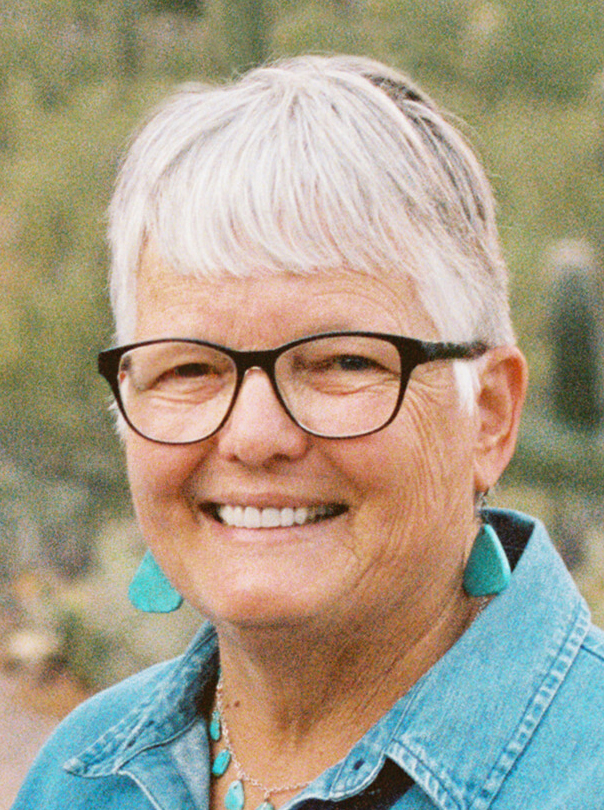
Welcome back to Everything Belongs. Our guest, Tessa Bielecki, is a contemplative writer and teacher who lives as an urban hermit in Tucson, Arizona. She also serves as co-director of the Desert Foundation. You can find her books, her Fire and Light podcast and seasonal reflections at tessabielecki.com and sandandsky.org, both of which you can find in the show notes. Oh my gosh. Tessa Bielecki, Paul Swanson, it is such a joy to get to sit down with the two of you today on the Everything Belongs podcast. Goodness gracious, thank you so much for being here.
Tessa Bielecki: Oh, well, this is a thrill to think that I could talk to both of you at once. I’m usually talking to one or the other of you, but two is, how am I going to stand this ecstasy?
Paul : Well, it’s definitely shared ecstasy. And once again, I love origin stories. And Tessa, I was thinking about how you and I first met. And if memory serves, my recollection is we met at the Wild Goose Festival and we met in the line for the porta-potty.
Tessa Bielecki: Yes. Yes.
Paul : You were coming out. I was going in. Go ahead.
Tessa Bielecki: Okay. You were coming out. I was coming in and you made the crack about how the porta-potty was like a monastic cell. And you didn’t know who you were talking to. You were talking to somebody who lived in the equivalent of a monastic cell, but you didn’t know who I was, was hilarious. I had no idea who you were.
Paul : That’s right. I love the auspicious nature of that meeting, because immediately after that, I was going to your talk. And I think about that as the starting to this beautiful friendship and the way that you have poured so much life and wisdom and guidance into my own journey. But like all good things, it starts with the natural needs of a porta-potty.
Tessa Bielecki: That’s right. The human thing.
Mike : So great.
Paul : The human thing. Mike, how did you first connect with Tessa?
Mike : You all met on a line for a bathroom. Tessa, you don’t know this, but you and I met in the New York City subway system because I started listening to an audiobook that you had recorded, which I think was called Wild at Heart: Radical Teachings of the Christian Mystics.
Tessa Bielecki: Oh, that’s it. That’s it.
Mike : And you were my first big introduction to Christian mysticism. So this was a huge influence for me. And then years and years later, you, Paul and I were all attending a talk on desert spirituality in Arizona and Paul kept saying, “Oh, I’m going to go grab a drink and have a chat with my friend Tessa.” And it was only at the very end of the event, I went, “Oh my God, you’re Tessa Bielecki,” and I was so starstruck. Yeah, it was such a huge moment for me because you’d had such a huge influence on my journey.
Tessa Bielecki: Yeah, what’s hysterical for me, I felt like a big rockstar and we’ve been collaborating ever since. Yeah.
Mike : We became fast friends and bonded deep, not only over our love of the desert and the mystics and maybe some mezcal in there, but also how we heal and grow from loss and betrayal in our families and in our spiritual communities. So it’s been such a rich dialogue and what a gift it is to have friends like the two of you in this life. Speaking of origin stories, Tessa, this season, we’re talking about the Enneagram. You’ve told me that you came to the Enneagram later in life and wish you’d found it earlier. We’ll get to that story, but I have to ask, do you remember how you first encountered the Enneagram?
Tessa Bielecki: I’m not sure. I had several friends who were actually Enneagram teachers, but my first vivid memory is of one of these friends visiting me in the log cabin that I was living in where I had gone for healing after the traumatic experience of leaving my community and he saw my wood pile and how my woodpile was stacked. And I just remember, he pointed and said, “That’s a One.”
Mike : Oh my God.
Tessa Bielecki: And so was the vision of my wood pile, and then of course, then we talked about it and I did not want to own being a One. Once I found out about the numbers, I thought I was a Four and it took me a while to admit that I was indeed a One. But I want to nuance that, because yes, I’m very by the book in some ways, and in other ways, I feel a little different.
Mike : Yeah. There’s something about that One and Four connection. Richard and I talked about that earlier in the episode. Should you ever decide to write a book called The Vision of My Woodpile? I’ll be very excited to read it.
Tessa Bielecki: Yeah. Yeah. Oh, my wood pile was perfect. Absolutely perfect, as are all my kitchen cupboards and my desk and my file cabinet. If you need anybody to make order out of your chaos, I’m your gal.
Paul : That’s fantastic. I have a couple rooms I could have you come over and work on.
Tessa Bielecki: Yeah, I love making order out of chaos and I do it very fast. And for me, it is fun. It’s always been fun.
Paul : Well, making order out of chaos is a perfect tea for, I think, talking about being a One in the Enneagram. I want to read first here how Richard defines the Type One. He says, “The Type One is about the need to be perfect. Ones are idealist, motivated, and driven on by longing for a true, just and moral world. They are honest and fair. It can spur others to work and mature and grow. They’re often gifted teachers who strive to go forward, setting a good example. They have a hard time accepting imperfections, other peoples, and above all, their own. Only when they are focused and at rest can they accept living in a still, imperfect, present and trusting in the gradual growth and good, in Christian terms, the kingdom of God.” How does this relate to you and what does it mean for you to be an Enneagram One?
Tessa Bielecki: When I hear that and I read other things about the One, it seems like there’s an awful lot of emphasis on moral perfection and on right and wrong from a moral point of view. And that does not characterize me. That isn’t how I was set up. For me, being a One is primarily about order and it’s about order in spatial order, “I must have tidiness and order in my spaces. They won’t necessarily be free of dust, but they will be ordered.” So order is important. The other thing is you see Ones described as perfectionists or reformers, I would use the word orderer or organizer. I would use the word fixer. I’ve spent my life fixing, and when I lived in community, we wouldn’t have known about the Enneagram, which is why I say I wish I knew it sooner. My community, they would play tricks on me.
So they’d be coming over, they’d get to my hermitage before I was there and they would slightly move a figurine on the shelf, a fraction of an inch. And then they would time how long it would take me to see it and set it right nanoseconds. So there’s that. Got to fix it, got to be right spatially and also relationships have to be right. Personal relationships, which is related to the spatial relationships. Third thing I see, I would call me as a One, the idealist. That’s where the perfection, is in the vision of high ideals and the wanting to be living out of those high ideals. And then when someone doesn’t live up to that or worse, when I don’t live up to that, I beat myself up, which of course then translates into making other people’s lives a lot harder because I want them to be perfect also. But not morally, just in terms of noble ideals. So that’s how I would see the One.
Mike : Oh my gosh. I can’t wait to unpack all of that with you. When we talk about the Enneagram, we talk about turning our wounds into wisdom. And sometimes we come in so strong on the wounds, we can overlook the fact that every single orientation on the Enneagram has a gift to give to the world and to all the others. And you’ve already said this so well that you make order out of chaos. I’m wondering about making meaning out of chaos or reorder, to use Richard’s language out of chaos. What do you think the gift of the Enneagram One, the mature Enneagram One, what is the gift that they give to the world and to the other numbers?
Tessa Bielecki: See, I think making order out of chaos is a huge gift. And when I first learned about the Enneagram and I was learning what was wounding about that, I really had to work with that and realize that’s the first thing God did, was make order out of chaos. That’s what creation is all about, was making order out of chaos. That’s a huge gift for people. And then I think a lot of Ones can be grim, especially if it’s the moralistic kind of One, but I’ve always been a pretty cheerful One. And I think that’s because of a strong two-wing, which softens me, or when I’m at my best, then I go to the Seven. So I was the big party girl. I was the one always calling for celebrations and breaks.
So I would both drive myself and other people hard to get the job done, but then boy, would we celebrate when the job was done. So I think that’s part of the gift of the One.
Paul : Well said. I want to dip back in some of your own personal history here to go back to childhood. I’m coming in hot with another quote from Richard. I want to see if this relates for you.
Tessa Bielecki: Okay.
Paul : Richard writes, “From an early age, Ones try to be model children. Starting back in their tender youth, they internalize the voices that demand, ‘Be good, behave yourself, try hard, don’t be childish, do it better.’ It is if they had decided even then to earn the love of everyone around them by meeting such expectations and being good. Often one of the parents of a One is moralistic, perfectionistic, or eternally dissatisfied. Stingy with praise, this parent takes above-average goodness for granted. The little Ones were precocious achievers because they didn’t want to lose the love of their nearest and dearest.” Tessa, does this connect for you at all in your family of origin and in the childhood that you had?
Tessa Bielecki: Yes and no. I certainly was a model child, and oh, precocious achiever. Oh, yeah.
Paul : Still precocious.
Tessa Bielecki: Oh, just achieving all over the place. But again, there wasn’t that moralistic part of it for me. My parents were very relaxed about upbringing and my religious life, my Catholicism was not moralistic and punishing. I had none of that. I find this a very difficult question. I think, for me, the best I can understand about it is I’m the oldest child. So right away, there you have a setup. I was the oldest of five siblings and the youngest who was nine years younger than I was a Downs syndrome child. So from a very young age, I had tremendous responsibility for him, for my youngest brother. I thought nothing of it at the time. I loved this brother and it wasn’t a chore for me, but objectively when I think about it, I’m like 10, 11, 12 and I have big responsibility every afternoon after school for taking care of that brother for hours on end. So I think that was part of it.
The other thing I think that for me was part of it, I was not trying to be perfect because of signals from my parents that I had to be perfect. I had an emotionally unavailable father. He was either yelling or he was totally silent. And so he scared me. I didn’t know him. There was absolutely nothing nurturing that ever came from him until the end of his life. And then that man transformed probably more than any other human being I’ve ever known. He did his inner work and was just extraordinary, but he was totally unavailable to me as a child. I have a sneaking feeling that even my mother was emotionally unavailable. And so if I was trying to perform well and be perfect, it was simply to get attention.
And talk about stingy with praise, I don’t remember getting any. I got it in school in spades, but I don’t remember praise from my parents growing up. That’s the setup. Not that I had to be morally perfect and I’m being punished for not being a good girl, they’re just not paying enough attention.
Mike : I told Richard in our previous conversation that my life has been this dance between these experiences, mystical experiences of total unconditional love and then coming out of that and for some reason, feeling like I would need to play these worthiness games to prove that I deserved the unconditional love that I was getting. And something you and I share in common that heightened that for me was, again, as you mentioned, being the eldest sibling and being responsible for our nuclear family members. And then on top of that, another thing that you and I share is this experience of losing some of those nuclear family members early. I’m thinking of mystical experience, responsibility, loss. Did that heighten this thing that we’re describing about this Oneness that wants order out of chaos?
Tessa Bielecki: I think absolutely. So in my story, what happened is, first, that beloved little boy, the Down Syndrome child, whose name was Richie, died of leukemia when he was eight at home in my parents’ arms and I was the only sibling there. My other siblings were not there. And then on September 4th, 1962, the brother who was just one year younger than I was killed in an automobile accident and he was driving the car and there were four other boys badly injured in the car. And we never processed it as a family, never got any help, never spoke about it. And two weeks later, I went to college. I left the family and went to college. And all that pain was stuffed. And I know as I explore the Enneagram that the big emotion is anger, which is deeply buried, for me, there are tremendous connections between grief and anger, so that the anger is much more expressed as sadness than anger.
And I would keep being shut down by people for one reason or another because I was trying to tell the wrong people who weren’t in a position to help. So I think that’s the buildup of the anger, probably started in early childhood because I’m not getting the right kind of affection and affirmation, first of all, from parents. Then you bring all the grief in over the deaths, so then I stuffed that and I shut down even more and I think that’s so chaotic interiorly and I don’t even know it, that then that reinforces the making order on the outside.
Mike : Wow. That makes so much sense why you would move to order as your superpower. Holy molly.
Tessa Bielecki: Yeah, yeah, there’s too much chaos, emotional chaos.
Paul : How did all this help you build contemplative communities that you’ve been a part of? I’m thinking particularly of the Spiritual Life Institute. How did all those experiences and those flashpoints and ongoing processes play a role in how you helped build that contemplative community and others?
Tessa Bielecki: Yes. So in college, I met a man who had created something called the Spiritual Life Institute. That’s a whole big story, but I joined him and it was more just an idea in his head when I arrived. And of course, I had no idea about my gifts. I was only 22 years old. I graduated from college. I worked for a year in Washington, DC and then I joined him in the Arizona Desert. That was where we started our first place and we started a second one 10 years later in Nova Scotia, Canada and then we started a third place in Colorado and then we started a fourth place in Ireland.
Well, I wouldn’t have understood it at the time, but you need a One to get the job done. And so first of all, I want to say I think the most important thing I could do as a One is a One knows how to look at an ideal or a vision and then I think it was Helen Palmer who said, “A One can develop a step-by-step methodology.” Well, I knew how to take this big vision that Father William had and I remember asking the question, “Okay, how are we going to live this out on a day-to-day basis?” And I was able to translate that into, “How would we live a rule of life on a day-to-day basis?” and then as other people came to join us, then, “How would we form them as contemplative monks, contemplative Carmelite monks?”
It was just an instinct. This was not hard for me to do. It was like second nature, “Well, of course, what we have to do is this, this, this, this.” So I would say that’s the first thing. The second thing I would say is because we kept moving into dumps basically, like the Nova Scotia place was an old hunting and fishing lodge, Ireland was an old rundown manor house with these broken down out buildings and I would know how to go in, “Look at this mess,” and make the lists. Ones are the list makers and we make them not only for ourselves, but for everybody else around us. And so I would know how to do that. “How are we going to clean up this mess? How are we going to turn these rundown cabins at an old hunting and fishing lodge, turn them into hermitages and make this a contemplative center?” I could do that.
And of course, I had a lot of help to do it, but I knew how to set it up. I happened to love bookkeeping, of course, because it’s cut and dried and life is so full of gray, bookkeeping is black and white and I like it. It’s restful for me to do bookkeeping, but it was both the outer and that inner in terms of the way of life and the spiritual formation. So I want to emphasize that it was both the inner and the outer and they go together.
Mike : I think for a lot of Ones, they have such a strong sense of how the world should be, their sense of order, that they’re sometimes living in that idea and not being fully present to life and reality. What can you tell us as a One about your quest for loving awareness and presence?
Tessa Bielecki: Whoa, boy, just the way you’re phrasing it is challenging. I have suffered a lot and made the people around me suffer a lot because of that idealism and living in an ideal world, wanting everything to be ideal and high noble ideal like chivalric ideal, high gospel ideal. There’s a big link between the code of chivalry and the gospel. So the One has a hard time relaxing. The One has a hard time being present because of, “It’s got to be better. We have to improve on it.” So one of the best things that can happen to a One is to have a best friend who is a Nine and I do. And that is my friend, Father Dave, whom you both know and love as I do.
Well, this is a great gift because the One is so heavily programmed about shoulds and oughts and perfection and the Nine is just flowing with the way things are. So I have just learned so much about being present, just being associated with a guy who is just present. Well, once I got onto the fact that I was a big fixer, that I was fixated on fixing and I was so tired of it, so tired of it, it’s exhausting, fixing everything, and one day, I just threw up my hands and I said, “I’m always trying to build a better mousetrap.” Now why would I come up with that image? Who knows? And Dave, my number Nine marvelous friend who knows me inside out, he just looked at me and said, “Tessa, the mouse is dead.”
And that’s become like a mantra for me. I just tell myself when I’m getting flustered, “The mouse is dead. So all I have to do is just be. There is nothing to fix. I don’t need a better mousetrap. I’ve already done the job. All I have to do is rest in being.” But that has been a long, hard journey for me because I feel like I’ve only been doing it for, I don’t know, maybe 10 years. I’m going to be 81 and I feel like I’m just getting onto it after years of getting the job done and trying to make everything perfect for everybody else. So it’s exhausting being a One, really exhausting.
Mike : It sounds like you need a One to get it done and you need a Nine to learn to feel fine.
Tessa Bielecki: Oh, Nines are frustrating to work with for a One, let me tell you and that’s part of why I value the Enneagram so much because studying it … And Dave would drive me nuts and we’ve had all these open conversations about it. He would be perfectly fine with my saying that, but once I understood how a Nine operates, then I stopped beating myself up trying to get him to perform the way I thought he should perform and could relax into and appreciate the way he does things, but then he had to move a little more my way as well.
Paul : I’m just thinking about right now about the inner work of the Enneagram One, which I know you have done in spades. And Richard talks about these three things that really help a One, being prayer, love and nature. And what I love about those three as examples is those are things you cannot necessarily control. Prayer, love and nature are all wild in their own way. And when I reflect on your life and how you’ve lived it, how you’ve continually deepened and sought that out, it’s clearly shaped by prayer, love and nature. How have they shown up for you, Tessa, and help you grow?
Tessa Bielecki: Well, like you said, it isn’t controlled. I was trained in my monastic life. We didn’t so much have structured programs for growth. The phrase we used was, “Let life do it, that life presents the teaching tools to you.” Now, Paul, you would know a lot about this as a father of children. We don’t have to try very hard. I believe that life through divine providence gives us what we need. So of course, here I am, I was in a community of prayer. So all the structures were there and that has just continued for me. I don’t know quite what to say about the love part. It’s what I referred to earlier. The One is wants right relationships, so puts energy into friendship.
Friendship is very important to me. I write lots about it and use St. Theresa of Avila as the great example of the importance of friendship on the spiritual path.
Paul : This is such a fun question to dance with, as I think about how you’ve spoken about prayer and the communities of love, and of course, nature is a big piece of, I know of your life. And what’s popping into my mind right now too is how you and my daughter share a love of saguaro cactus. And that seems to be almost an icon for you of your relationship with nature. Can you speak a little bit about how nature has impacted your own sense of growth on this path?
Tessa Bielecki: Yes. And the aspect of nature, I think that’s the most important is the changes through the seasons. So Ones don’t do change well. We don’t like change. We like our routines and we like things to be the same because we like the order. Yes, there’s beautiful order in nature. Nature’s also very messy. I’ve been keyed into the seasons all my life, summer, fall, winter, spring, which are really the seasons of our soul. The outer and inner landscapes are one. And it’s the way nature gracefully moves through the changes of the seasons. It’s important for everybody, but I think especially a One who doesn’t like to see change and doesn’t see change as simply inevitable and as natural growth.
So that would be one way of the way I have found nature healing and helping me integrate. And the other is, of course, the saguaros. I was living in Colorado and I moved to Tucson. I needed to get back to the desert for sure, but I needed to get back to saguaros. Why wasn’t necessarily clear to me, and for a long time, it wasn’t clear to me. It’s only become clear in the last couple of years here. I kept being drawn to the saguaros that were scarred, that were damaged and broken. And I kept photographing these and being awed by the fact that they not only survived, but they thrived, how strong they were, how enduring they are and how beautiful the scars were.
And finally, I made the connection that because I was so broken, and we’ll talk more about how that happened, and I was seeing beings and they are beings. The local indigenous people here, the Tohono O’odham consider the saguaros people, I do too. I have names for them. They’re my friends. I talk to them. I visit the same ones regularly. If you came to visit me, I would introduce you to my friends. So there’s just so many things to learn from the saguaros, and only this last weekend, since I knew we were going to be talking about Enneagram One, I realized …
So the One has a hard time appreciating and living with imperfection. Well, I realized over the weekend, you seldom see a perfect saguaro. Their beauty is precisely in their imperfection. Maybe when they’re young and they’re just one straight column, they’re perfect and they look alike, but once they start really growing and putting out arms, they’re all over the place and they’re all different and they aren’t perfect. And so the fact that I love them so much and I spend so much time with them, I’m realizing … You see, that’s partly how nature is healing. I’m not consciously, “Okay, I have to heal this one wound in me, therefore I am going to go out and turn to nature.” I’m just doing it naturally and the process is happening and the healing is happening and the growth in me is happening without my even knowing it.
Thomas Aquinas said, “God draws us according to our nature,” and so when you follow those instincts or what the South African bushmen call the tappings in your heart, and I’ve done that all my life, you’re led to where you need to be to grow and to heal. And that’s what’s happened with me and all of nature, but very, very profoundly, most profoundly with the saguaros.
Mike : Wow. Well, Tessa, first of all, I love that. And having been in those saguaros, I so deeply appreciate it. And then speaking about brokenness and wounds, shifting to deeper waters, in our conversation with Richard, we discussed this idea from an Enneagram teacher, Chichi Agorom, who talks about how Western Christianity is a very One-driven religion. Many of us have been hurt by religious leaders that let us down and I know that you’re currently working on a memoir that tells just such a story. Can you share just a bit with us about what happened with Father McNamara and those communities and your wounds and go through that?
Tessa Bielecki: Yes. Got to be brief because I know this is just one little part of this whole podcast. So this would be my biggest wound and the source of biggest healing simultaneously. And that’s really important, that people understand that it doesn’t matter how devastating the wounding is, there is healing. And I actually became nonfunctional for almost two years. I think that’s very important to say. So what happened to us is I found out of the blue, shock, shock, shock, overwhelmed by shock and trauma, I found out that our founder had been acting out with multiple adult women over years.
And I thought we were going to survive this crisis and we didn’t because it unleashed, talk about chaos, just unleashed incredible chaos. Everything broke down. All the relationships broke down. Paul, you were asking about my inner work as a One. Well, I think that a huge amount of how I needed to change as a One happened in one fell swoop when everything broke. I was absolutely shattered. The community fragmented. Father William as my ideal religious person mystic was no longer who I thought. My idealism shatters, the relationship shatters. The community shattered, I shattered. And as a fixer, I tried to fix it. I thought I could fix it. I tried to fix it and I couldn’t.
And so believe me, that stopped me from fixing. The mouse was more than dead. The mouse was stomped on and obliterated. And it’s the best thing that ever happened to me. There’s so much to say about it. You’re going to have to read the memoir. You’re going to have to listen to the podcast that I did with Mike Petrow on Healing with a Thousand Faces. I zero in on this. It’s most of what we talk about. The only thing I want to say here is that Mike said it right. Wounds are way into wisdom, our way into healing. And more specifically, I know Mike, you and I have talked a lot about betrayal. The poet, Robert Bly, says, “Betrayal is actually the way to wisdom.”
And of course, what this wound for me was very much betrayal. Not only was it a dose of, you can’t fix everything because some things are just so broken, they can’t be fixed, God can raise them from the dead. God rose me from the dead. That’s how I would describe my healing. I died. There’s no question about it, which is also why I love those saguaros because I also pay attention to the ones that are dying and there’s something extremely beautiful about their surrender to their dying. And then I rose from the dead and I didn’t do that. So you have to do a certain amount of work yourself, and by golly, I did that work. But in the end, it’s grace. And in the end, we are raised up. We rise like the phoenix.
Jacques Maritain, the old French philosopher, had this image of Christ as the phoenix of the five wounds.
Paul : Wow.
Tessa Bielecki: So it’s not a majestic, glorious bird phoenix that you see like Dumbledore’s fawkes. You see the five wounds in the resurrected Christ. You see the scars in the saguaros. You see my woundedness and that’s all right. Again, you have to be broken in order to realize that imperfection and brokenness is beautiful. I tried too hard not to be broken. And finally, what was coming at me was so terrible that it broke me. I want to say that to people. I was broken. If you had known me then, one of the most important teachings, one of the most important things my therapist said to me was, “Your pain is so big. Don’t stay inside. Live outside as much as you can and give your pain to the universe.”
So I really came to love that land where I was living. I was living in this log cabin outside of Crestone, Colorado at the time, and I spent as much time as I could out there out and I was giving my pain to the universe. So that land was very beloved because it was that land that took my pain. It was that land that helped heal me. And that’s the power of the land. The land is living and we’re in living relationship to the land and the land is part of our healing.
Mike : First of all, thank you for sharing that. That is so powerful. It hits me in my bones. Your willingness to be vulnerable and open about it and share that with us is sanity making and lifesaving, so thank you. I know for so many Enneagram Ones, they have this strong sense of right and wrong, or as you’ve described, this profoundly deep sense of order. I feel like betrayal in particular is such a heavy hit for a One, as it is for all of us. What advice would you give to anyone listening who has had someone they loved, someone they trusted, maybe even someone they idealized, deeply betray their sense of order and trust and goodness?
Tessa Bielecki: Aha, well, as Bly said, “Betrayal is the way into wisdom.” Now I only read that after I’d been moving there and it isn’t the end. It’s a step. I had to keep taking steps on behalf of life, which again, One is very strong and determined, and the Oneness, that kind of strength helped me put one foot in front of another, helped me get out of bed, help me take the steps. I don’t want to discourage people. I want to encourage you by saying how long it can take. It took me a long time. Very hard work. Forgiveness is not reconciliation. You do not necessarily reconcile with those who have betrayed you. It is not about getting back to the way things were. There is no going back to normal. There is only the new and the new may be without those others in your life.
And most important for a One, you forgive yourself because you’re your own worst enemy and your worst critic is the one in your head. And so you have got to forgive yourself. Just put one foot in front of another and keep going and find your tribe, find the places that are going to be healing for you, pay attention to your dreams, pay attention to the tappings in your heart. All of this is part of the healing.
Paul : Thank you, Tessa. So I’m thinking about you mentioned you’re about to turn 81 and what for you is the biggest difference about your experience as an Enneagram One now that’s different from previous iterations of your life, at this stage of life?
Tessa Bielecki: Well, the work is over on one sense. Yes, I still work hard. I write, I do podcasts. I have to clean my apartment. I have to pay my taxes. I have to balance the books. Aging already brings the lessons and the blessings. You don’t have to do anything. You just have to get old. And I don’t even think of myself as old. People have to remind me that I’m old. I’m 81. I expect to live to 96. My dad lived to 96. I could beat him, but I don’t know. I don’t want to, but anyway, I’ve got a lot of years left and they’re joyful and they’re celebrative. And mostly, it’s that sense of resurrection. And gosh, I tried so hard for so long. I don’t regret anything. I wish I’d done some things differently, but I learned from all of that. And now it’s all a blessing. It’s just a blessing.
I get to talk to guys like you. I get to do something like this and share a bit about where I’ve been and love people through a podcast. And it’s all about loving and it’s all about giving and it’s all about celebrating the joy of being alive. Amen, brothers-
Paul : Amen.
Tessa Bielecki: … friends.
Paul : Amen. That personal, passionate presence comes through in every conversation with you. So we’re so grateful that we had this chance to take a few laps around the Enneagram One with you.
Tessa Bielecki: Well, thank you. And thank you for giving me the opportunity to look back at the Enneagram One because I’m still learning and undoing. Thank you guys. Love you both, lots.
Paul : Love you too.
Mike : This was so great, Tessa. Oh my gosh. Wonderful Ones in their Oneness. Cassidy, wow, those two conversations.
Cassidy : Great, great episode and so amazing to be able to see myself in the One. Now I’m wondering, “What am I? Am I a One or am I Five?”
Mike : It’s so true. Richard legitimately had me halfway convinced that I was a One and it’s this recognizing my own Oneness, this deep internal sense of right and wrong and the wrestling with the inner voice of the accuser. And as Tessa talked about the desire for order, but I got to tell you, what really, really hit me, especially in our conversation with Richard, what really hit me was this idea that Western religion is very One driven. So of course it would hit all of us and recognizing the special role in Ones’ ability to help us heal when they work on their healing themselves.
And how wild to think that maybe one of the reasons Richard has been so successful is because all of his books and teachings have been addressing that. He’s talking to his own Oneness and putting his healing in the service of healing the world. Did that hit you that way?
Cassidy : Oh my gosh. This has given me a totally new understanding of Richard’s work. I’ve been thinking his life’s work, his writing, his teaching, these lessons in order, disorder, reorder or in being non-dualistic. These are all lessons and teachings that he also needed himself. And that really resonates with me knowing the lessons I need to teach myself or preach to myself and sometimes the ways those are our gifts to the world or, Mike, as you say, “Our wounds lead to our wisdom.”
Mike : Absolutely. And then to hear Tessa talk about her own strength in bringing order to chaos, but then this experience of crashing into a season of life where no matter how hard she tried, she could not fix, she could not bring order. Of course, that reminds me of Richard’s teaching in Falling Upward that we’ve explored in this podcast, that sooner or later, if we’re on any kind of a classical spiritual schedule, we will fail at something or something will fail us. And I’ll bet all the Ones in the audience can feel that, the impact of that moment where no matter how hard you try, you cannot make it work. But I think all of us feel that. And I was so, so, so encouraged by Tessa reminding us that even though that feels like a death, there really is a resurrection on the other side of it.
Cassidy : That’s right. And I think Ones have a particular gift in teaching us something about the contemplative path. And, Mike, I think you said in this episode that nature is harmonious, but not orderly. And that makes me think about Tessa talking about her particular relationship with nature and thinking also about Richard talking about gazing, talking about looking out his window and the ways that this order that exists in nature or this harmony, the ways that the One has to kind of look at that with open hands and hold that with open hands. And I think that special relationship with nature is also a special relationship with contemplation and the ways that they teach us to be in the presence of challenging things where we can’t control it and we just have to hold it in all its beauty and complexity.
Mike : Gosh, I love that so, so much. And so I think the great gift of the One to the rest of us is that they do get things done and they do bring order out of chaos and point us towards justice and help things make sense. But then it sounds like the great task of the One is to navigate that moment where their best efforts fail, where they don’t have control. Richard says that suffering is so very frequently linked to our lack of a sense of control and I can hear the One in him when he writes and says that. And yet, the Ones can trust that there is healing and growth on the other side of that failure and show us how to walk that path.
So for everyone listening, I would encourage you to find the Oneness in yourself, to wonder how you’ve been shaped by One-shaped religion and ask yourself, “How do I attempt to create order and justice in my life and in the world? When has that been defeated? What can I learn from it?” I think on the other side of that defeat, we don’t stop trying to make love more real in the world around us, but we probably do it a little bit differently. What do you think that sounds like?
Cassidy : In some of our readings, we’ve talked about how one of the gifts of the One is serenity. Is that right?
Mike : Mm-hmm. Yes.
Cassidy : And I’m thinking about the serenity prayer and I’m thinking about, again, this back to holding things with open hands. And so I’m wondering if one of those questions is, “How can I make love more real with my open hands?”
Mike : Oh, that’s so good. That’s so good. Friends, there’s so much to cover as we get deeper and deeper into the Enneagram. One of the things that we didn’t discuss in this episode in Richard’s teaching is that, in health, an Enneagram One will move deeply into aspects of an Enneagram Seven. And in stress, the Enneagram One will dissolve into aspects of the Enneagram Four. We just want you to know that, at the end of the season, after we’ve covered all the numbers, we will come back and talk about the connections and the movements between them. Please do sign up to receive our monthly bonus resources and discussion questions, so you can keep on chatting about the Enneagram with your friends and conversation partners.
And of course, you can sign up to receive that at cac.org/belongs2026. That’s cac.org/belongs2026. And as we let you go, I think, Cassidy, you nailed it. Why don’t we go out on the words of that serenity prayer as something that all of us can sit with?
Cassidy : I think that’s a great idea, Mike. So let’s pray this together. God, grant me the serenity to accept the things I cannot change, courage to change the things I can and the wisdom to know the difference. I encourage you all to read this slowly to yourself. Maybe even notice where you feel it in your body and what word or line carries the most meaning for you. But in addition, I’ve been considering a lot what happens to my body when I find myself in One energy. I tend to get a little tight and clenched, and so in our additional resources email this month, you’ll also be able to find an embodied practice I wrote that we can all do together.
Mike : Right on. Hey, friends, thanks for listening to Everything Belongs. We’ll see you next time as we step into the Enneagram Two and learn how Twos can take their wounds, turn them into wisdom and find their work in the world. Thanks a bunch, everybody.
Corey: Thanks for listening to this podcast by the Center for Action and Contemplation, an educational nonprofit that introduces seekers to the contemplative Christian path of transformation. To learn more about our work, visit us at cac.org. Everything Belongs is made possible, thanks to the generosity of our supporters and the shared work of-
Mike : Mike Petrow.
Paul : Paul Swanson.
Drew : Drew Jackson.
Carmen : Carmen, Acevedo Butcher.
Jenna : Jenna Keiper.
Izzy : Izzy Spitz.
Megan: Megan Hare.
Sara: Sara Palmer.
Dorothy : Dorothy Abrahams.
Brandon : Brandon Strange.
Vanessa : Vanessa Yee.
Cassidy : Cassidy Hall.
Corey: And me, Corey Wayne. The music you hear is composed and provided by our friends, Hammock. And we’d also like to thank Sound On Studios for all of their work in post-production. From the high desert of New Mexico, we wish you peace and every good.